TheJakartaPost
Please Update your browser
Your browser is out of date, and may not be compatible with our website. A list of the most popular web browsers can be found below.
Just click on the icons to get to the download page.


Popular Reads
Top Results
No results found. Please check your search term and try again
Can't find what you're looking for?
View all search results
Popular Reads
Top Results
No results found. Please check your search term and try again
Can't find what you're looking for?
View all search resultsUnmasking the Kartini 'fairy tale' and the cost of performance
We were taught that Kartini’s brilliance was a gift, but we rarely talk about the patriarchal strings attached to her platform. It’s time to stop performing in a show we never auditioned for and start building a self that doesn't require external permission to exist.
Change text size
Gift Premium Articles
to Anyone
Share the best of The Jakarta Post with friends, family, or colleagues. As a subscriber, you can gift 3 to 5 articles each month that anyone can read—no subscription needed!
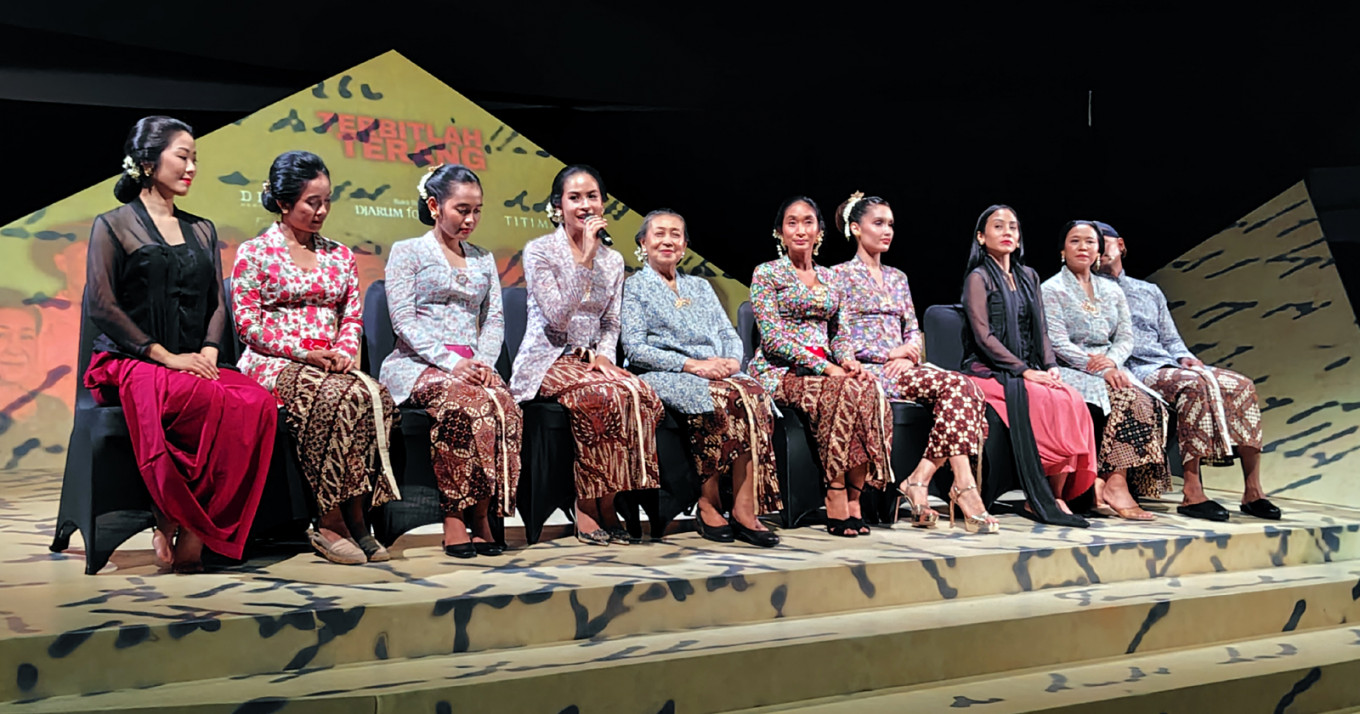 Actress and activist Maudy Ayunda (fourth left) addresses a press conference on April 21, 2025, following a performance of ‘Terbitlah Terang: Pembacaan Surat dan Gagasan Kartini’ (Out of darkness: Readings of Kartini’s letters and ideas) at the National Museum in Central Jakarta, alongside renowned actresses including Ratna Riantiaro (center left) and Happy Salma (center right). (JP/Sylviana Hamdani) (JP/Sylviana Hamdani)
I
f Raden Ajeng Kartini were alive today, she would probably have a social media account. And I genuinely believe that she would know exactly what to do with it.
Not because she would have abandoned her letters, her fury or her radical insistence that Javanese women deserved an education and a self, but because Kartini understood power. She understood that the world she was fighting against had rules, and that sometimes you had to move within those rules before you could subvert them.
She wrote in the colonizer's language to the colonizer's people. She was fluent in a world that was never built for her, and she used that fluency as a weapon.
But let's be honest about something else: Kartini's voice reached the world not only because of her mind but also because of her father. Raden Mas Adipati Ario Sosroningrat was unusual for his time; he educated his daughters when most men didn't. Her access to the Dutch language, to correspondence and to ideas beyond the walls of pingitan (seclusion) came through him.
The very patriarchy she was deconstructing also gave her the tools to do so. Her platform was, in part, inherited from a man who decided she was worth the investment.
That tension doesn't diminish her; it actually makes the argument more honest. It means that even the most radical women in our history had to work with what the system was willing to grant them.

Kartini didn't choose her access any more than she chose her household. She just used what she had, brilliantly, defiantly, and we called it revolution.