TheJakartaPost
Please Update your browser
Your browser is out of date, and may not be compatible with our website. A list of the most popular web browsers can be found below.
Just click on the icons to get to the download page.


Popular Reads
Top Results
No results found. Please check your search term and try again
Can't find what you're looking for?
View all search results
Popular Reads
Top Results
No results found. Please check your search term and try again
Can't find what you're looking for?
View all search resultsThe clock is ticking for Malaysian politics
Whether the national polls are triggered by the explosive multibillion-ringgit fuel subsidy crisis or accelerated by cascading state-level collapses, the political alignment is fluidly shaping up.
Change text size
Gift Premium Articles
to Anyone
Share the best of The Jakarta Post with friends, family, or colleagues. As a subscriber, you can gift 3 to 5 articles each month that anyone can read—no subscription needed!
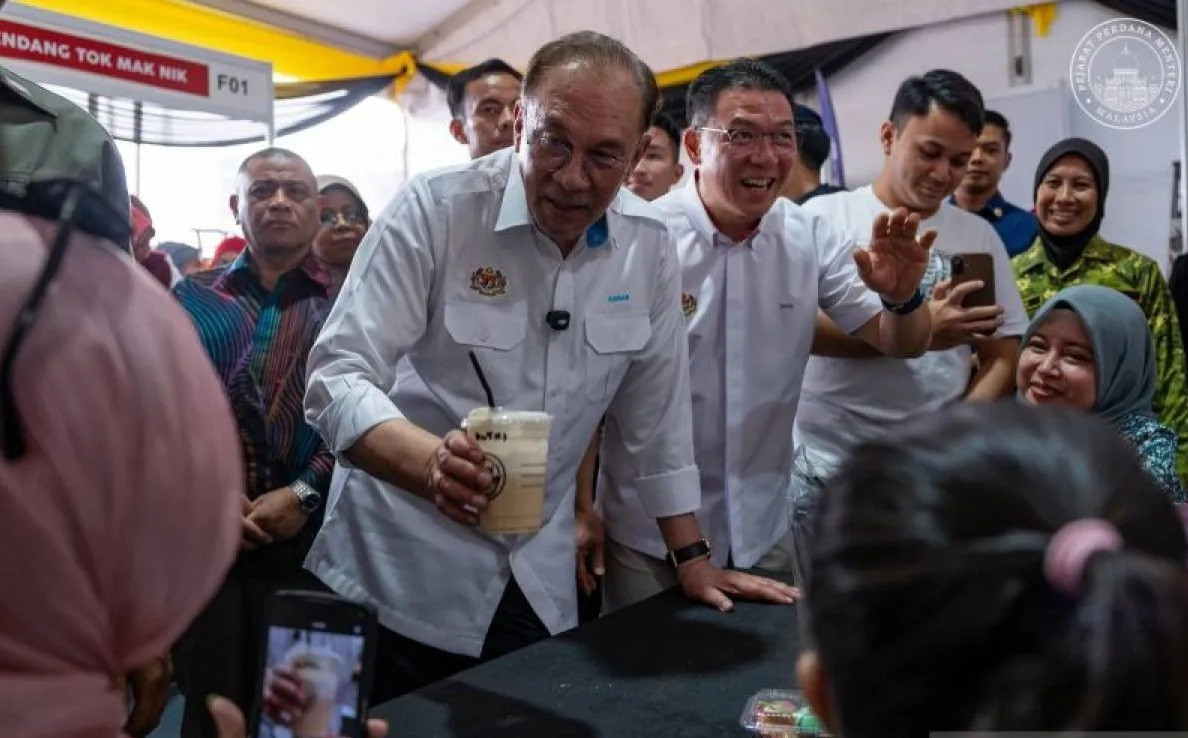 Community vibing: Malaysian Prime Minister Anwar Ibrahim (center left, front) attends an event on April 4, 2026 in Ipoh, Perak state, Malaysia. (Antara/Office of the Malaysian Prime Minister)
I
n Malaysian politics, the only thing more certain than change is the perpetual rumor of an impending election. My political bubble is buzzing with the question: when is GE16 (the 16th General Election)?
Malaysian Communications Minister Fahmi Fadzil recently attempted to dismiss the feverish gossip. Speaking to the press, Fahmi said it is unlikely there will be any move to hold GE16 this year. As the Pakatan Harapan political coalition’s communications director, he emphasized that Prime Minister Anwar Ibrahim has given no indication of an early poll, and that the administration’s focus must remain firmly on resolving the people’s economic woes.
However, Fahmi, who is a People's Justice Party (PKR) politician, added a crucial caveat: the prime minister has reminded Pakatan Harapan leaders and members of parliament to always be prepared for any possibility, including state elections like the one looming in Johor, although he hinted it may not be too soon.
Fahmi’s statements, however, are unlikely to stop the guessing game. The timing of GE16 remains a scorching-hot topic among politicians, political analysts, businessmen, diplomats and the people alike. Everyone seems to have a source. Some insiders firmly whisper that the snap polls could happen as early as October this year. Conversely, others argue that Anwar is determined to ride out the storm and ensure his government serves its full term until it naturally expires in February 2028.
A strong school of thought suggests GE16 will be called shortly after the 2027 Budget is tabled. The rationale behind the calling for an election several months before parliament’s automatic dissolution is simple yet grounded in fiscal reality. The government needs a fresh, strong mandate to implement the highly unpopular but economically vital cuts to the RON95 petrol subsidy.
The financial numbers paint a terrifying picture. While the initial fiscal strategies are hoped to keep spending in check, the escalating Middle East conflict – sparked by the United States and Israeli warn on Iran and the subsequent closure of the Strait of Hormuz – has sent crude oil prices screaming toward US$150 a barrel. Consequently, Malaysia’s monthly fuel subsidy bill has exploded from a manageable 700 million ringgit (US$176.36 million) to a staggering 4 billion.

The Prime Minister himself warned that if this external crisis persists, the petrol subsidy bill alone could reach 24 billion ringgit by the end of 2026. No government wants to prune fuel subsidies right before facing the voters; a fresh five-year mandate provides the necessary political shield.
Furthermore, political sources indicate that despite Fahmi’s public dismissal, PKR’s election machinery is quietly being greased for a potential battle this year. The opposition is equally on high alert.
In politics, timing is not just everything; it is the difference between political survival and oblivion. Former prime minister Najib Razak learned this the hard way ahead of the historic 14th General Election in 2018.
Back then, Najib’s advisers were fiercely divided. One faction urged him to call for an early election in late 2017 to catch the newly formed opposition alliance off guard, before Mahathir Mohamad and Anwar could fully solidify their opposition pact. However, another faction advised waiting. Najib opted to push the clock to its absolute limits, dissolving parliament in April 2018 – just two months before its automatic expiry in June.
The then Barisan Nasional chairman and UMNO president, I’m told, was holding out for an elusive two-thirds majority. The delay gave the opposition the critical window they needed to mobilize the masses. We all know how that story ended: Barisan lost its 60-year grip on power for the first time in Malaysian history. Arguably, had Najib called the election earlier, the political landscape today might look entirely different.
As federal leaders ponder the grand timeline, the local political landscape is already fracturing. Three major states are rapidly approaching the end of their legal lifespans: Melaka’s assembly automatically dissolves in December 2026, followed by Sarawak in February 2027, and Johor in April 2027.
Exacerbating this timeline is the high-stakes drama in Negeri Sembilan, where the state government is in limbo. Negeri Sembilan’s 14 UMNO assemblymen withdrew their support for Pakatan Harapan chief minister Aminuddin Harun.
While Aminuddin has stayed on to clarify his majority support, he openly acknowledged the fragility. The PKR vice president has hinted that the state could dissolve into a snap election. It is a contest that pundits view as a critical beta test for GE16 and a litmus test for the post-2022 Madani political configuration.
Sources have whispered that Johor’s state assembly may dissolve very soon. Johor recently convened a special state assembly session to pass an amendment allowing for five appointed assemblymen. Analysts view it as a protective fallback mechanism for the incumbent government.
The UMNO-led Barisan intends to go completely solo in the southern state, which is the birthplace of its party. Unlike the electoral pact forged between Pakatan and Barisan during the 2025 Sabah polls, the two federal allies are highly likely to go head-to-head in Johor, testing the stability of their alliance.
Over in Borneo, the rumor mill insists the Sarawak state polls will follow shortly after the Gawai celebrations on June 1 and 2. However, the Gabungan Parti Sarawak administration is currently playing a strategic waiting game. The Sarawak assembly previously passed a bill to expand its state seats from 82 to a massive 99 constituencies.
For these new boundaries to take effect in the next state election, the expansion must be formally tabled and ratified by the parliament, which is expected to happen during the upcoming July parliamentary session. Whether it happens before or after July, one thing is certain: Sarawakians will likely head to the ballot box before the year ends.
Whether the national polls are triggered by the explosive multibillion-ringgit fuel subsidy crisis or accelerated by cascading state-level collapses, the political alignment is fluidly shaping up. The political machinery of some parties across the country is already screaming for battle. Others, caught flat-footed, can only pray that GE16 remains a distant prospect.
But in the volatile theater of Malaysian politics, prayers rarely delay the inevitable. Whether driven by a multibillion-ringgit fiscal crisis or accelerated by cascading state collapses, the countdown has begun. History has cruelly proven that the clock waits for no one.
---
The writer is a senior news editor at Star Media Group. The views expressed are personal.