The Jakarta Post
Please Update your browser
Your browser is out of date, and may not be compatible with our website. A list of the most popular web browsers can be found below.
Just click on the icons to get to the download page.


Popular Reads
Top Results
No results found. Please check your search term and try again
Can't find what you're looking for?
View all search results
Popular Reads
Top Results
No results found. Please check your search term and try again
Can't find what you're looking for?
View all search resultsAfter the state and the owner, who protects fishers?
Behind the record-breaking profits of Indonesia’s industrial fishing fleet lies a predatory system of legal fictions and debt bondage that leaves the very workers fueling the industry with less than the price of a pack of cigarettes.
Change text size
Gift Premium Articles
to Anyone
Share the best of The Jakarta Post with friends, family, or colleagues. As a subscriber, you can gift 3 to 5 articles each month that anyone can read—no subscription needed!
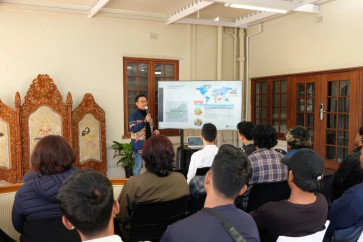
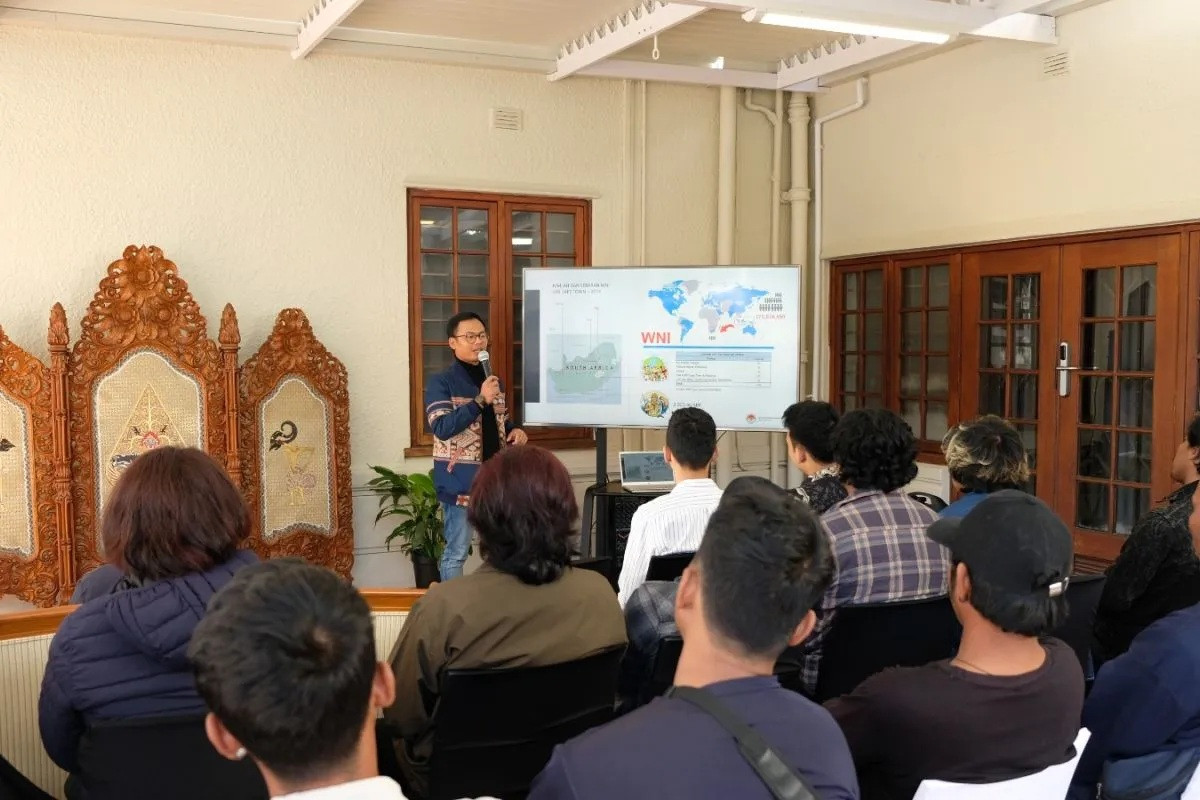 A diplomat briefs Indonesian fishers on migrant worker protection and safety on June 23, 2024, at the Indonesian Consulate General in Cape Town, South Africa. (Antara/Indonesian Consulate General in Cape Town)
C
all him Yosafat. He is in his late 30s, from a village in eastern Indonesia where the cell tower works only on clear days. He has been a deckhand on tuna vessels for fifteen years to support his three children.
In January, Yosafat boarded a longliner out of a major eastern port for what was meant to be a month at sea. The boat returned 31 days later with a full hold. Yosafat had pulled in tuna after tuna, working 16-hour days and sleeping in three-hour stretches between hauls.
Yet, when the boat docked and accounts were settled, the company handed him an envelope holding a sum that broke down to less than the cost of a packet of cigarettes a day - far below the regional minimum wage and what his family needs to survive.
His settlement slip listed deductions he could not read: fuel he had not used, repairs to a vessel he did not own, and the coffee and instant noodles he bought on credit from the captain’s store during nights when staying awake was the only boundary between life and the longline.
Yosafat is an amalgamation, but every detail of his story is real. His life is pieced together from interviews documented by Destructive Fishing Watch (DFW) Indonesia across five major ports, alongside doctoral fieldwork. The average monthly take-home of an ordinary crew member is around Rp 900,000 (US$51). In the worst cases, fishers return after six months at sea with just Rp 500,000 in their pockets - less than Rp 3,000 a day. Yosafat’s story represents the median experience, not the outlier.
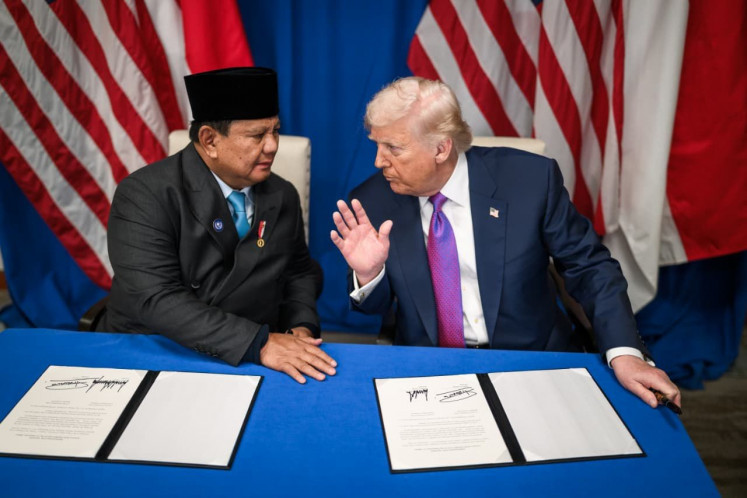
On May Day, President Prabowo Subianto signed Indonesia’s accession to International Labour Organization (ILO) Convention No. 188 (C188) - the Work in Fishing Convention - through Presidential Regulation No. 25/2026. This landmark signature codified a commitment the country’s fishers have long awaited. C188 rests on a simple recognition: Fishing is one of the most hazardous occupations in the world, and its workers are entitled to protections that reflect that hazard.

However, the harder question is what this paper commitment means for a fisher like Yosafat. More importantly, where do his wages come from, and who decides what is left for him?