The Jakarta Post
Please Update your browser
Your browser is out of date, and may not be compatible with our website. A list of the most popular web browsers can be found below.
Just click on the icons to get to the download page.


Popular Reads
Top Results
No results found. Please check your search term and try again
Can't find what you're looking for?
View all search results
Popular Reads
Top Results
No results found. Please check your search term and try again
Can't find what you're looking for?
View all search resultsBuilding alliances of among US allies
In a world in which the US cannot be counted on as it once was, the objective is not stability at any price, but rather stability on terms consistent with national and Western interests.
Change text size
Gift Premium Articles
to Anyone
Share the best of The Jakarta Post with friends, family, or colleagues. As a subscriber, you can gift 3 to 5 articles each month that anyone can read—no subscription needed!
 Set as preferred source
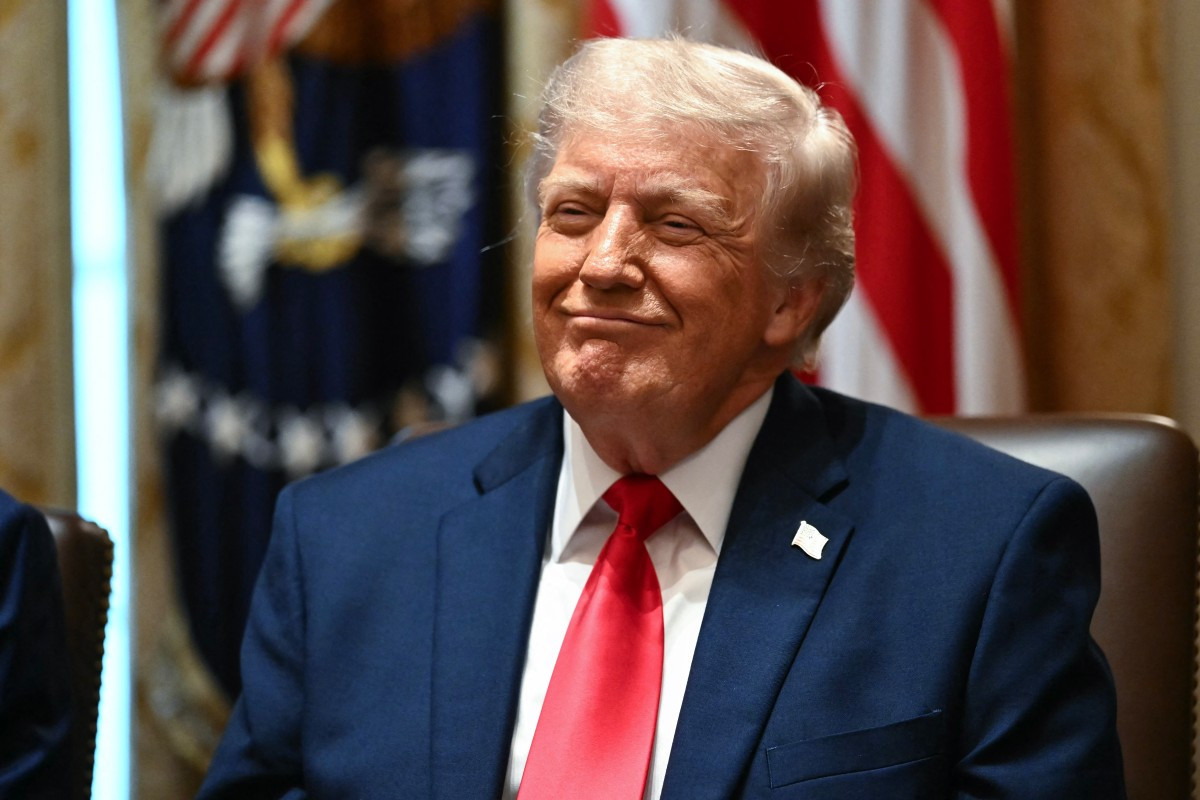 United States President Donald Trump reacts during a cabinet meeting in the Cabinet Room of the White House in Washington, DC, on May 27, 2026. (AFP/Kent Nishimura)
U
nited States President Donald Trump’s second administration has been clear from the outset that it would recast American foreign policy in fundamental ways. Its National Security Strategy, released last November, declared that “The days of the United States propping up the entire world order like Atlas are over”, a shift that is especially significant for America’s many allies and partners, which have long made dependence on the US the central tenet of their national security.
The most recent articulation of the changed American approach came last week, in Defense Secretary Pete Hegseth’s speech in Singapore to a gathering of defense ministers and experts: “We need partners, not protectorates,” Hegseth declared. “We seek alliances built on shared responsibility, not dependency. This is the maturation of our alliances in a new era.”
This line of American thinking reflects, in part, the widely held view that for too long the country’s security partners have not carried their weight. There is more than a little truth to this, as many US allies have the economic wherewithal to spend more on defense. What has traditionally held them back has been domestic politics and even a presumption that the US would always defend them, come what may. That will not be accepted in Washington anymore.
It is also reasonable for US allies and partners to shoulder responsibilities closer to home. The US has unique and extensive global responsibilities in multiple theaters, including Europe, the Indo-Pacific, the Middle East and the Western Hemisphere, suggesting a larger US motive: narrowing the gap between America’s military capabilities and commitments. This gap would become readily apparent if more than one contingency arose simultaneously, which is more than a hypothetical possibility, given the number of threats, potential and actual, from state and non-state actors, confronting the US and its security partners.
But the Iran war already has brought into sharp relief the gap between US capabilities and commitments. America lacks not only the military systems relevant for this moment, but also the manufacturing base that would enable it to produce them quickly, cheaply and at scale. Here the US would be wise to learn from Ukraine, which has emerged as a contemporary arsenal of democracy and is leading the world when it comes to the production and use of drones.
For these and other reasons, especially the erratic nature of a US foreign policy that no longer regards allies as privileged and deserving of unflinching support, America’s traditional partners have begun to rethink their own national security strategies. They are right to do so.

For starters, they should spend more on defense, but how is more important than how much. Increasing the share of GDP devoted to defense is necessary but not sufficient. Europe spends a good deal on military hardware, but the whole is less than the sum of its parts.