The Jakarta Post
Please Update your browser
Your browser is out of date, and may not be compatible with our website. A list of the most popular web browsers can be found below.
Just click on the icons to get to the download page.


Popular Reads
Top Results
No results found. Please check your search term and try again
Can't find what you're looking for?
View all search results
Popular Reads
Top Results
No results found. Please check your search term and try again
Can't find what you're looking for?
View all search resultsA new aviation plan key to fixing Indonesia’s skies
To fix high ticket prices and bridge an archipelagic nation, Indonesia must move past reactive policies and treat its aviation industry as a strategic tool for national unity.
Change text size
Gift Premium Articles
to Anyone
Share the best of The Jakarta Post with friends, family, or colleagues. As a subscriber, you can gift 3 to 5 articles each month that anyone can read—no subscription needed!
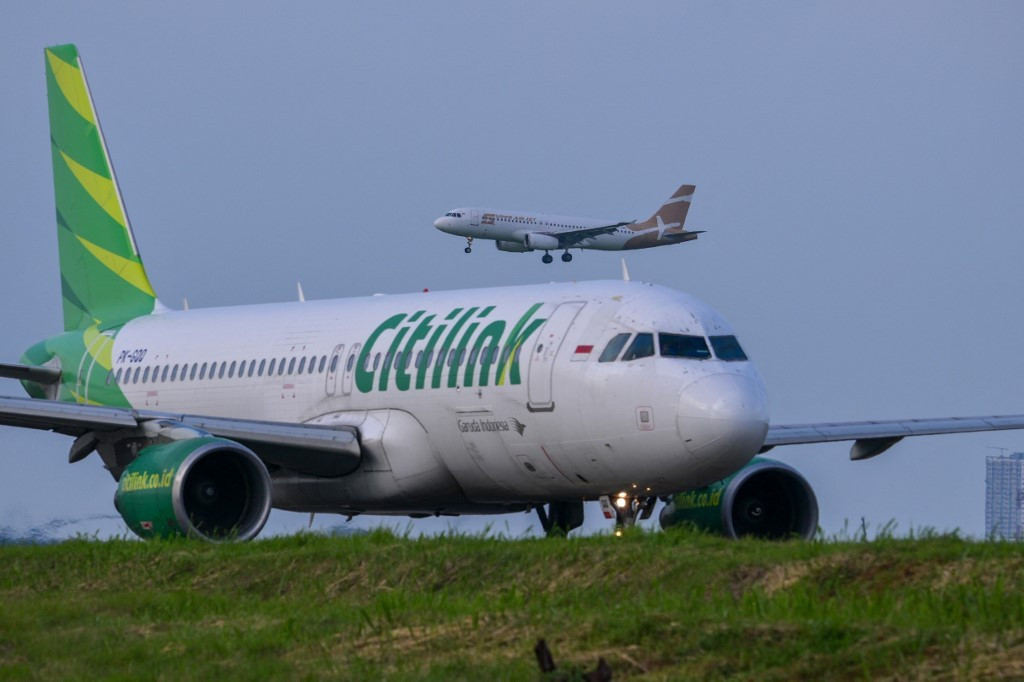 A Citilink plane taxis as a Super Air Jet plane lands on Jan. 10, 2025, at Soekarno-Hatta international airport in Tangerang, Banten. (AFP/Bay Ismoyo)
T
he debate over whether airline tickets are expensive or affordable is a timely issue in the country. Prior to the 2000s, public complaints about airfare were rare because people generally understood that air transportation was a high-technology mode of travel that naturally cost more than land, sea or rail transport.
At the time, comparisons were made across different modes of transportation. Air travel was chosen for its speed and efficiency, while its higher cost was accepted as a logical consequence of advanced technology, safety requirements and passenger comfort.
Toward the late 1990s and early 2000s, the low-cost carrier (LCC) model emerged globally. By eliminating operational expenses not directly related to safety, airlines were able to offer significantly cheaper fares. Flying was no longer an exclusive privilege.
This phenomenon soon reached Indonesia and dramatically transformed public perceptions. Ticket prices that had once been considered reasonable suddenly became remarkably low - on some routes, even cheaper than traveling by road, rail or sea. As a result, the public gradually adopted these low fares as the new benchmark for air transportation.
However, the era of ultra-cheap airfares came with significant consequences. During the same period, Indonesia’s aviation industry experienced a surge in accidents, weaknesses in safety oversight and the collapse of numerous airlines. Indonesia was downgraded to Category 2 by the United States aviation authorities for failing to meet international safety standards, while several Indonesian carriers were banned from operating in Europe. The industry subsequently entered a difficult period of reform aimed at restoring international confidence and credibility.
Following substantial improvements in safety regulations and oversight, the industry entered a new phase characterized by market consolidation. The number of airlines declined, leaving two major airline groups dominating the domestic market.

It was under these conditions that concerns over expensive airfares and allegations of a duopoly emerged. These two airline groups were often accused of exercising excessive control over ticket pricing. Interestingly, public benchmarks had also shifted.