The Jakarta Post
Please Update your browser
Your browser is out of date, and may not be compatible with our website. A list of the most popular web browsers can be found below.
Just click on the icons to get to the download page.


Popular Reads
Top Results
No results found. Please check your search term and try again
Can't find what you're looking for?
View all search results
Popular Reads
Top Results
No results found. Please check your search term and try again
Can't find what you're looking for?
View all search resultsWhy normalizing Myanmar’s junta is a strategic capitulation
Thailand and other ASEAN members may be tempted to treat the junta’s staged transition as a way out of the impasse. But normalization would reward the main driver of Myanmar’s regional crisis.
Change text size
Gift Premium Articles
to Anyone
Share the best of The Jakarta Post with friends, family, or colleagues. As a subscriber, you can gift 3 to 5 articles each month that anyone can read—no subscription needed!
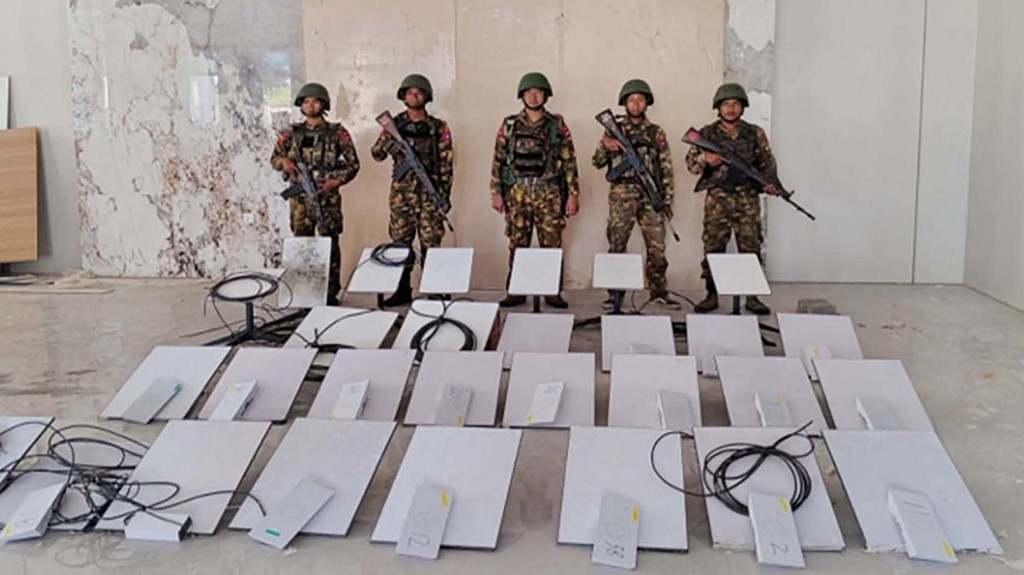 Myanmar military soldiers stand next to Starlink devices on Oct. 20, 2025, seized during a raid on the KK Park online scam center in Myawaddy, Karen State, Myanmar. (AFP/Myanmar Military Information Team)
R
ecent regional security analyses suggest that a tactically resurgent Myanmar military and growing "fatigue" among member states could prompt ASEAN to normalize relations with the junta in Naypyidaw. However, this perspective fundamentally misdiagnoses the root cause of the region's instability.
While these analyses highlight recent junta military advances, they ignore the systemic decay hollowing out the Tatmadaw from within. The regime's manpower is increasingly an illusion; replacing decimated elite combat regiments and experienced commanders with forced conscripts, who are frequently drugged and deployed as human shields, severely degrades actual combat capability.
Furthermore, the catastrophic drop in Defense Service Academy applications reveals a total collapse in institutional prestige and voluntary Bamar support. Relying on indiscriminate airstrikes and expendable infantry is an unsustainable strategy for long-term victory.
Tactically, holding major towns in Chin and Sagaing is largely meaningless when adaptive resistance forces continually sever the military’s vital supply and support lines through guerrilla warfare. More importantly, the military’s brutal campaigns in central Myanmar have inadvertently forged an unprecedented socio-political alignment.
The shared trauma of daily atrocities has united the Bamar majority with historically marginalized ethnic minorities. This collective determination to dismantle the authoritarian center provides the necessary ideological bedrock for a genuine "Coming Together" federal movement. Driven by a unified demand for both self-rule and shared governance, the resistance will sustain a protracted war of attrition that the isolated military cannot ultimately win.
ASEAN cannot afford the luxury of "fatigue", because engaging the junta will not curb the explosion in transnational crime, it will only institutionalize it. Historically, illicit economies ranging from drug and human trafficking to forced illegal migration, are not accidental by-products of the current conflict. They are established mechanisms of survival for Myanmar’s military dictatorships.

Today, military-backed Border Guard Forces and allied militias actively facilitate the booming cyber-scam industry and organized crime syndicates that plague the region. Engaging the junta under the illusion of restoring order ignores the reality that the military frequently operates like a cartel, utilizing these illicit networks to bypass sanctions, generate revenue, and maintain its grip on power.