The Jakarta Post
Please Update your browser
Your browser is out of date, and may not be compatible with our website. A list of the most popular web browsers can be found below.
Just click on the icons to get to the download page.


Popular Reads
Top Results
No results found. Please check your search term and try again
Can't find what you're looking for?
View all search results
Popular Reads
Top Results
No results found. Please check your search term and try again
Can't find what you're looking for?
View all search results8 percent for drivers, zero transparency for Danantara
A state asset fund that will not account for itself is not managing public assets.
Change text size
Gift Premium Articles
to Anyone
Share the best of The Jakarta Post with friends, family, or colleagues. As a subscriber, you can gift 3 to 5 articles each month that anyone can read—no subscription needed!
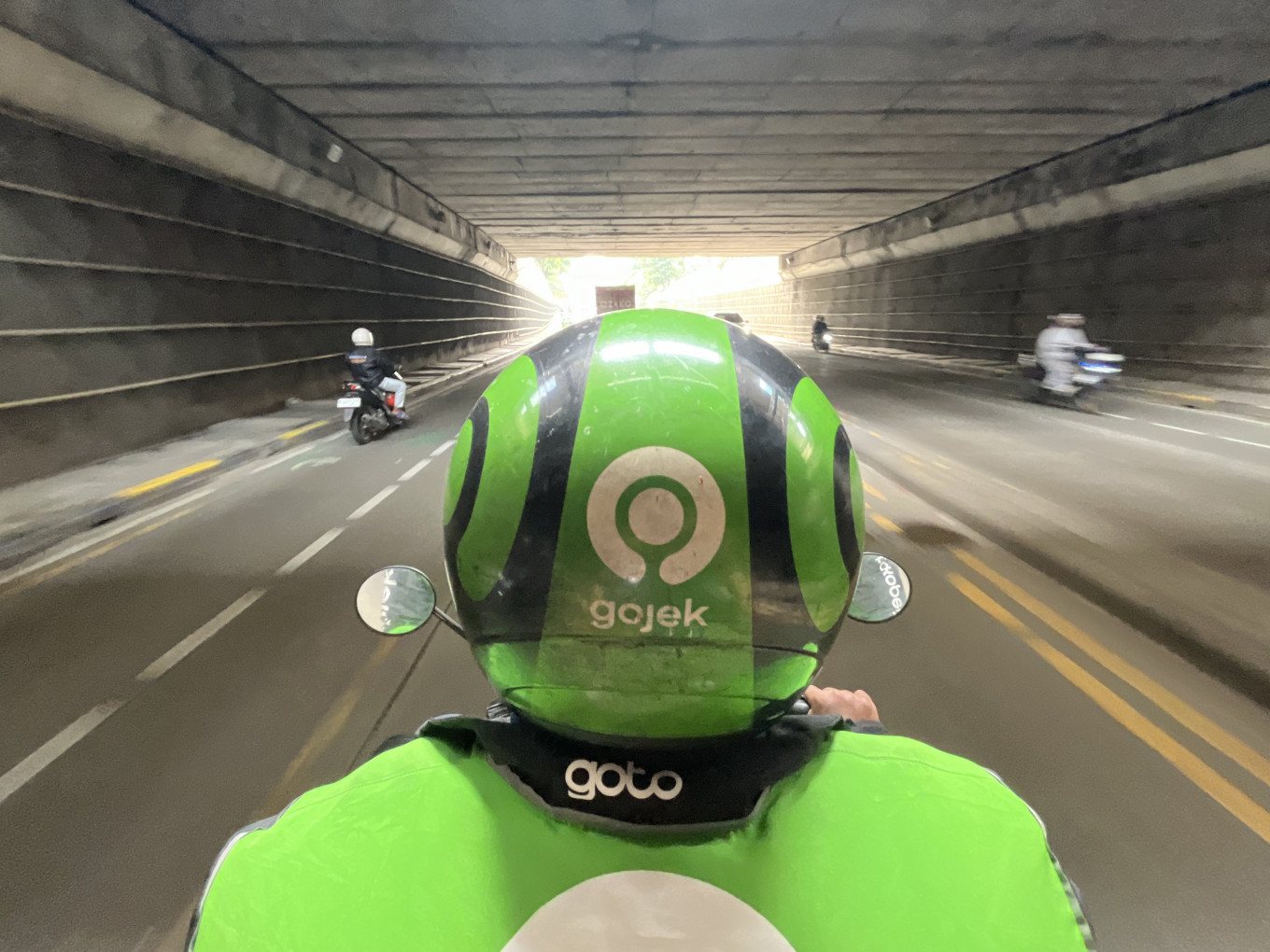 An online motorcycle taxi rider passes through the Casablanca area in South Jakarta, on May 10, 2026. (JP/Iqro Rinaldi)
O
n May Day, in front of labor union representatives at the Senayan Legislative Complex in Central Jakarta, Deputy House of Representatives Speaker Sufmi Dasco announced that state asset fund Danantara had acquired stakes in ride-hailing platforms and would use that shareholding to push to cut commissions that companies take from drivers to 8 percent from 20 percent. He framed it as a "victory" for labor.
It is a study in how a government can use a state asset fund to bypass every institution designed to prevent this kind of decision from being made in the dark.
No legislative committee approved this acquisition. No public interest test was conducted. The acquisition price has not been disclosed. The legal basis for using an equity stake to dictate commercial pricing has not been established. And the conflict of interest created by the state owning shares in both dominant platforms, while asking those platforms to align their pricing, has not been acknowledged, let alone resolved.
Some context is necessary. Telkomsel, majority-owned by state-owned telecommunications operator Telkom, injected US$450 million into GoTo between 2020 and 2021. GoTo's stock collapsed after its April 2022 IPO, and Telkom's filings recorded an unrealized loss of Rp 474 billion ($26 million) as of Q3 2024. The Attorney General's Office confirmed in November 2025 it is investigating the investment for alleged violations of good corporate governance principles, with no accountability to date. Danantara, capitalized by state asset transfers and state-owned enterprises SOEs) dividends, now enters the same company's share register at an undisclosed price, with no explanation as to whether that pricing bears any relationship to Telkomsel's losses under prosecutorial review.
The Jakarta Post's editorial in July 2025, warned that when Danantara bypasses normal institutional processes, it removes the transparency those processes were designed to provide, because the funds are public money. Nowhere in Danantara’s mandate is there authority to function as a pricing regulator for private commercial platforms. When Dasco described using Danantara's shareholding to set fare structures across the ride-hailing industry, he was describing a “regulatory act performed by an investment body”, without legal authorization, due process or public consultation.
The institutional design of Danantara compounds this problem. Under Article 24 of Government Regulation No. 10/2025, oversight is entirely subject to the President's authority, the same executive that authorized the ride-hailing acquisition. A constitutional petition filed in March 2025, argued that Law No. 1/2025 on SOEs weakens public accountability in ways that could impede corruption oversight, because no independent institutional check is structurally guaranteed.

The Oversight and Accountability Committee lacks explicit parameters for its composition, authority, or function in the enabling law itself. These are the precise vulnerabilities that allowed Malaysia's 1MDB to become one of the largest sovereign fund scandals in history.