The Jakarta Post
Please Update your browser
Your browser is out of date, and may not be compatible with our website. A list of the most popular web browsers can be found below.
Just click on the icons to get to the download page.


Popular Reads
Top Results
No results found. Please check your search term and try again
Can't find what you're looking for?
View all search results
Popular Reads
Top Results
No results found. Please check your search term and try again
Can't find what you're looking for?
View all search resultsA test of legal certainty: Prabowo's impasse over the Andrie case
As President Prabowo finds himself in an international spotlight over a brutal chemical attack on a human rights defender, a landmark pretrial ruling has exposed a deep systemic clash between civilian accountability and entrenched military impunity.
Change text size
Gift Premium Articles
to Anyone
Share the best of The Jakarta Post with friends, family, or colleagues. As a subscriber, you can gift 3 to 5 articles each month that anyone can read—no subscription needed!
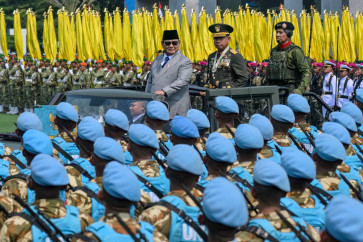
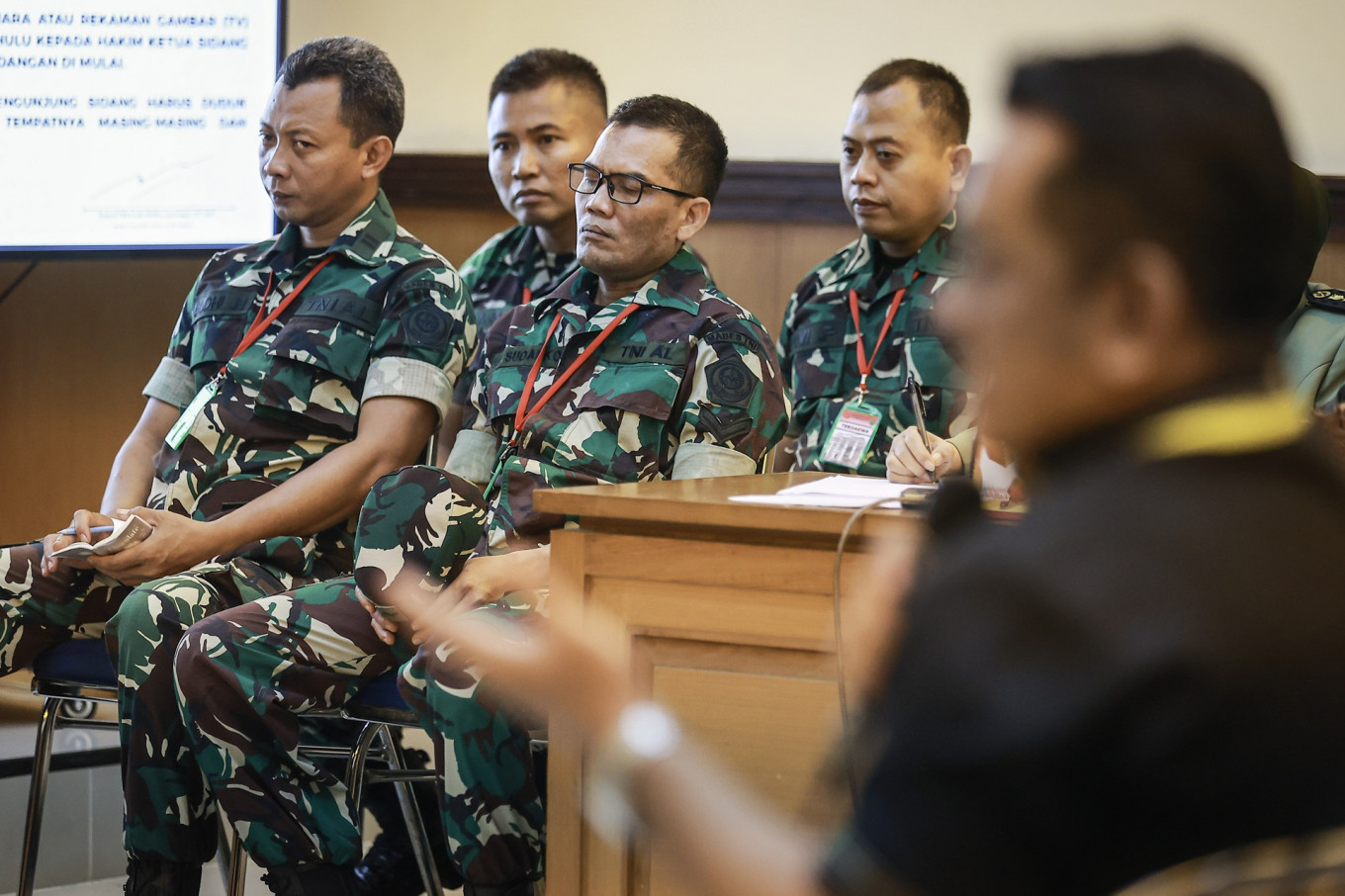 (From left to right) Defendants First Lt. Budhi Harytanto Cahyono, First Lt. Sami Lakka, Second Sgt. Edi Sudarko and Capt. Nandala Dwi Prasetya attend a hearing against them on June 2, 2026, regarding the acid attack on Commission of Missing Persons and Victims of Violence (Kontras) activist Andrie Yunus, at the Jakarta Military Court in Jakarta. (Antara/Dhemas Reviyanto)
T
he principle of legal certainty in Indonesia faces a critical turning point following a landmark pretrial ruling issued by Judge Suparna at the South Jakarta District Court. The court explicitly ordered the Jakarta Police to resume the legal process regarding the acid attack on human rights defender Andrie Yunus.
The mandate is significant given that the attack involved active-duty military personnel from the Indonesian Military’s Strategic Intelligence Agency (BAIS). Judge Suparna held that the police's transfer of case files and physical evidence to the Military Police triggered severe legal confusion in the public sphere. This handover, the judge reasoned, generated the wrong perception that police jurisdiction and investigative obligations had effectively ended. Yet, testimony at trial indicated that the police had never issued a formal order terminating the investigation.
While the Advocacy Team for Democracy (TAUD), acting as legal counsel for the victim, interpreted this investigative delay as a covert mechanism to suppress the inquiry, the court framed the issue as a failure of internal police communication. The fact that investigative progress stalled entirely after the evidence transfer in March 2026 highlights systemic shortcomings that directly undermine the victim’s right to legal certainty.
This pretrial decision sets an invaluable legal precedent by establishing that the civilian police can be held accountable for undue delays in handling a case. Beyond that, the ruling also helps break a public impasse regarding jurisdictional boundaries in a highly sensitive context -occurring at a time when Military Court II-08 is simultaneously trying four servicemen who are alleged to have been the perpetrators in the field.
The structural limitations of the ongoing military justice system reinforce why a narrow, sectoral legal approach cannot satisfy the demands of material justice. An independent field investigation conducted by TAUD, based on a comprehensive mapping of 34 surveillance camera (CCTV) points at the incident site and along the route taken by the perpetrators before the attack indicates that the assault was not the product of spontaneous animosity. Instead, it points to a planned operation involving at least 16 individuals operating with specific roles, ranging from execution and guarding to reconnaissance, location mapping and communication monitoring.
These empirical findings correlate strongly with reports from the National Commission on Human Rights (Komnas HAM), which documented at least 14 interconnected, unidentified individuals operating around the Indonesian Legal Aid Foundation (YLBHI) headquarters on the night of the attack, March 12. Backed by evidence of suspicious vehicle coordinates and radio-frequency tracking devices, Komnas HAM concluded that the attack on Andrie was not a spontaneous act of individual grievance, but rather a systematic operation conducted within an intelligence framework.

Furthermore, another independent investigative outcome suggests the possible involvement of civilian personnel in the operation. Drawing on information from within policing circles, this investigation reveals allegations that an IT specialist functioning as the operation's hacker is of civilian background.