The Jakarta Post
Please Update your browser
Your browser is out of date, and may not be compatible with our website. A list of the most popular web browsers can be found below.
Just click on the icons to get to the download page.


Popular Reads
Top Results
No results found. Please check your search term and try again
Can't find what you're looking for?
View all search results
Popular Reads
Top Results
No results found. Please check your search term and try again
Can't find what you're looking for?
View all search resultsPSN in Papua needs more indigenous entrepreneurs
True economic acceleration in Papua won’t come from pouring trillions into mega-projects—it requires building an army of local indigenous entrepreneurs to own them.
Change text size
Gift Premium Articles
to Anyone
Share the best of The Jakarta Post with friends, family, or colleagues. As a subscriber, you can gift 3 to 5 articles each month that anyone can read—no subscription needed!
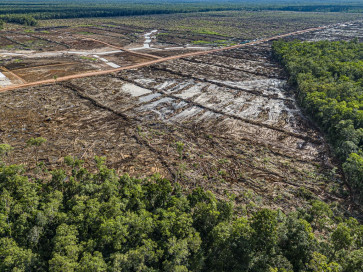
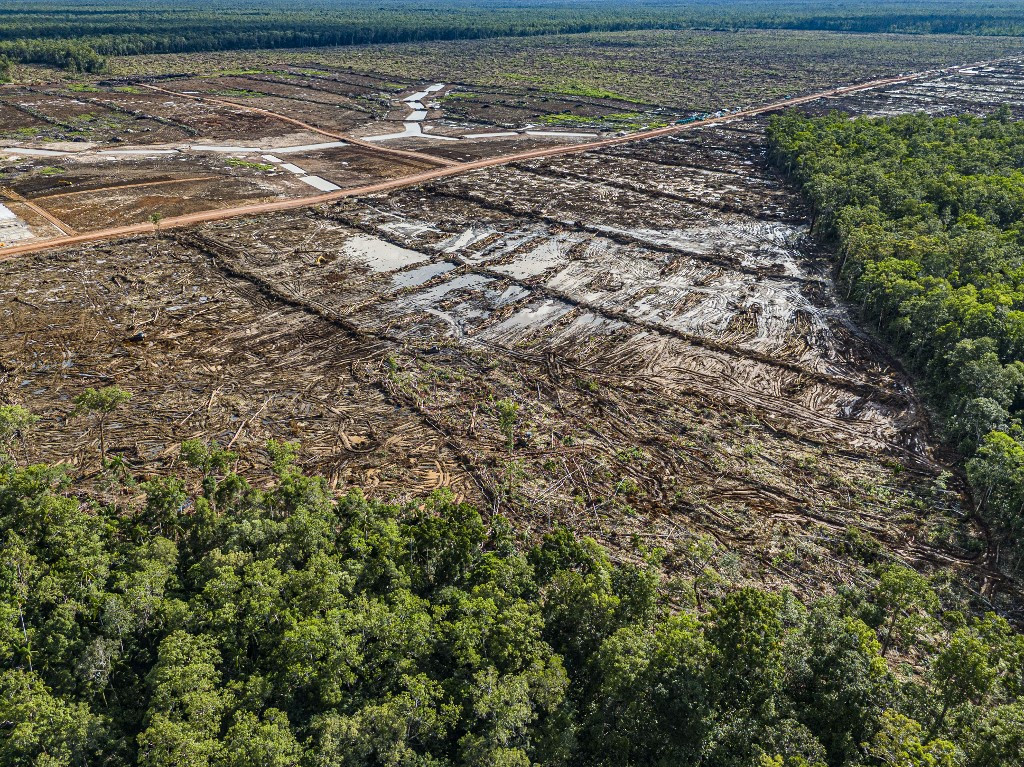 A deforested area to be converted into a sugar cane plantation by PT Murni Nusantara Abadi, encroaches upon the adjacent customary forest protected by the Kwipalo Clan on March 17, 2025, in Mandiri Jagebob, Merauke regency, South Papua. (AFP/Handout/Mighty Earth/Yusuf Wahil)
P
apua’s development acceleration will not happen merely because the government builds more infrastructure, increases public spending or launches more national strategic projects (PSN).
From an economic perspective, true development acceleration occurs only when public investment creates a meaningful multiplier effect inside the local economy. Every rupiah spent through special autonomy funds, food security programs, healthcare, education and infrastructure projects must circulate through local production, local suppliers, local employment and indigenous enterprise ownership.
Currently, Papua’s economic landscape reveals a profound structural imbalance that disadvantages indigenous Papuan (OAP) entrepreneurs. This is not due to a lack of capability or drive, but because they face systemic barriers that their non-OAP competitors do not. Research on indigenous entrepreneurship consistently shows that in post-colonial economies, marginalized groups operate within institutional systems that were simply not built for them—systems that demand forms of cultural, bureaucratic and financial capital that are far harder for them to access.
In Papua specifically, institutional weaknesses, limited capacity building and transitional governance structures continue to constrain inclusive participation in strategic sectors. This structural exclusion was highlighted in a 2025 study by the Marine Affairs and Fisheries Ministry regarding PSN implementation.
Furthermore, research by Setiadi and Sumini demonstrates how rapid industrialization and large-scale in-migration often push indigenous Papuans to the margins of local economies, allowing incoming groups to dominate the business and service sectors even when corporations claim to prioritize local inclusion.
These findings reinforce a critical truth: the underrepresentation of OAP entrepreneurs is rooted not in a deficit of talent, but in historic structural disadvantages that dictate who gets access to networks, capital and institutional support.

This is why OAP entrepreneurs are not merely a supplementary part of Papua’s development strategy—they are a necessary economic institution for development acceleration itself. Without them, government programs risk becoming externally delivered projects rather than locally owned economic engines. OAP entrepreneurs convert public spending into household income, sustainable job creation, local value chains and community trust. By reducing transaction costs between state programs and local communities, they secure the "social license" to operate, shifting the perception of indigenous Papuans from passive beneficiaries to active producers, suppliers and owners.