The Jakarta Post
Please Update your browser
Your browser is out of date, and may not be compatible with our website. A list of the most popular web browsers can be found below.
Just click on the icons to get to the download page.


Popular Reads
Top Results
No results found. Please check your search term and try again
Can't find what you're looking for?
View all search results
Popular Reads
Top Results
No results found. Please check your search term and try again
Can't find what you're looking for?
View all search resultsAnalysis: Lemigas’ new import power risks overlap in energy procurement roles
Change text size
Gift Premium Articles
to Anyone
Share the best of The Jakarta Post with friends, family, or colleagues. As a subscriber, you can gift 3 to 5 articles each month that anyone can read—no subscription needed!
 Set as preferred source
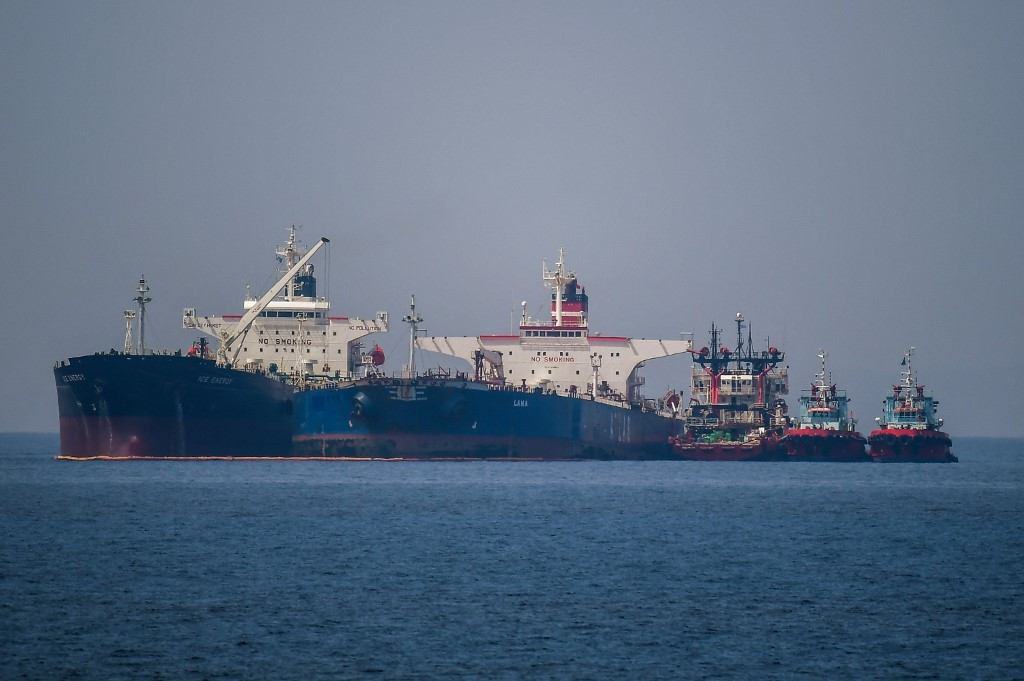 The Liberian-flagged oil tanker Ice Energy (left) transfers crude oil from the Russian-flagged oil tanker Lana (right) (former Pegas), off the shore of Karystos, on the Island of Evia, on May 29, 2022. (AFP/Angelos Tzortzinis)
T
he administration of President Prabowo Subianto has issued Presidential Regulation (Perpres) No. 26/2026, which expands the role of public service agencies (BLU) in energy imports, blurring the traditional boundaries between government agencies, state-owned enterprises (SOEs) and private sector players. While the new regulation appears intended to strengthen Indonesia’s energy security amid growing global uncertainties, it could create overlapping responsibilities, increase operational risks and expose the country to greater geopolitical pressures.
Article 2 of the Perpres states that the regulation’s aim is to maintain good governance in the procurement of crude oil, fuel oil (BBM) and liquefied petroleum gas (LPG), whether sourced domestically or imported. It also seeks to improve the continuity, reliability and resilience of the national energy supply.
Under Article 4, imports of oil and gas products, including gasoline and LPG, may be conducted through agreements between Indonesia and foreign governments, cooperation between the government and foreign energy producers or partnerships between domestic energy companies and overseas suppliers, subject to certain restrictions.
Article 4 further stipulates that imports under bilateral cooperation schemes may be executed either by energy SOEs such as Pertamina or by the Oil and Gas Testing Center (Lemigas) of the Energy and Mineral Resources Ministry. It also authorizes the government to direct Lemigas to import oil and gas products to support strategic energy reserves and operational stockpiles.
During emergencies, Article 5 allows Lemigas and energy SOEs to independently procure oil and gas if domestic supplies are disrupted by geopolitical developments, price surges due to supply fluctuations or domestic reserves fall below established thresholds. The article also permits import contracts to include price differences based on volume, product type, country of origin and delivery schedules.
Meanwhile, Article 9 allows Lemigas, energy SOEs and private energy companies to import oil and gas products for storing in Free Trade and Free Port Zones (KPBPB) such as Batam or at bonded logistics centers (PLB). These facilities provide logistics and storage services while allowing deferred payment of selected duties, taxes and excise.

Granting Lemigas the authority to import oil and gas products marks a significant departure from the center’s traditional role. Historically, Lemigas has focused on research, certification, consulting, field surveys and testing services for the oil and gas industry.