The Jakarta Post
Please Update your browser
Your browser is out of date, and may not be compatible with our website. A list of the most popular web browsers can be found below.
Just click on the icons to get to the download page.


Popular Reads
Top Results
No results found. Please check your search term and try again
Can't find what you're looking for?
View all search results
Popular Reads
Top Results
No results found. Please check your search term and try again
Can't find what you're looking for?
View all search resultsWhen drought breeds doubt
As El Niño intensifies, this year's dry season has already triggered severe water shortages and rampant wildfires in an emerging crisis that will serve as a high-stakes litmus test for the food security agenda and climate adaptation policies of the Prabowo administration.
Change text size
Gift Premium Articles
to Anyone
Share the best of The Jakarta Post with friends, family, or colleagues. As a subscriber, you can gift 3 to 5 articles each month that anyone can read—no subscription needed!
 Set as preferred source
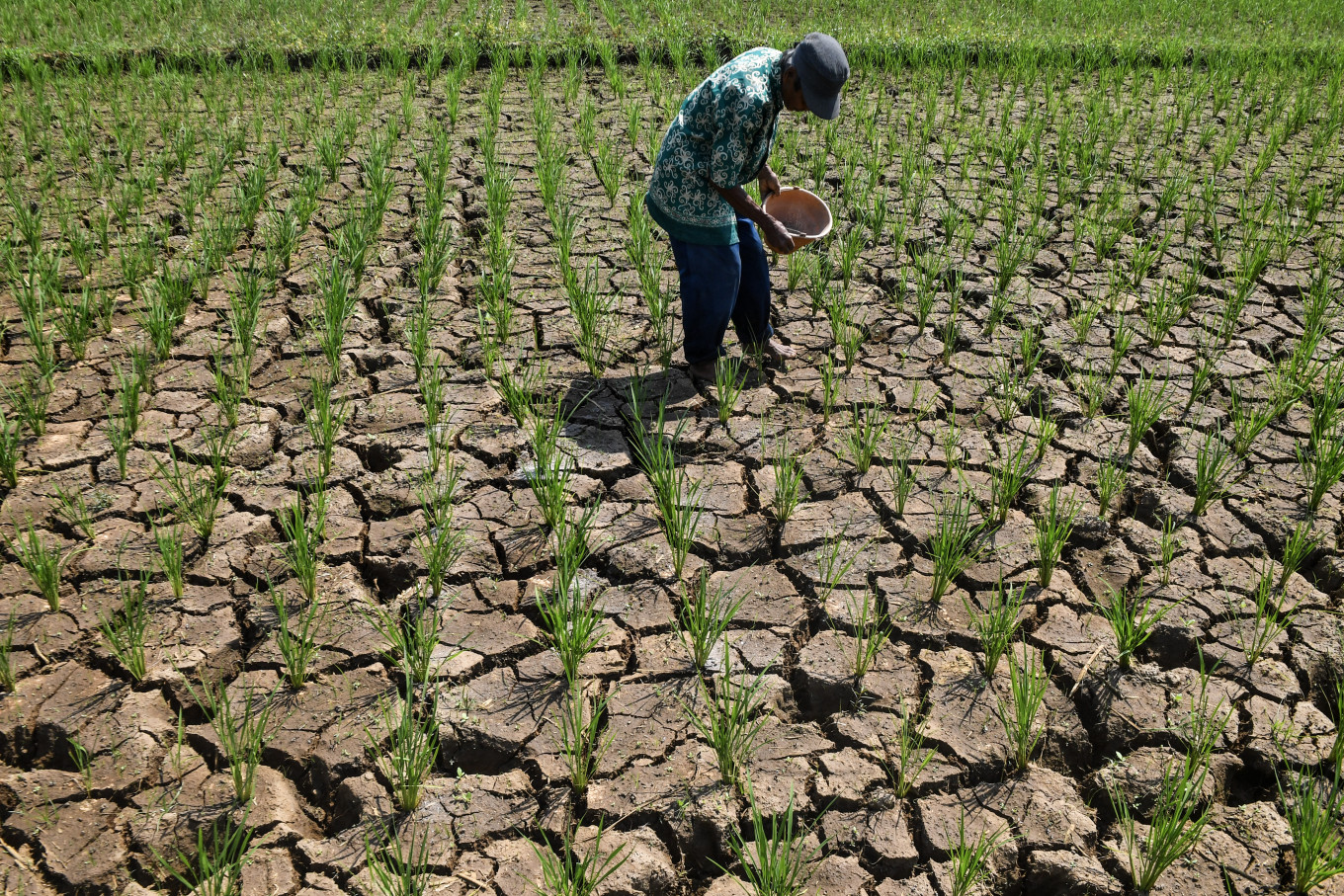 A farmer applies urea to paddy on June 10, 2026, at a drought-affected rice farm in Handapherang village, Ciamis regency, West Java, where around 12 hectares of rice fields have been left parched and cracked as the dry season intensifies. (Antara/Adeng Bustomi)
M
ost of the country has entered the dry season, which is forecast to be significantly longer and harsher than last year’s due to a severe El Nino event.
In several regions, the immediate impact of the climate phenomenon is already weighing heavily on thousands of people. Parts of Java, for instance, are struggling with acute clean water shortages, forcing local authorities to resort to emergency measures like trucking and rationing water to desperate communities.
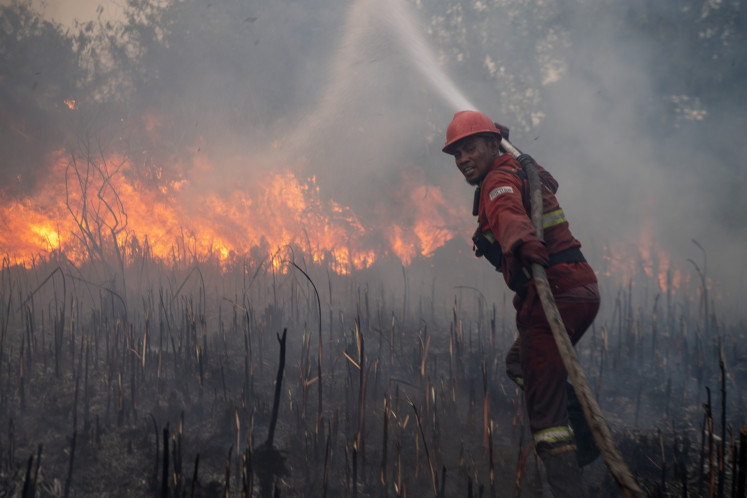
Further north, Kalimantan and Sumatra are suffering from forest and peatland fires that have multiplied rapidly over the last few months. Official records show wildfires have burned through 81,000 hectares of land this year to date, nearly eight times the 11,000 ha recorded during the same period last year.
Yet severe droughts and rampant wildfires are merely the tip of the iceberg. With El Nino predicted to intensify to a moderate or strong level by the third quarter, concerns are growing over its potential impact on national agricultural yields. The current projections carry a grim echo of the devastating 1997-1998 dry season, when a record El Nino event caused massive crop failures that exacerbated the financial crisis endured by millions of Indonesians.
This dry season will be the first real test for President Prabowo Subianto’s administration, which has constantly reassured the public that national food reserves are secure. While they may be stable for now, a prolonged drought, compounded by global supply chain disruptions from ongoing geopolitical conflicts, will undoubtedly push Indonesia’s food security into a corner.
Furthermore, this dry season will offer a stark preview of the coming decades as more frequent, intense heat waves driven by global warming morph into a new normal. Climate projections universally warn that the planet is warming at an unprecedented pace to break temperature records in years, if not months.

Beyond global statistics, a warming planet has immediate human costs, including heightened risks of heat-related illnesses. In the long term, the threats of severe droughts, wildfires and crop failures will rise exponentially with every fraction of a degree the temperature rises.