TheJakartaPost
Please Update your browser
Your browser is out of date, and may not be compatible with our website. A list of the most popular web browsers can be found below.
Just click on the icons to get to the download page.


Popular Reads
Top Results
No results found. Please check your search term and try again
Can't find what you're looking for?
View all search results
Popular Reads
Top Results
No results found. Please check your search term and try again
Can't find what you're looking for?
View all search resultsHormuz oil shock echoes 1973 embargo lessons
The Hormuz crisis has pushed nations to rethink their energy strategies. Does that mean we should expect a dramatic reduction in fossil fuel use?
Change text size
Gift Premium Articles
to Anyone
Share the best of The Jakarta Post with friends, family, or colleagues. As a subscriber, you can gift 3 to 5 articles each month that anyone can read—no subscription needed!
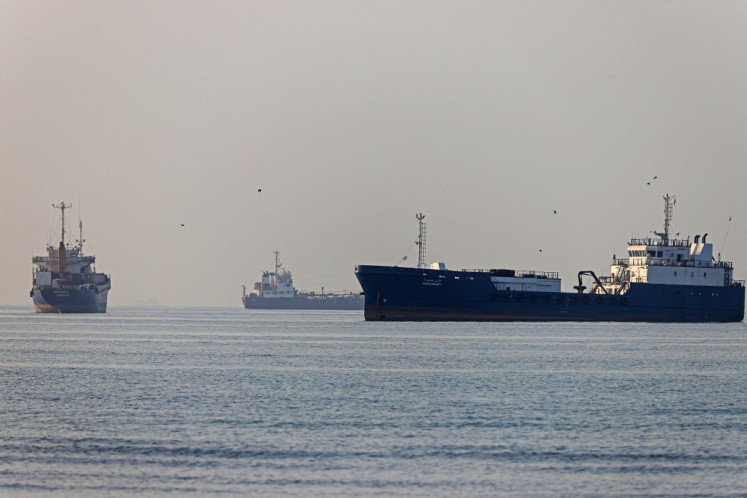
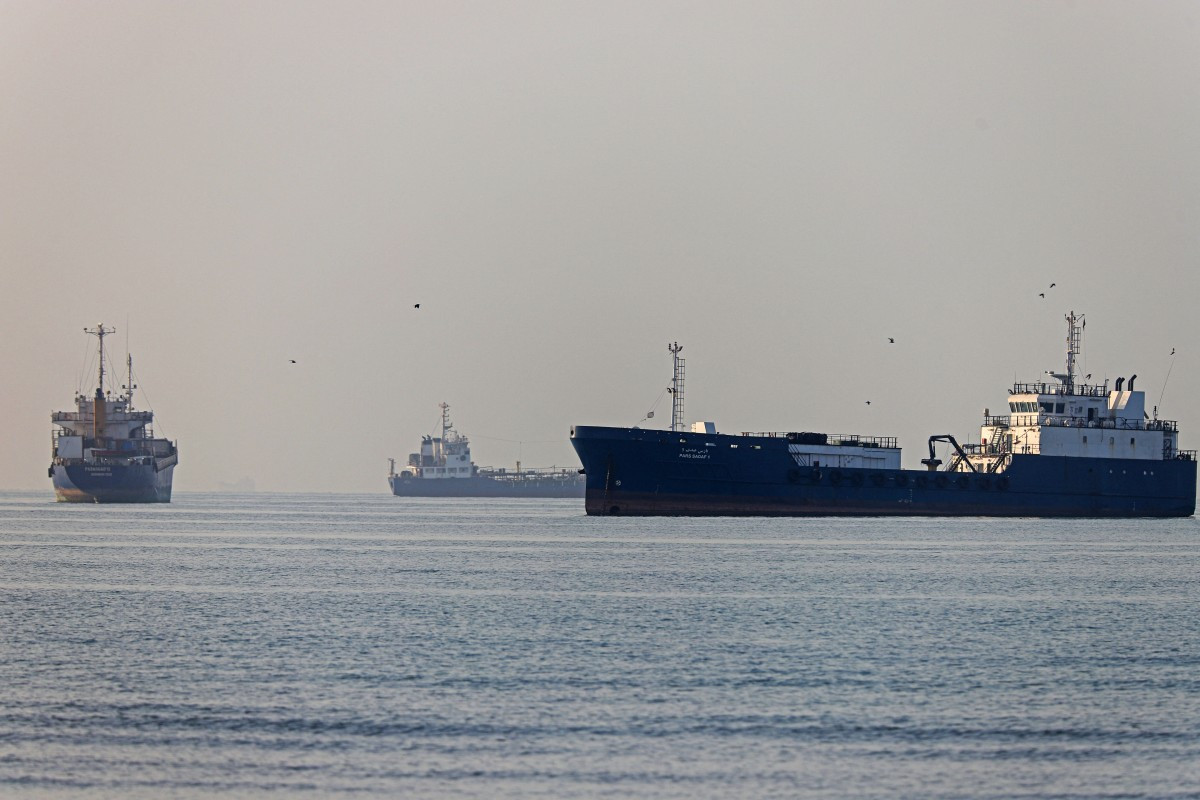 In this picture obtained from Iran's ISNA news agency on June 1, 2026, vessels sail past Suru Beach in Bandar Abbas along the Strait of Hormuz. (AFP/ISNA/Amirhossein Khorgooei)
W
hile oil and gas are once again flowing through the Strait of Hormuz, the closure of the vital waterway for over 100 days could prove to be a turning point in global energy markets. The Arab oil embargo of 1973, a similarly disruptive supply shock, offers clues about where we might be headed.
The latest Middle East crisis tested the limits of the modern energy system, which has evolved over recent decades into a highly interconnected global market held together by thousands of tankers, trading houses and complex pricing systems.
This system proved remarkably adaptable during the United States-Israeli war with Iran. Yet this shock was far from painless, particularly in Asia, which depends on the Middle East for 60 percent of its oil and gas imports.
The Hormuz crisis has pushed nations to rethink their energy strategies. Does that mean we should expect a dramatic reduction in fossil fuel use?
Comparing today's crisis to the Arab oil embargo suggests that the path forward will be more complicated than that, but the crisis could ultimately mark the beginning of the end of the oil era.
A defining moment in the age of oil came when Arab members of the Organization of the Petroleum Exporting Countries imposed an oil embargo on the US and other Western countries supporting Israel after the 1973 Yom Kippur war. This quadrupled oil prices almost overnight, triggering a global inflation shock and creating wide-reaching implications.

First, it drove governments and businesses to curb fuel consumption. US drivers shifted to smaller, more efficient Japanese cars as Washington imposed fuel economy standards. European automakers pushed diesel engines, and heavy industry moved away from fuel oil toward coal and gas.
More broadly, Western countries accelerated the development of domestic oil and gas resources, particularly in offshore basins.
The crisis also prompted the formation of the International Energy Agency in 1974 to coordinate global responses to major oil disruptions, including the management of newly created national strategic petroleum reserves.
Overall, it did not cause economies to abandon fossil fuels, but rather to use them more carefully.
Fast forward to 2026, and a similar adjustment appears to be underway. But unlike the 1970s, there are now readily available, cost-competitive alternatives to fossil fuels that could erode oil and gas consumption.
Asia initially responded to the Hormuz closure with dramatic measures, including four-day weeks, mandatory work-from-home policies and restrictions on air and car travel. Some industries were also forced to shut down capacity because of energy shortages.
But these were emergency measures, meant to be reversed once oil flows normalized.
What matters more are the structural changes that could determine how the world's fastest-growing energy market powers itself in the years ahead.
Asian economies have long focused on securing the cheapest energy to drive growth. The lesson of Hormuz is that energy security trumps everything, including cost. To that end, countries like India and Pakistan will now invest in domestic oil reserves, following IEA members and China.
Major energy importing nations, including India, Pakistan and Japan, are also looking to reduce their exposure to oil and gas by accelerating investment in domestic renewables, nuclear and even coal.
In South Korea, a major petrochemical and industrial powerhouse, President Lee Jae Myung in April called for efforts to explore alternative supply chains, pursue mid- to long-term industrial restructuring and move toward a "plastic-free economy" to be promoted as key national projects.
Europe was not hit as hard by the Iran crisis, but the continent has now endured two major energy supply shocks in under five years.
After Russia's invasion of Ukraine in 2022, Europe was forced to rapidly replace sanctioned energy supplies, sending gas prices soaring and triggering a painful contraction in consumption as countries introduced energy-saving measures. Energy-intensive industries, including chemicals, glass and steel, also shriveled, as fuel costs made them uncompetitive globally.
European gas demand dropped by over 20 percent between 2021 and 2023 and has only recovered modestly since then, while renewables have become a bigger part of the continent’s energy mix. The latest shock looks set to accelerate this trend.
Capital is already following these new energy priorities globally.
Despite the destabilizing effect of the Middle East conflict, global energy investment is expected to reach US$3.4 trillion this year, up 5 percent from 2025, according to the IEA's World Energy Investment report.
Much of that spending is flowing into alternatives to oil and gas and system resilience. That suggests the move away from oil is gaining traction, if only at the margins.
Electric vehicle sales surged in the first quarter of 2026, rising by 30 percent year-on-year in Europe, 75 percent in Latin America and 80 percent in Asia Pacific, according to the IEA. Solar trade flows tell a similar story, with Chinese panel exports jumping by 120 percent to Africa and 150 percent to Southeast Asia.
In Africa, 15 countries reported record solar imports of more than $400 million in the first quarter alone, compared with $650 million for all of 2025.
Energy efficiency is also moving higher on the policy agenda. Global spending in this area already stands at around $350 billion per year, and the scope of such policies continues to broaden. The IEA estimates that roughly 20 countries have announced new efficiency measures in direct response to the Hormuz crisis.
This is not to say that oil and gas will soon be displaced from the center of the global energy system. Oil remains deeply embedded in transportation, agriculture and construction, while rising electricity demand, fueled by industrial expansion, air conditioning and AI data centers, is reinforcing the role of gas.
The question is about direction. For much of the last century, the direction of travel for fossil fuel use was invariably up and to the right. The Hormuz crisis may change that.
---
The writer is a columnist for Reuters. The views expressed are personal.