The Jakarta Post
Please Update your browser
Your browser is out of date, and may not be compatible with our website. A list of the most popular web browsers can be found below.
Just click on the icons to get to the download page.


Popular Reads
Top Results
No results found. Please check your search term and try again
Can't find what you're looking for?
View all search results
Popular Reads
Top Results
No results found. Please check your search term and try again
Can't find what you're looking for?
View all search resultsWhen two nations begin to build together
Beyond the standard headlines of trade and defense, the genuine warmth between Modi and Prabowo signals a profound shift from transactional diplomacy to a resilient, co-developed future for India and Indonesia.
Change text size
Gift Premium Articles
to Anyone
Share the best of The Jakarta Post with friends, family, or colleagues. As a subscriber, you can gift 3 to 5 articles each month that anyone can read—no subscription needed!
 Set as preferred source
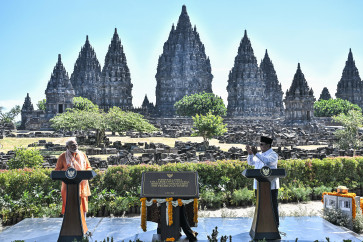
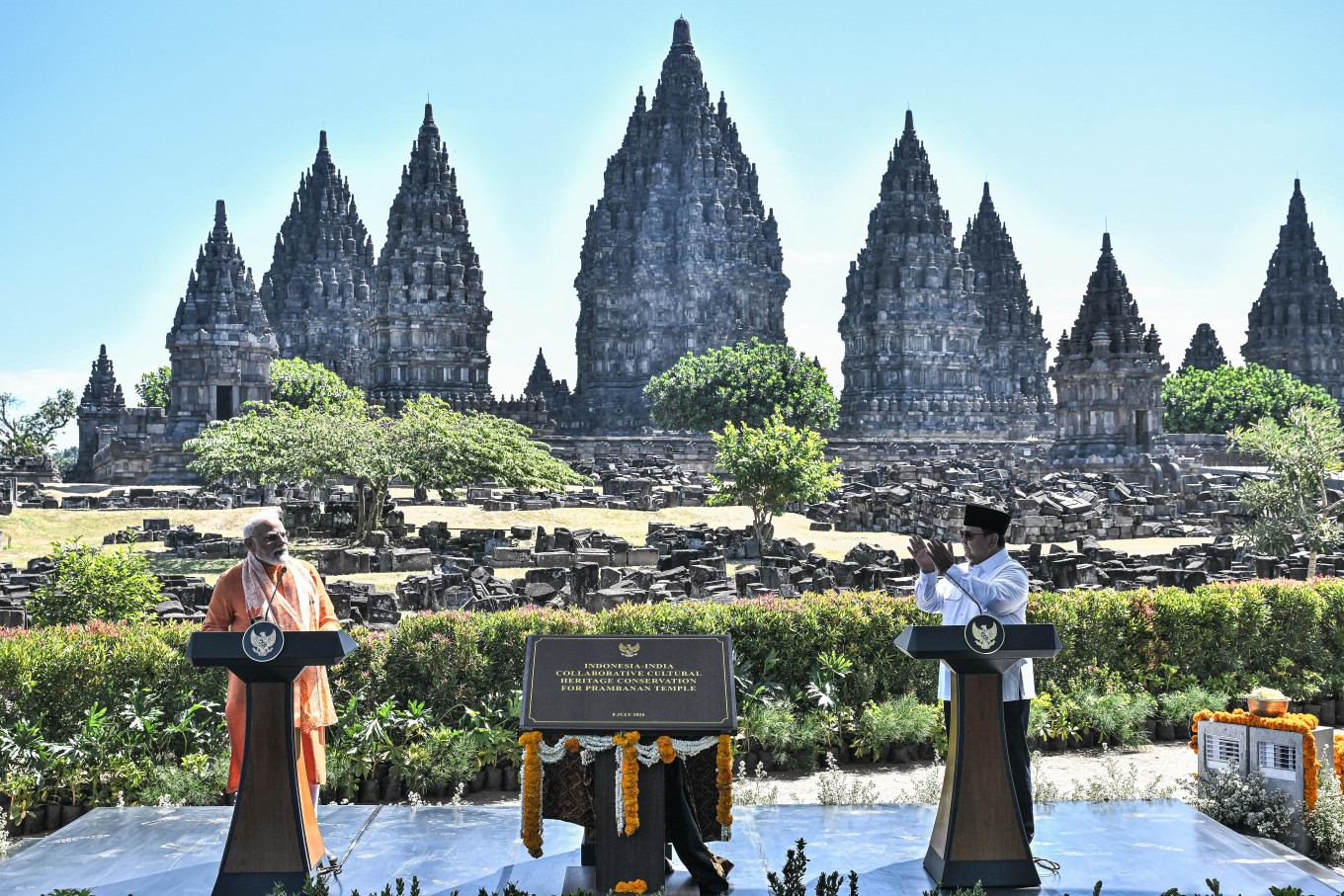 President Prabowo Subianto (right) and Indian Prime Minister Narendra Modi deliver remarks during the launch of a cultural heritage conservation and restoration partnership at the Prambanan Temple complex in Sleman, Yogyakarta, on July 8, 2026. The two leaders visited the UNESCO World Heritage site to review and advance bilateral cooperation on the restoration and conservation of the Prambanan temple complex. (Antara/Bayu Pratama S.)
A
single moment this week captured a profound shift in Asian geopolitics. Speaking to thousands of gathered citizens on a Tuesday afternoon, President Prabowo Subianto cracked a familiar joke about possessing Indian DNA. The playful remark, while not literal, evoked an instant warmth, illustrating a civilizational connection through culture, trade and ideas that flourished centuries before modern diplomacy gave it a name.
The warm exchanges between Indian Prime Minister Narendra Modi and President Prabowo felt less like a formal bilateral summit and more like a meeting of long-time partners. President Prabowo repeatedly affirmed his admiration for the Indian leader, while Prime Minister Modi emphasized their close personal chemistry. The interaction signaled an underlying reality: New Delhi and Jakarta have quietly entered an era of deep institutional comfort.
Predictably, official headlines focused on the core pillars of modern diplomacy: trade, defense, health care, critical minerals, education, digital payments and investment. While these metrics are vital, the defining narrative of the state visit transcended the standard joint statement. It revealed two major democracies increasingly capable of co-authoring a shared regional future.
This cooperative spirit surfaced during a lighthearted exchange when President Prabowo noted that Indonesia had drawn inspiration from several of India’s successful public initiatives, adding that he was fortunate there was no copyright on good ideas. Prime Minister Modi responded that innovations meant to improve human lives should never be confined by borders.
Beneath the humor lies a strategic transition: India and Indonesia are moving past transactional diplomacy toward a relationship anchored in shared institutional capability and deep mutual trust.
This evolution is particularly visible in health care, a sector historically defined by dependency. For decades, complex medical treatments required affluent Indonesians to travel to Singapore or Malaysia. Today, a growing number choose India for its specialized expertise and affordability.

However, the more significant transformation is happening within Indonesia itself. Modern hospital partnerships between the two nations have evolved past mere patient referrals toward building domestic capacity.