The Jakarta Post
Please Update your browser
Your browser is out of date, and may not be compatible with our website. A list of the most popular web browsers can be found below.
Just click on the icons to get to the download page.


Popular Reads
Top Results
No results found. Please check your search term and try again
Can't find what you're looking for?
View all search results
Popular Reads
Top Results
No results found. Please check your search term and try again
Can't find what you're looking for?
View all search resultsWhat Nusantara can learn from Xiong'an's urban journey
As Indonesia builds its new capital from scratch, China’s "city of the future" offers a powerful blueprint for turning ambitious green dreams into a sustainable urban reality.
Change text size
Gift Premium Articles
to Anyone
Share the best of The Jakarta Post with friends, family, or colleagues. As a subscriber, you can gift 3 to 5 articles each month that anyone can read—no subscription needed!
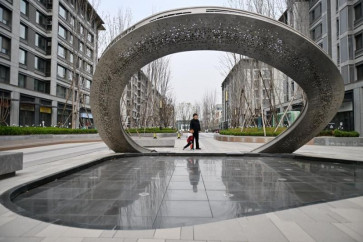
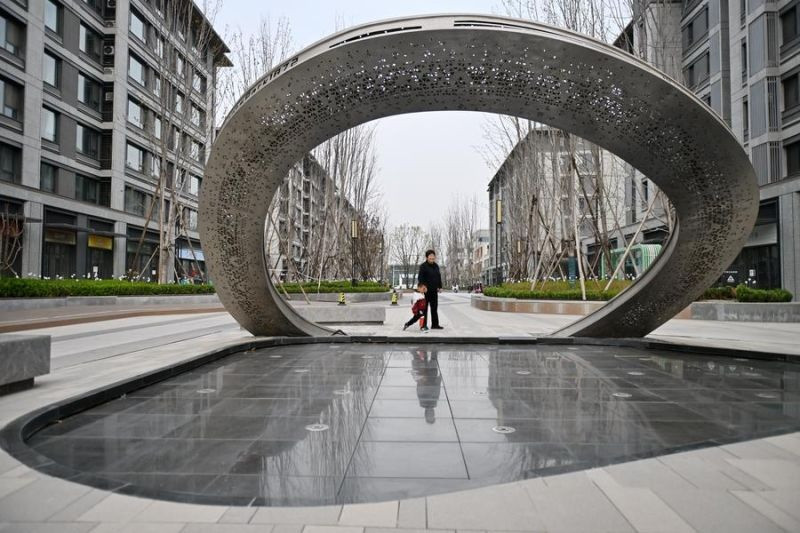 Local people spend their leisure time on March 26, 2025, in a residential community within the startup zone of Xiong'an New Area, located in northern China's Hebei Province. (Antara/Xinhua/Mu Yu)
A
recent conversation with my long-time friend, Harryanto Aryodiguno, an Indonesian scholar, quickly drifted from his academic research to a question that has long occupied both of our minds: What does a "city of the future" actually look like?
Harryanto, who has made several field trips to Nusantara in East Kalimantan, Indonesia’s planned new capital, drew a parallel between our respective nations' urban ambitions. "Just as China established the Xiong’an New Area to relieve capital functions from Beijing, Indonesia plans to shift its national capital from overcrowded Jakarta to Nusantara," he noted.
We both agreed on a fundamental premise: if a city is not green, it cannot claim to represent the future.
Unveiled in 2019, Nusantara is envisioned by the Indonesian government as a smart, sustainable "forest city" designed to achieve net-zero emissions by 2045. However, translating this vision into reality poses immense logistical challenges. As Totok Sulistiyatno Wardoyo, a member of the Global Buildings Performance Network expert team providing technical advice to the project, once observed: "The biggest challenge is working to achieve net-zero in the new capital city using various technologies and resources that are already there."
This dilemma reminds me of an observation made by my husband, an engineer whose company is relocating to Xiong’an. Returning from a three-day inspection trip to the new city, I asked him what had left the deepest impression.
"The green," he replied, describing parks integrated into every neighborhood, trees planted as structural elements rather than mere decorations, and air that did not taste like a typical metropolis. As someone who prioritizes systemic efficiency, his praise for the "green landscape" was fundamentally an appreciation of an urban ecosystem operating in harmony with nature.

As a journalist covering China’s urban development, I know this harmony has been the core objective for Xiong’an’s planners from the outset. Established in 2017, the Xiong'an New Area was designed to relieve Beijing of functions non-essential to its role as the national capital, while advancing the coordinated development of the Beijing-Tianjin-Hebei region.