TheJakartaPost
Please Update your browser
Your browser is out of date, and may not be compatible with our website. A list of the most popular web browsers can be found below.
Just click on the icons to get to the download page.


Popular Reads
Top Results
No results found. Please check your search term and try again
Can't find what you're looking for?
View all search results
Popular Reads
Top Results
No results found. Please check your search term and try again
Can't find what you're looking for?
View all search resultsDon’t cry for Messi, Argentina
Defined by controversial refereeing, political tensions and record-breaking scoring, the just-concluded 2026 World Cup proved to be as compelling off the pitch as it was on it.
Change text size
Gift Premium Articles
to Anyone
Share the best of The Jakarta Post with friends, family, or colleagues. As a subscriber, you can gift 3 to 5 articles each month that anyone can read—no subscription needed!
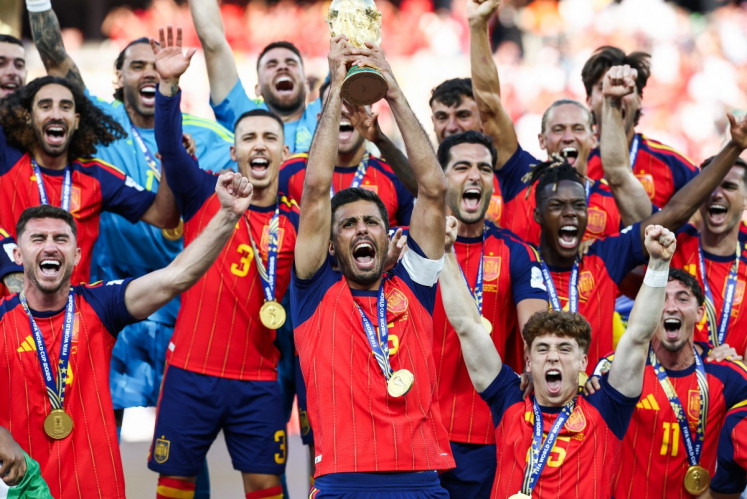
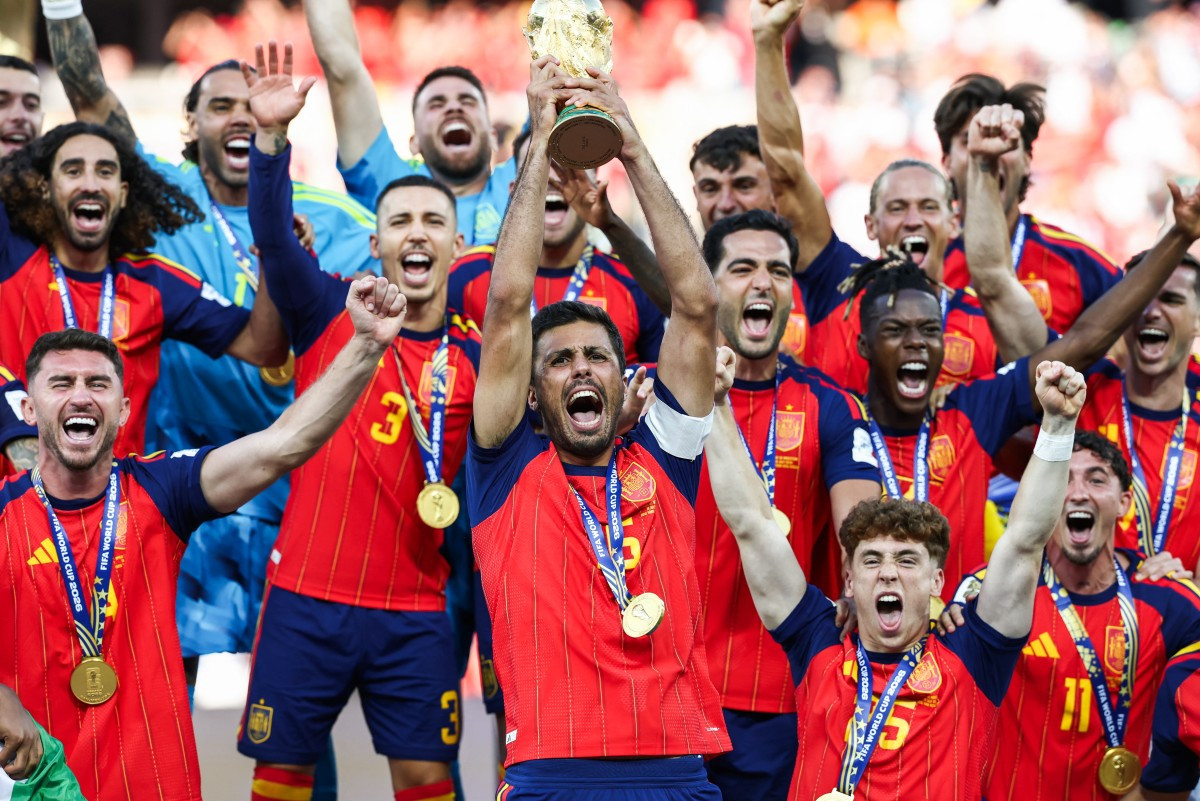 Spanish midfielder Rodri lifts the trophy with his teammates after winning the 2026 World Cup soccer tournament final match between Spain and Argentina at the New York/New Jersey Stadium in East Rutherford, the United States, on July 19, 2026. (AFP/Franck Fife)
A
series of striking coincidences surrounding the World Cup final had led many fans to view the Argentina-Spain matchup as predestined, except perhaps for the title holder’s 1-0 defeat in the match between the champions of Europe and South America, the long-time hegemons of the soccer world.
Days before the final on Sunday, New Jersey time, a 19-year-old photograph resurfaced on social media showing a young Lionel Messi bathing an infant Lamine Yamal in a plastic tub. The image captures a rare moment between two of FC Barcelona’s greatest La Masia academy talents, both of whom coincidentally began their professional careers at the Spanish club wearing the number 19 shirt.
However, critics have expressed skepticism, accusing soccer’s governing body, FIFA, of orchestrating a favorable path for the Messi-led defending champion. Skeptics point to Argentina’s relatively straightforward draw compared with those of its contenders. Allegations of favoritism were further fueled by a controversial VAR intervention during the round of 16, which annulled a second goal for Egypt and eventually allowed the South American side to secure a come-from-behind 3-2 victory.

The July 8 controversy quickly went viral on social media, highlighted by a parody video of Indonesian children reenacting the incident, which amassed more than 81 million views. Beyond the allure of the children impersonating Messi, the referee and other figures, including a comedic moment where a child discovers an Argentine jersey hidden beneath the referee's official uniform, the video reminds us of the sports world's long-standing struggle to uphold fair play.
It is safe to say the just-concluded World Cup will be remembered as much for its off-pitch geopolitical friction as for its on-pitch drama. Apart from contentious refereeing, the world bore witness to the host United States' discriminatory policies, which directly and indirectly compromised the performance of the Iranian team.
In the wake of the protracted hostilities between the two nations, Washington prohibited the Iranian squad from training on American soil. Consequently, the team was forced to establish its base in Tijuana, Mexico, and endure exhausting commutes to Los Angeles and Seattle for its group-stage matches. Furthermore, US authorities denied entry visas to several Iranian team officials, disrupting the squad's technical support.

Iran managed an unbeaten run, yet its three points from three consecutive draws proved insufficient to secure a spot in the knockout stage. In contrast, the US advanced to the round of 16. The host nation’s campaign eventually ended in a 4-1 loss to Belgium in a match overshadowed by controversy after FIFA rescinded a two-match ban on American striker Folarin Balogun at the eleventh hour, allowing him to take the field.