The Jakarta Post
Please Update your browser
Your browser is out of date, and may not be compatible with our website. A list of the most popular web browsers can be found below.
Just click on the icons to get to the download page.


Popular Reads
Top Results
No results found. Please check your search term and try again
Can't find what you're looking for?
View all search results
Popular Reads
Top Results
No results found. Please check your search term and try again
Can't find what you're looking for?
View all search resultsWhy the President should stop acting as foreign minister
While President Prabowo’s high-profile global engagement boosts Indonesia’s visibility, relying on personal charisma over institutional diplomacy risks undermining the long-term credibility of the nation's foreign policy.
Change text size
Gift Premium Articles
to Anyone
Share the best of The Jakarta Post with friends, family, or colleagues. As a subscriber, you can gift 3 to 5 articles each month that anyone can read—no subscription needed!
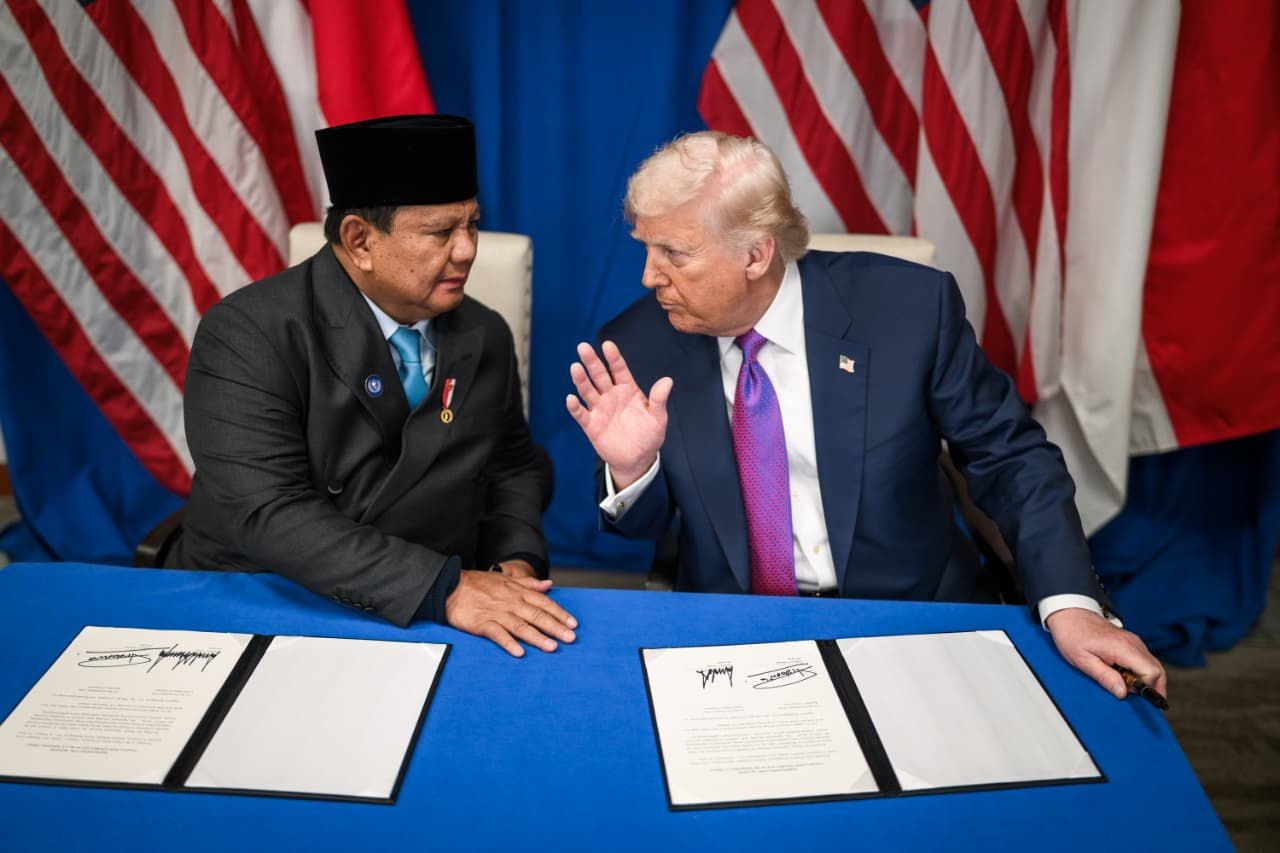 President Prabowo Subianto (left) speaks to United States President Donald Trump on Feb. 19 during the signing of the US-Indonesia Agreement on Reciprocal Tariffs (ART) in Washington, DC. (Courtesy of Presidential Secretariat/White House)
T
here is nothing inherently wrong with an active president. In a turbulent world, Indonesia benefits from a leader who is willing to engage global counterparts, attend international summits and place the country squarely on the diplomatic map. The problem begins when presidential activism starts replacing, rather than strengthening, the institutions tasked with conducting foreign policy.
Foreign policy is one of the few domains where process matters as much as outcomes. A trade agreement, a defense partnership or a diplomatic initiative is only as durable as the institutional framework supporting it. When diplomacy becomes overly personalized, it may generate headlines today while eroding institutional capacity for tomorrow.
Under President Prabowo Subianto, Indonesia's foreign policy has become increasingly synonymous with the head of government himself. Overseas trips, high-profile summits, mediation offers and major diplomatic announcements have cultivated the image of an energetic leader eager to position Indonesia as a prominent global player. Yet visibility should not be mistaken for strategy.
The danger is not that the President is too engaged; it is that Indonesia's foreign policy risks becoming overly dependent on a single individual. Strong nations do not build diplomacy around personalities; they build it around institutions.
The United States does not rely solely on its president to conduct foreign affairs. Behind every presidential summit stands the Department of State, the National Security Council, career diplomats, regional experts and intelligence agencies, backed by months of preparation. Japan’s foreign policy is sustained by a highly professional ministry, while Singapore’s global influence far exceeds its geographic size because its diplomatic institutions are respected for their consistency across successive administrations.
Indonesia has spent decades building precisely this type of professional diplomatic machinery. The Foreign Ministry possesses a seasoned diplomatic corps, responsible for negotiating complex agreements on trade, maritime boundaries, ASEAN integration, climate action and the protection of Indonesian citizens abroad.

These are not ceremonial tasks; they require deep institutional memory, technical expertise and painstaking negotiation. When foreign policy becomes concentrated in the presidency, these foundational strengths risk being overshadowed.