The Jakarta Post
Please Update your browser
Your browser is out of date, and may not be compatible with our website. A list of the most popular web browsers can be found below.
Just click on the icons to get to the download page.


Popular Reads
Top Results
No results found. Please check your search term and try again
Can't find what you're looking for?
View all search results
Popular Reads
Top Results
No results found. Please check your search term and try again
Can't find what you're looking for?
View all search resultsAbadi Masela: Redefining Indo-Pacific LNG geopolitics
As Western energy majors retreat from Southeast Asia, the $21 billion Masela Block project signals a major geopolitical shift toward Asian self-reliance, binding Indonesia, Malaysia, and Japan into a resilient new energy alliance.
Change text size
Gift Premium Articles
to Anyone
Share the best of The Jakarta Post with friends, family, or colleagues. As a subscriber, you can gift 3 to 5 articles each month that anyone can read—no subscription needed!
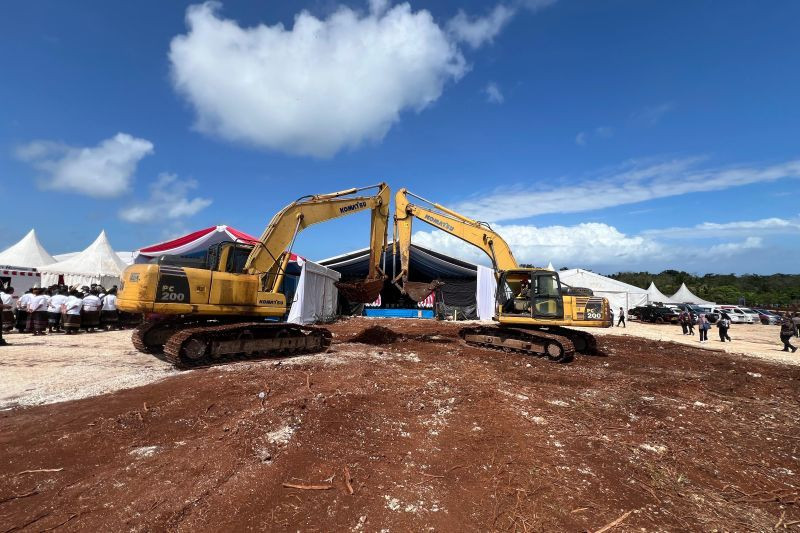 Heavy equipment is used at the groundbreaking site for the Abadi Masela LNG project in Tanimbar Islands, Maluku, on July 16, 2026. (Antara/Putu Indah Savitri)
P
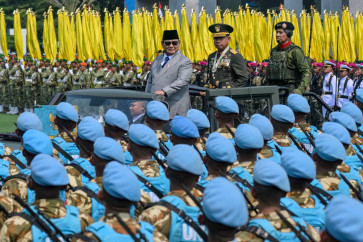
resident Prabowo Subianto’s recent groundbreaking of Abadi LNG Project in the Masela Block, Maluku is far more than a long-overdue ceremonial start for an energy infrastructure venture delayed for nearly 28 years.
Beneath its US$20.9 billion price tag and targeted 2029 operational timeline lies a tectonic shift in Indo-Pacific energy geopolitics: Masela offers concrete proof that the regional energy security architecture is gradually pivoting away from reliance on Western energy majors toward a more politically resilient consolidation of intra-Asian alliances.
To appreciate this strategic shift, one must examine the drastic evolution of the project's ownership structure. When British energy giant Shell exited the Masela Block by selling its 35 percent stake, Western observers questioned the commercial viability of a complex, capital-intensive offshore LNG project in the Arafura Sea. Shell’s departure was widely framed as evidence that high-cost upstream projects in developing nations were losing appeal amid growing pressure for global decarbonization.
That pessimistic Western narrative proved short-lived. The project was reinvigorated when an Asian consortium stepped in to take over the equity. The entry of Indonesia's state oil and gas company Pertamina (20 percent) and its Malaysian counterpart Petronas (15 percent), alongside Japan's Inpex (65 percent) as lead operator, transformed Masela from a standard commercial venture into a pillar of regional resilience.
This structural shift carries a strong strategic logic. Western multinationals often prioritize short-term market volatility and remain highly sensitive to domestic political pressures regarding aggressive green energy timelines. By contrast, for East and Southeast Asian economies, natural gas is not merely a traded commodity, it is a critical "bridge fuel" essential for maintaining industrial stability and enabling a realistic energy transition over coming decades.
For Tokyo, Inpex's involvement, fully backed by the Japanese government, is a matter of national economic survival. As one of the world's leading LNG importers, Japan understands the extreme fragility of global supply chains, particularly in light of ongoing geopolitical friction and heightened tensions across the Taiwan Strait.

Securing LNG from the Arafura Sea, a relatively secure maritime corridor in the southern Indo-Pacific, offers Tokyo a vital hedge against high-risk shipping routes passing through vulnerable East Asian choke points.