The Jakarta Post
Please Update your browser
Your browser is out of date, and may not be compatible with our website. A list of the most popular web browsers can be found below.
Just click on the icons to get to the download page.


Popular Reads
Top Results
No results found. Please check your search term and try again
Can't find what you're looking for?
View all search results
Popular Reads
Top Results
No results found. Please check your search term and try again
Can't find what you're looking for?
View all search resultsSecuring public trust in Indonesia–Singapore clean energy cooperation
To transform their ambitious clean energy pact into a regional blueprint, Indonesia and Singapore must move beyond boardroom handshakes and secure the vital public trust needed to turn cross-border electricity into shared economic prosperity.
Change text size
Gift Premium Articles
to Anyone
Share the best of The Jakarta Post with friends, family, or colleagues. As a subscriber, you can gift 3 to 5 articles each month that anyone can read—no subscription needed!
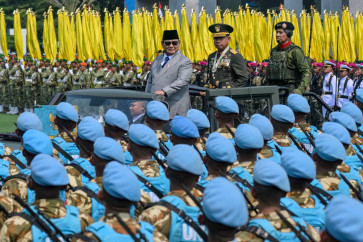
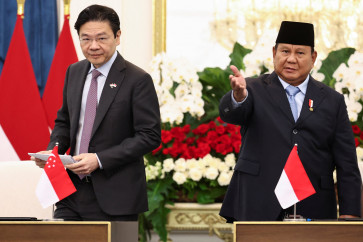
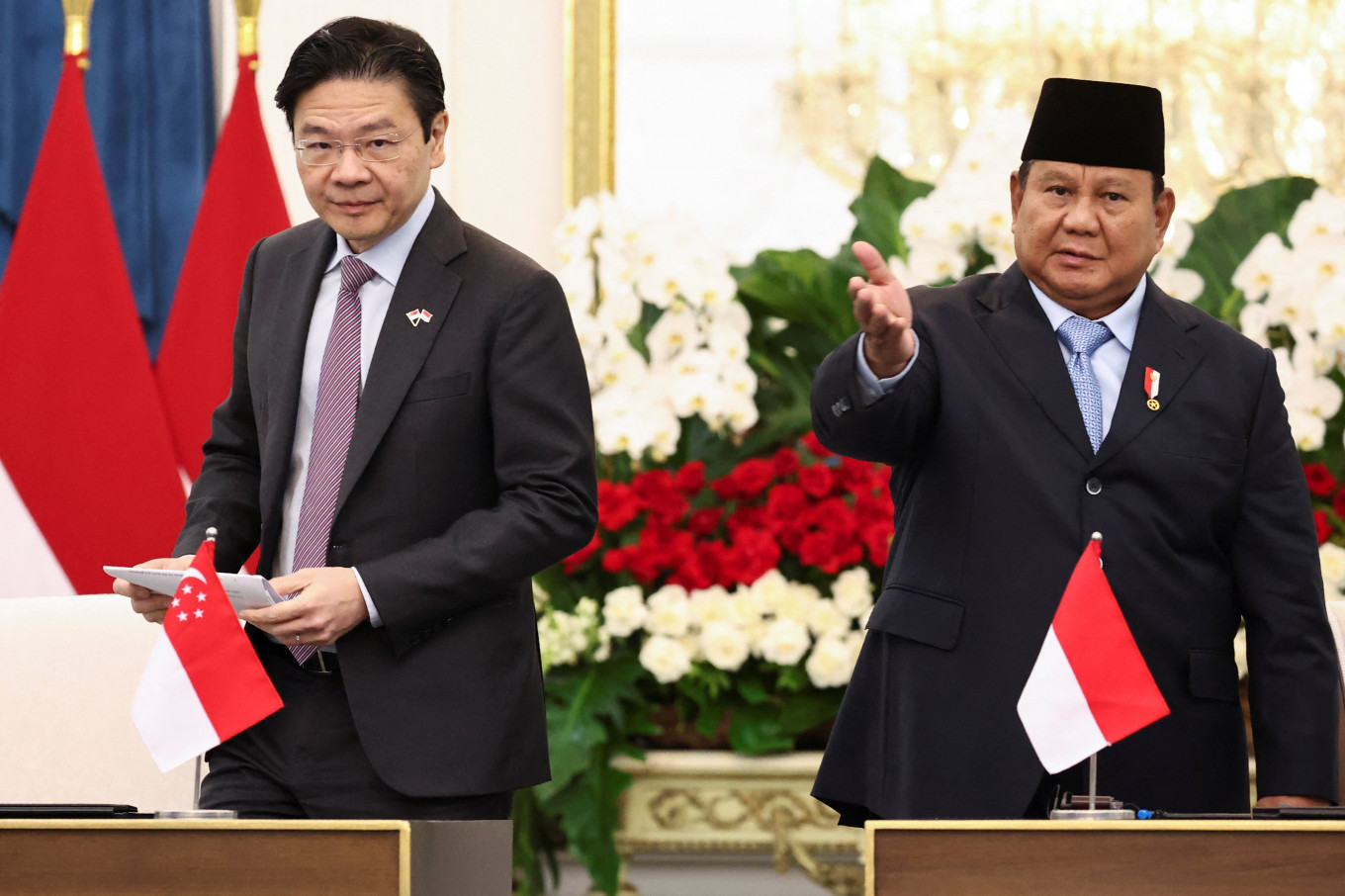 President Prabowo Subianto (right) gestures next to Singapore's Prime Minister Lawrence Wong during a joint press conference after their meeting at the Presidential Palace complex in Jakarta on July 6, 2026. (Reuters/Willy Kurniawan)
T
he Leaders’ Retreat in Jakarta on July 6 marked a pivotal milestone in the Indonesia–Singapore bilateral relationship as it approaches its 60th anniversary in 2027. Hosted by President Prabowo Subianto and attended by Prime Minister Lawrence Wong, the summit yielded 26 cooperation outcomes spanning both government-to-government and business-to-business tracks.
A significant portion of these agreements directly targets the energy transition. Notable outcomes include a new carbon-credit framework under Article 6 of the Paris Agreement, a comprehensive road map for cross-border electricity trade, and commercial agreements designed to advance projects initiated under the energy memorandums of understanding (MoUs) signed in 2025.
These developments signal that clean energy is rapidly becoming a core pillar of bilateral diplomacy. However, the subsequent phase of execution will prove far more demanding than the initial signing ceremony. The long-term efficacy of these commitments hinges on whether they can be translated into commercially viable projects, yield tangible socio-economic benefits and articulate a clear value proposition for both nations.
For Singapore, the strategic rationale is clear. The city-state has aggressively pursued its energy transition despite acute physical and geographical constraints. Lacking abundant domestic land and renewable resources, Singapore cannot achieve grid decarbonization through domestic solar power alone.
While it has successfully deployed 2 gigawatt-peak (GWp) of solar capacity and raised its 2030 target to 3 GWp, it must import approximately 6 GW of low-carbon electricity from the region by 2035 to meet its climate targets. Consequently, regional electricity trade is not a peripheral initiative; it is a critical component of Singapore’s energy security and net-zero strategy.
Indonesia offers starkly complementary strengths: vast land availability, rich natural resources, a substantial domestic market and immense renewable energy potential. Concurrently, Jakarta possesses strong domestic imperatives to accelerate its own transition.

Government Regulation No. 40/2025 on the National Energy Policy mandates that new and renewable energy comprise 19 to 23 percent of the primary energy mix by 2030, ascending to 70 to 72 percent by 2060. Crucially, this regulation emphasizes domestic energy security, affordability, job creation, local added value and national resilience. Therefore, cooperation with Singapore should not be viewed merely as an export opportunity, but as a catalyst for inward investment, capacity building and domestic industrial development.