TheJakartaPost
Please Update your browser
Your browser is out of date, and may not be compatible with our website. A list of the most popular web browsers can be found below.
Just click on the icons to get to the download page.


Popular Reads
Top Results
No results found. Please check your search term and try again
Can't find what you're looking for?
View all search results
Popular Reads
Top Results
No results found. Please check your search term and try again
Can't find what you're looking for?
View all search resultsWhy Indonesia needs an accountable developmental state
To unlock its economic potential on the road to 2045, Indonesia must move beyond simply chasing finance to closing its core development capital formation gap. Building an accountable, state-led architecture, not just a larger bureaucracy, is the true master key to turning strategic priorities into productive national wealth.
Change text size
Gift Premium Articles
to Anyone
Share the best of The Jakarta Post with friends, family, or colleagues. As a subscriber, you can gift 3 to 5 articles each month that anyone can read—no subscription needed!
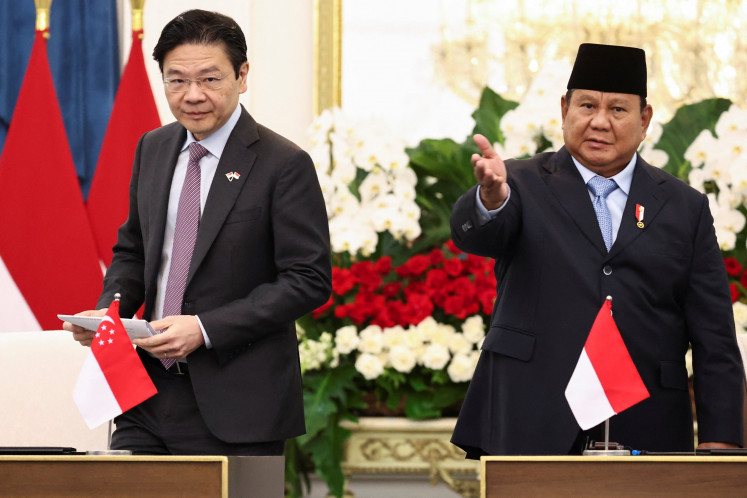
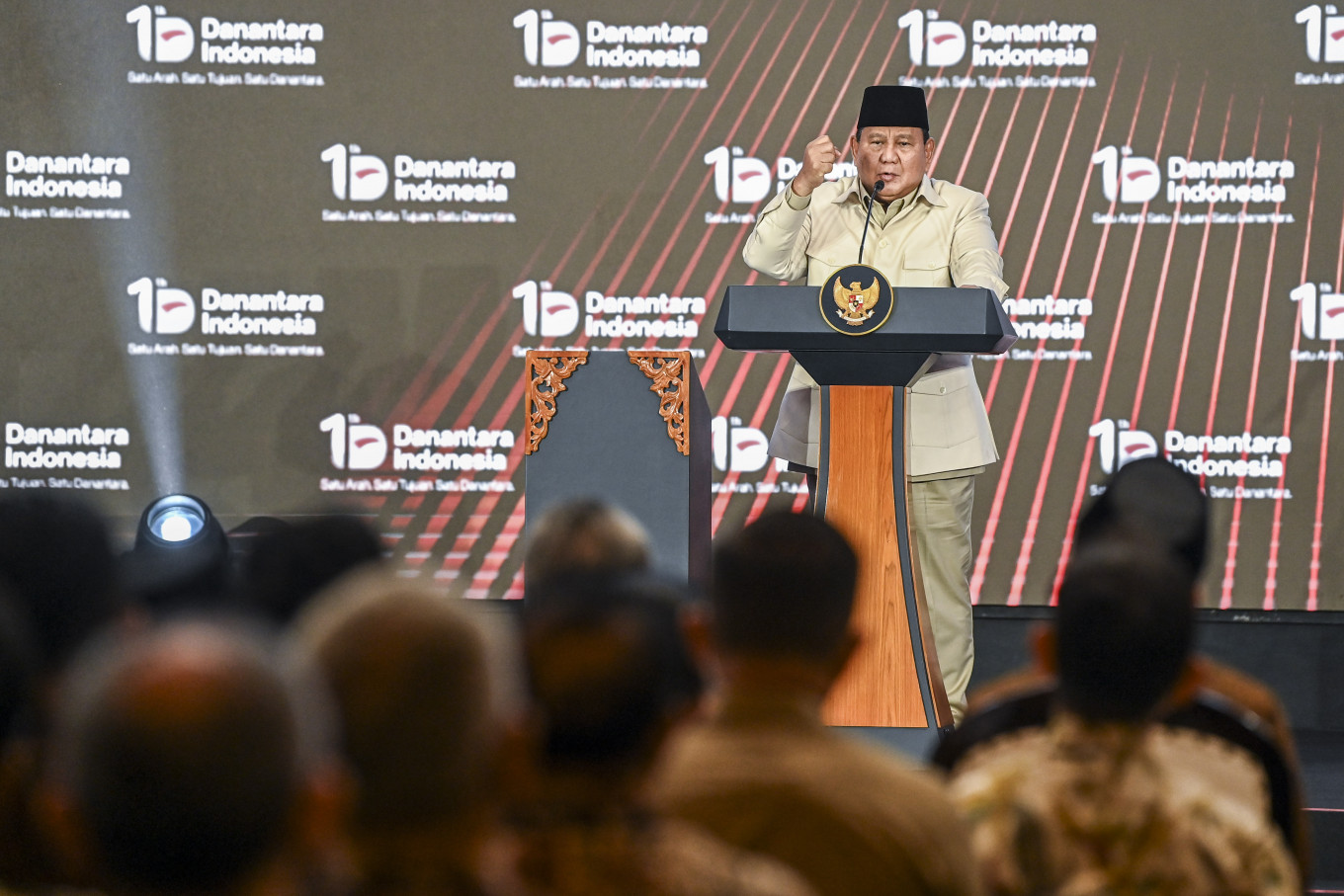 President Prabowo Subianto delivers his remarks during the first anniversary celebration of state asset fund Danantara at Wisma Danantara in Jakarta, on March 11, 2026. (Antara/Galih Pradipta)
I
ndonesia is frequently said to face an infrastructure financing gap. The standard prescriptions are familiar: boost public spending, deepen capital markets, expand public-private partnerships (PPPs), court foreign investors and deploy state asset fund Danantara to mobilize long-term capital. Each approach has merit, but all share a fundamental flaw, they assume that finance is the primary constraint.
That diagnosis is incomplete. Indonesia today boasts larger public budgets, extensive state-owned assets, an established PPP framework, a growing domestic financial system and a sovereign investment entity whose official mandate is to optimize government investments and state-owned enterprise assets for industrialization and sustainable growth. Indeed, Danantara positions itself as an institution that coordinates operational and investment holdings, measuring success not merely through financial returns, but through job creation, economic expansion and public benefit (About Danantara Indonesia, 2026).
Indonesia has assembled many components of a modern development finance system, yet it lacks the system itself. Its primary challenge is not a shortage of funds, but a development capital formation gap: the absence of a coherent cycle that converts strategic priorities into bankable projects, projects into productive assets and asset value into future investment.
Any reform of Indonesia’s development architecture must begin with Article 33 of the 1945 Constitution. Too often, this provision is reduced to a binary debate over state versus market control. Its actual objective is far broader: the economy must be organized as a cooperative endeavor, with strategic sectors and natural resources managed for the collective prosperity of the people.
The true constitutional test is not how many assets the state holds, but whether citizens gain meaningful access to land, capital, technology, markets, skills and economic opportunity. As argued in "Prabowonomics or State Corporatism?" (The Stance, June 2, 2026), a stronger state does not automatically produce a stronger society. Without institutional safeguards, economic concentration simply shifts from private oligopolies to state-centered corporatism.
This risk does not invalidate President Prabowo Subianto’s focus on food and energy security, downstreaming, strategic industries and cooperatives. Rather, it underscores the essential condition for success: Indonesia requires a capable developmental state, not merely a larger one. Effective state-led development depends on meritocratic administration, clear industrial priorities, technological capability, policy discipline and close coordination with the private sector without regulatory capture.

Indonesia needs what can be termed a development capital architecture, not a new super-agency, but an integrated framework that aligns five essential forms of capital.