The Jakarta Post
Please Update your browser
Your browser is out of date, and may not be compatible with our website. A list of the most popular web browsers can be found below.
Just click on the icons to get to the download page.


Popular Reads
Top Results
No results found. Please check your search term and try again
Can't find what you're looking for?
View all search results
Popular Reads
Top Results
No results found. Please check your search term and try again
Can't find what you're looking for?
View all search resultsAnalysis: Keeping elites out of high-stakes corruption case
Change text size
Gift Premium Articles
to Anyone
Share the best of The Jakarta Post with friends, family, or colleagues. As a subscriber, you can gift 3 to 5 articles each month that anyone can read—no subscription needed!
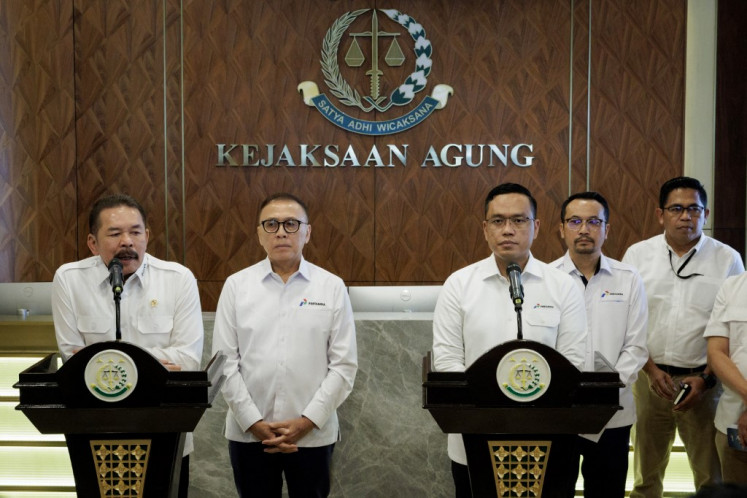
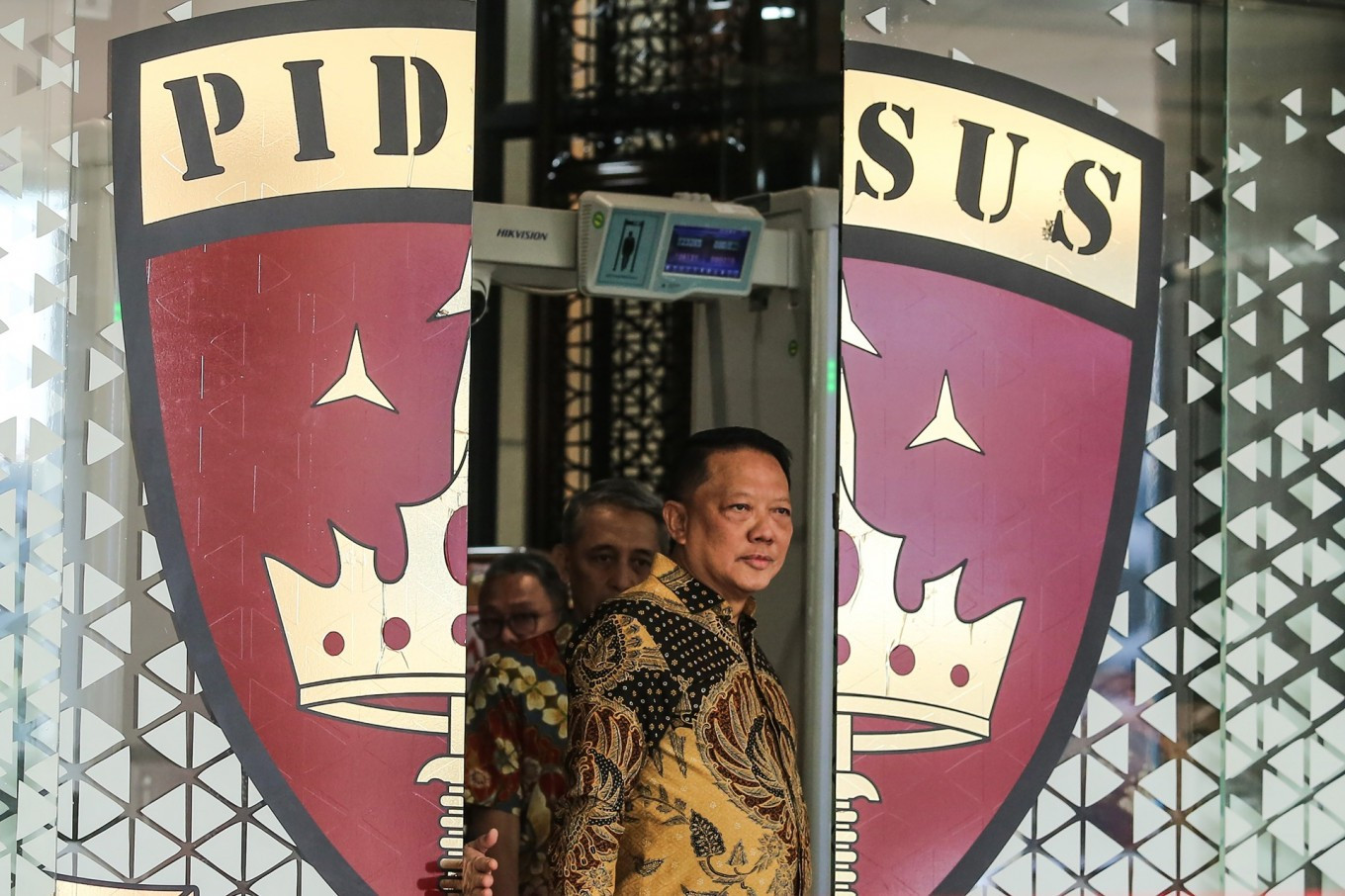 Assistant Attorney General for Special Crimes (Jampidsus) Febrie Adriansyah walks out of the Attorney General's Office (AGO) special crimes division building in South Jakarta ahead of a press briefing on July 10, 2026. Febrie denied allegations of his involvement in a corruption case pertaining to the coal supply to PLN. (Antara/Asprilla Dwi Adha)
P
ublic concern continues to mount over the handling of the high-profile graft case involving Febrie Adriansyah, the former assistant attorney general for special crimes (Jampidsus). The National Police's Corruption Eradication Corps (Kortastipidkor) has declared Febrie a suspect and subsequently handed over the case files to the Attorney General's Office (AGO), but he has not been detained. The prosecution’s foot-dragging has fueled suspicion about horse trading among the elite rather than a steadfast commitment to eliminating corruption.
On July 22, members of the Network of National Legal Intellectuals (JIHN) protested at the gates of the AGO compound, demanding Febrie’s immediate arrest and detention. Their outcry mirrors concerns raised by the public, which are questioning fundamental aspects of managing Febrie’s case.
In a similar vein, the Women Against Criminalization Group (Kelopak), a forum comprising the wives of graft defendants and convicts, has highlighted what it views as blatant double standards. Its members have pointed out that their husbands were swiftly detained at the onset of proceedings, long before a court had established their guilt. By contrast, Febrie has not been detained despite his official status as a suspect of a crime that carries potentially heavy punishment.
Legal experts have naturally cast doubt on the independence of the investigation. Public confidence has been severely undermined by the fact that the case is being managed by investigators of the AGO, the very institution where Febrie had led the division for special crimes, which includes corruption. Critics have called for the Corruption Eradication Commission (KPK) to take over, arguing that public trust will remain compromised as long as Febrie’s former subordinates are handling his case.
The position of Jampidsus carries extraordinary power and is one of the most potent positions in national law enforcement. Reporting directly to the attorney general, the Jampidsus oversees the prosecution of major cases pertaining to special crimes, which covers human rights violations, terrorism, corruption, money laundering and narcotics.
The controversy has drawn scrutiny from multiple oversight bodies. House of Representatives Commission III, which oversees law enforcement, has established a working group to monitor the three graft cases involving Febrie. The Indonesian Prosecutor’s Commission (Komjak RI), has formed a special team to review the investigation's progress, describing the matter as a definitive "test of public trust" in the justice system.

Questions have also arisen about procedural anomalies. Under the Criminal Procedures Code (KUHAP), handing over a suspect and evidence to the public prosecution service signals that the case is complete. Yet upon receiving the case files, the AGO issued new warrants of investigation, effectively reopening the cases under its authority.