TheJakartaPost
Please Update your browser
Your browser is out of date, and may not be compatible with our website. A list of the most popular web browsers can be found below.
Just click on the icons to get to the download page.


Popular Reads
Top Results
No results found. Please check your search term and try again
Can't find what you're looking for?
View all search results
Popular Reads
Top Results
No results found. Please check your search term and try again
Can't find what you're looking for?
View all search resultsWhen the powerless, defenseless are declared a threat
When a state turns its defense apparatus inward, its most vulnerable citizens like LGBT people pay the price—starting on the streets of Bogor.
Change text size
Gift Premium Articles
to Anyone
Share the best of The Jakarta Post with friends, family, or colleagues. As a subscriber, you can gift 3 to 5 articles each month that anyone can read—no subscription needed!
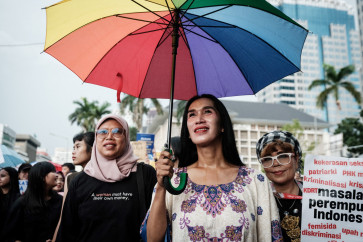
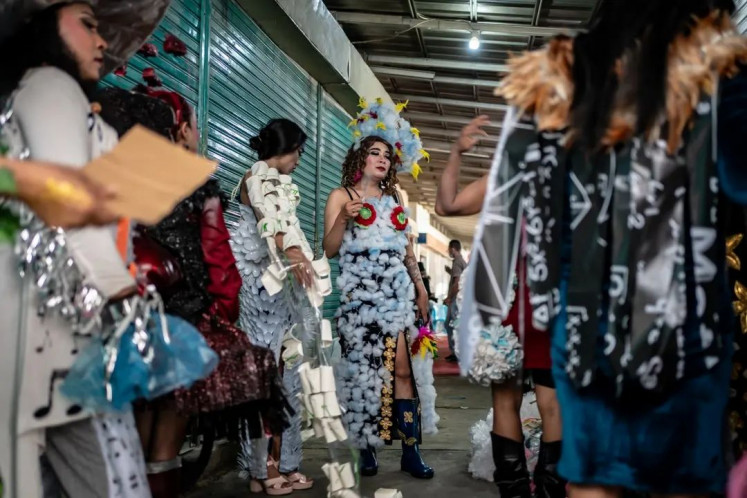
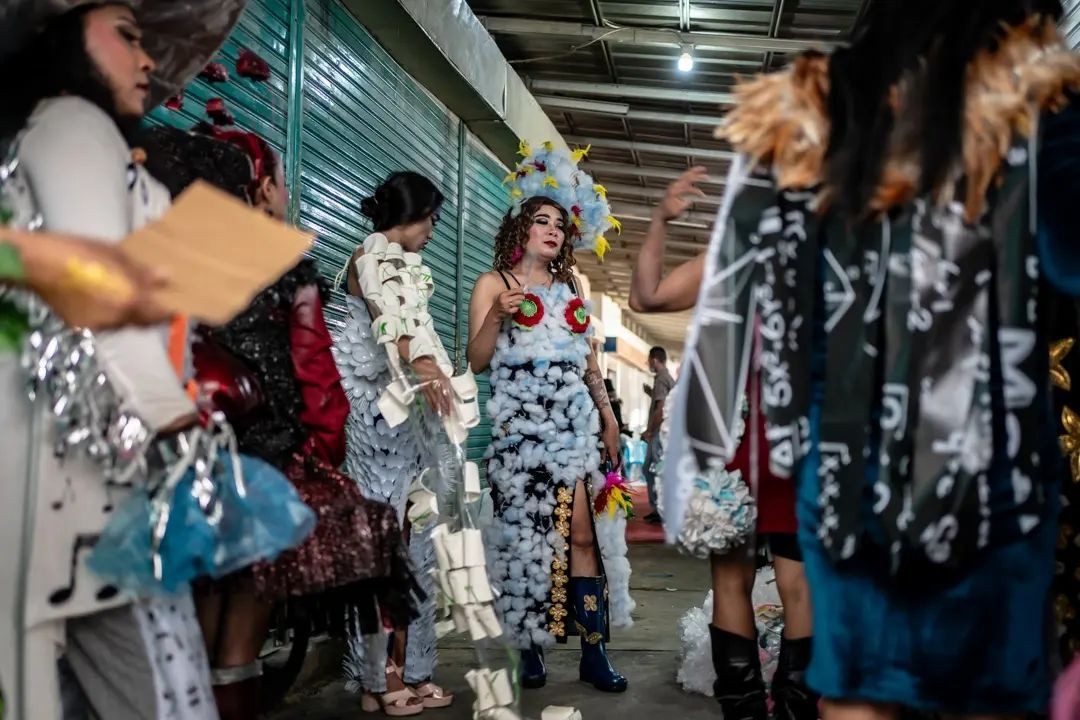 Transgender members of the Sanggar Seroja community
prepare for a fashion show on December 17, 2023, during Trans Super Heroes Carnival event at Duri
traditional market, Jakarta. Fifteen models paraded in costumes
made of recycled plastic waste organized to reflect the artist's concerns about waste and climate change issues. (JP/Muhammad Zaenuddin)
Transgender members of the Sanggar Seroja community
prepare for a fashion show on December 17, 2023, during Trans Super Heroes Carnival event at Duri
traditional market, Jakarta. Fifteen models paraded in costumes
made of recycled plastic waste organized to reflect the artist's concerns about waste and climate change issues. (JP/Muhammad Zaenuddin)
N
ear a nearly deserted bus terminal in Bogor, West Java, a person ran for her life. Chasing her was a mob of over a dozen young men who felt fully entitled to hunt her down, douse her with urine, force her to undress and physically assault her.
As captured on video, the perpetrators appeared proud, recording the ordeal as if they possessed the unquestioned authority to pass judgment. In the footage, a transgender woman slides through narrow alleys and slips between public minibuses and closing market stalls, attempting to hide her body—as if she could simply vanish from the legal classification her own government had just assigned to her.
The word "threat" traditionally applies to forces capable of inflicting grave destruction: heavy weaponry, cyberattacks, military aggression, or violent extremist ideologies. Yet that night, the entity classified as a "threat to national defense" was an unarmed transgender woman carrying nothing but her own vulnerability.
This framing is not accidental. The Annex to Presidential Regulation No. 111/2025 on General National Defense Policy officially classifies the spread of "LGBT culture" as a nonmilitary threat—placing it alongside terrorism, separatism and drug trafficking. To date, the government has offered no legitimate rationale for this inclusion; it exists as a standalone clause asserted as an absolute legal truth.
Historically, national defense doctrine is designed to shield a nation from external adversaries, not to target its own population. When defense frameworks turn inward, the target shifts from provable criminal acts or hostile organizations to the mere existence of specific citizen groups. No unlawful action is required to draw suspicion; identity alone becomes the offense.
This expansive definition of "nonmilitary threats" did not emerge in a vacuum. It followed closely on the heels of the 2025 revision to the Indonesian Military (TNI) Law—a move civil society groups warned would accelerate the remilitarization of the civilian sphere. When military-style national defense logic becomes the lens through which domestic social issues are viewed, the first targets are inevitably those who visibly diverge from traditional gender norms. Within a rigid, militaristic binary, lesbian, gay, bisexual, transgender and queer (LGBT) people quickly become the most convenient scapegoats.

By branding a segment of society as a "threat", the state fundamentally alters public perception. Neighbors, coworkers, and fellow commuters are reframed as objects of suspicion. Language shapes behavior: the label "threat" grants the public an implicit license to judge, police and inflict violence under the guise of civic duty or self-defense. Only long after the violence is committed—if ever—are the victims remembered as fellow citizens.