TheJakartaPost
Please Update your browser
Your browser is out of date, and may not be compatible with our website. A list of the most popular web browsers can be found below.
Just click on the icons to get to the download page.


Popular Reads
Top Results
No results found. Please check your search term and try again
Can't find what you're looking for?
View all search results
Popular Reads
Top Results
No results found. Please check your search term and try again
Can't find what you're looking for?
View all search resultsAnticipating climate displacement before it becomes a crisis
Climate change and disaster management can no longer be treated separately.
Change text size
Gift Premium Articles
to Anyone
Share the best of The Jakarta Post with friends, family, or colleagues. As a subscriber, you can gift 3 to 5 articles each month that anyone can read—no subscription needed!
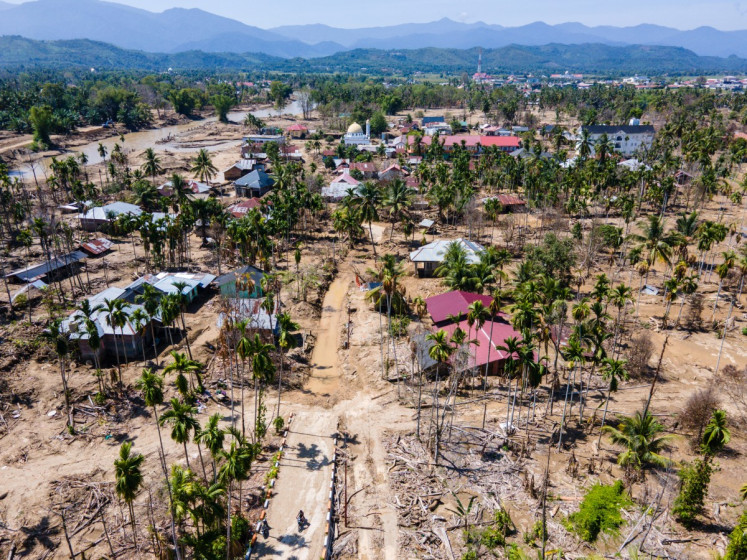
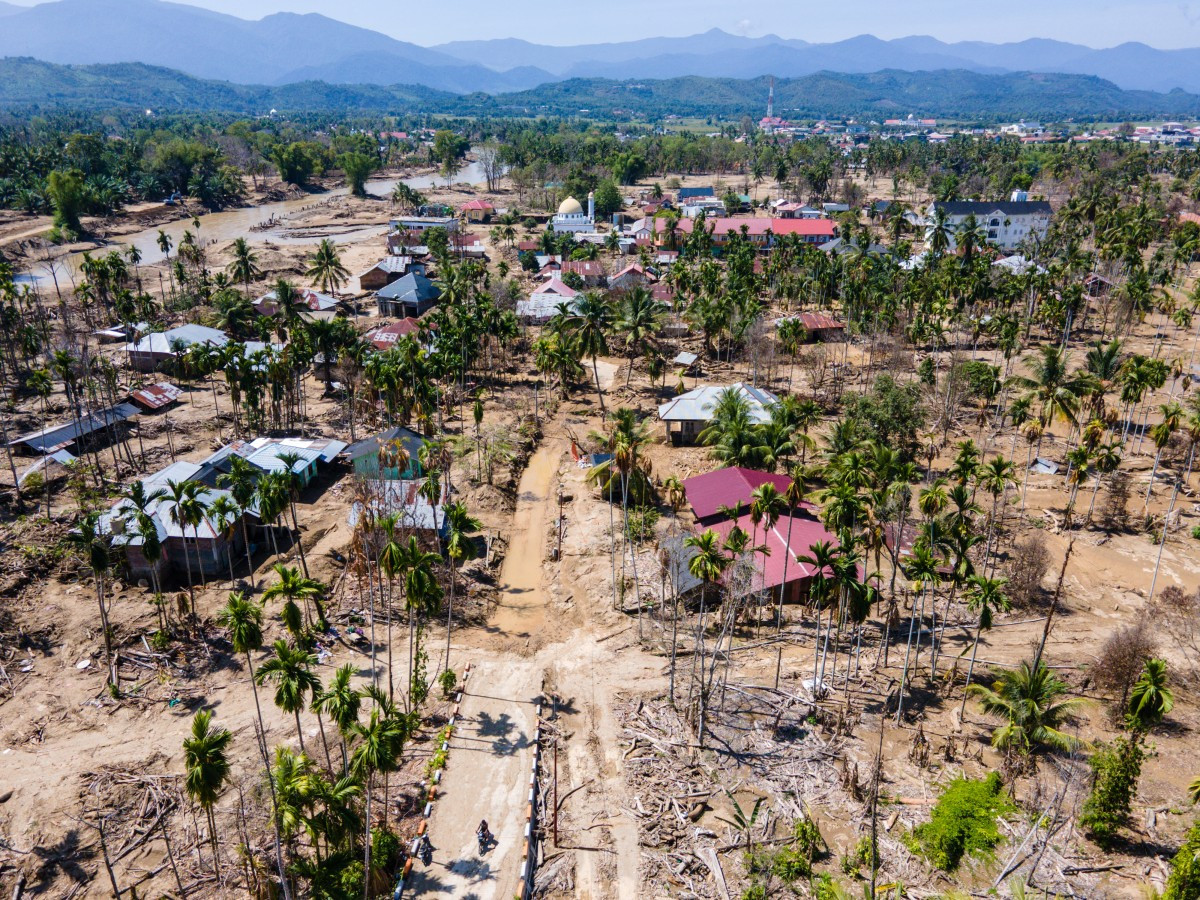 An aerial view shows flood damage to a residential area in Meurah Dua, Pidie Jaya regency, Aceh, on Feb. 22, 2026, after devastating cyclone-induced floods and landslides struck northern Sumatra in November 2025. (AFP/Chaideer Mahyuddin)
I
ndonesia has long understood that disasters are not only sudden events. They are shaped by where people live, how cities grow, how ecosystems are managed and how prepared institutions and communities are before hazards strike. But climate change is altering the scale and complexity of those risks.
The scale is already visible. In 2025, the National Disaster Mitigation Agency (BNPB) recorded 4,727 disaster events, with more than 12.1 million people affected and displaced, alongside 1,666 deaths and 214 people missing. Reducing these risks is therefore not only essential to protecting communities, but also to strengthening Indonesia’s long-term development, resilience and disaster management agenda. This aligns with Asta Cita, the National Long Term Development Plan (RPJPN) 2025–2045 vision for social, cultural and ecological resilience and the Sustainable Development Goals (SDGs) on resilient communities and climate action.
Within the broader reality, climate change is increasingly influencing disaster risks, from changing rainfall patterns and rising temperatures to sea-level rise, coastal erosion and ecosystem degradation.
Not all communities experience climate change impacts in the same way. The most vulnerable populations, including women, children, older persons, persons with disabilities and low-income households, often face disproportionate risks, underscoring the importance of locally led approaches that prioritize those most at risk.
These impacts include damage to homes and infrastructure, disruption of livelihoods and displacement. In this context, displacement is not separate from disasters, but one of their humanitarian consequences. The challenge extends beyond emergency response. It becomes a question of governance, development planning and national and local resilience.
For this reason, climate change and disaster management can no longer be treated separately.

These challenges are not unique to Indonesia. Across East Asia and the Pacific, disasters triggered 19.6 million internal displacements in 2025, about one-third of the global total, with powerful typhoons and end-of-year storms affecting densely populated countries including the Philippines, China and Indonesia. This underscores the need for stronger regional cooperation, shared learning and evidence-based approaches to disaster risk management and human mobility.