The Jakarta Post
Please Update your browser
Your browser is out of date, and may not be compatible with our website. A list of the most popular web browsers can be found below.
Just click on the icons to get to the download page.


Popular Reads
Top Results
No results found. Please check your search term and try again
Can't find what you're looking for?
View all search results
Popular Reads
Top Results
No results found. Please check your search term and try again
Can't find what you're looking for?
View all search resultsGig platforms evade commission caps through hidden fees
Behind every discounted ride is a hidden algorithmic fee, leaving Indonesia’s gig workers stripped of basic earnings while regulations turn a blind eye.
Change text size
Gift Premium Articles
to Anyone
Share the best of The Jakarta Post with friends, family, or colleagues. As a subscriber, you can gift 3 to 5 articles each month that anyone can read—no subscription needed!
 Set as preferred source
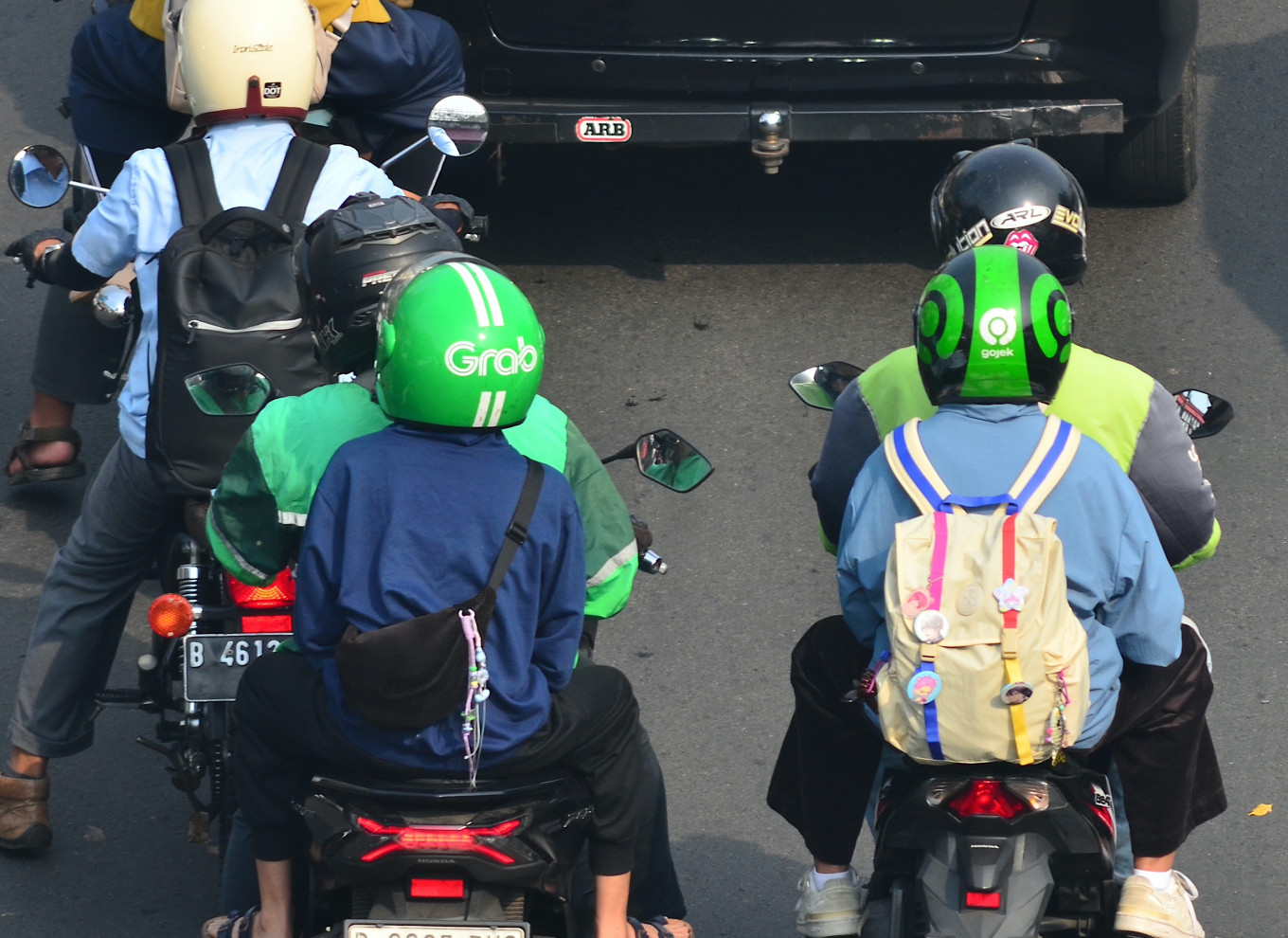 The logos of ride-hailing service providers Gojek and Grab are seen on helmets worn by two passengers using online motorcycle taxi services in the Kampung Melayu Besar area of South Jakarta on June 24, 2026. (JP/Iqro RInaldi)
P
resident Prabowo Subianto probably did not anticipate that his administration's landmark gig economy policy would be circumvented so swiftly by tech platforms. The government established a maximum application commission cap of 8 percent to protect ride-hailing and delivery workers.
Yet, for millions of ojol (online motorcycle taxi), taksol (online car taxi) and cargo delivery drivers, platforms continue to siphon earnings through hidden cost components layered behind the application screen. As a result, effective deductions frequently swell to 34 percent, reducing the prospect of a living wage to a distant prospect.
Consider a typical transaction: a passenger pays a fare of Rp 19,500 (US$1.08). Before those funds reach the driver's digital wallet, the platform deducts Rp 5,500 upfront, comprising a Rp 4,500 application service fee and a Rp 1,000 travel insurance fee. The platform then takes its official 8 percent commission from the remaining balance. In the end, the driver receives just Rp 12,880.
Recalculated against the total fare, the actual deduction rate is 34 percent rather than 8 percent, completely undermining the regulatory intent to leave 92 percent of the fare with the worker.
This dynamic stems directly from the classification of drivers as mitra (independent partners) rather than formal employees. Under partner status, drivers are compensated solely per completed order; during lulls in demand, their income drops to zero. Meanwhile, drivers bear all operational overheads, including fuel, parking, mobile data, routine maintenance, vehicle financing or rental, and mandatory branded gear such as helmets, jackets and delivery bags.
Data from a 2026 survey by Kompas research arm, Litbang Kompas, indicates that driver daily gross earnings average between Rp 75,000 and Rp 100,000. After deducting daily operating costs of Rp 50,000 to Rp 75,000, net take-home pay sits around Rp 50,000 per day, and occasionally drops to zero.

Measured against the 2026 national average minimum wage reported by Statistics Indonesia (BPS) at Rp 3.3 million per month, the economic disparity is stark. The core issue extends beyond fee caps: the "partner" label systematically excuses platforms from ensuring basic wage floors.