The Jakarta Post
Please Update your browser
Your browser is out of date, and may not be compatible with our website. A list of the most popular web browsers can be found below.
Just click on the icons to get to the download page.


Popular Reads
Top Results
No results found. Please check your search term and try again
Can't find what you're looking for?
View all search results
Popular Reads
Top Results
No results found. Please check your search term and try again
Can't find what you're looking for?
View all search resultsWhen classrooms go empty
From shrinking birth rates to stagnant teaching quality, the country’s public elementary schools are facing a quiet crisis of empty classrooms - leaving educators and policymakers wondering where all the students went.
Change text size
Gift Premium Articles
to Anyone
Share the best of The Jakarta Post with friends, family, or colleagues. As a subscriber, you can gift 3 to 5 articles each month that anyone can read—no subscription needed!
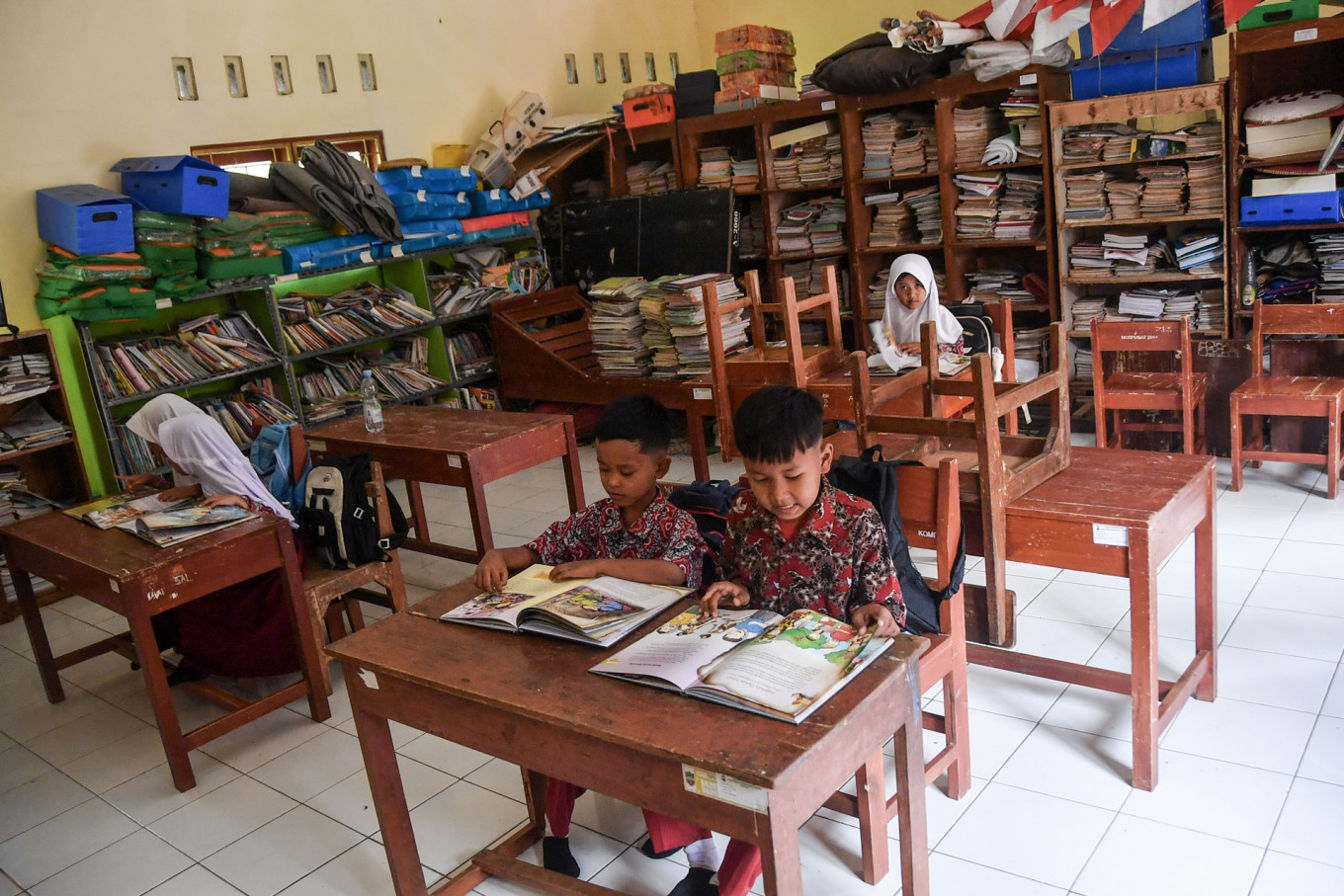 Students attend class at the SDN 2 Salakaria state elementary school in Ciamis regency, West Java on July 15, 2026. The school only had one new student for the 2026/2027 academic year as most of nearby residents are elderlies with no school-age children. (Antara/Adeng Bustomi)
W
alk into many state elementary schools across the country today, and you will notice something eerie: rows of empty desks. In a handful of regions, entire first-grade classrooms are sitting completely vacant for the new academic year, which began on July 13.
In Ponorogo regency, East Java, SD Nailan state elementary school in Slahung district has not enrolled a new pupil for two consecutive years, leaving its first and second grades empty. Similarly, in places like Blitar, Tulungagung and Karanganyar, several schools couldn’t pull in a single new student.
“It’s like a private course, but it doesn’t matter,” a mother in Surakarta, Central Java said when seeing her kid attend a class with four other first-grade students only. A schoolteacher said last year the state primary education institution admitted 18 new students.
In response to the phenomena of public elementary schools losing their appeal and parents jumping ship to private schools, education experts point to several reasons ranging from the changing demographics and poor quality perception to the government’s flawed policy.
Totok Amin Soefijanto, a regular opinion writer for The Jakarta Post and the rector of EMTEK Digital Media Institute, says that demographic shifts do contribute to the crisis. Back in 1971, Statistics Indonesia (BPS) data showed a fertility rate of 5.61 - meaning a woman had five or six kids on average, but by 2025 the figure nosedived to 2.13.
Families today usually cap it at one or two kids. Combined with a declining infant mortality rate and an aging population, the sheer volume of school-aged kids has naturally dwindled.

But we cannot blame everything on demographics. The Semarang Education Agency found that roughly 22,500 children graduated from preschool across the Central Java capital city this year, far exceeding the 14,500 seats available in local state elementary schools.