The Jakarta Post
Please Update your browser
Your browser is out of date, and may not be compatible with our website. A list of the most popular web browsers can be found below.
Just click on the icons to get to the download page.


Popular Reads
Top Results
No results found. Please check your search term and try again
Can't find what you're looking for?
View all search results
Popular Reads
Top Results
No results found. Please check your search term and try again
Can't find what you're looking for?
View all search resultsAnalysis: Civil society experiments in shadow opposition
Change text size
Gift Premium Articles
to Anyone
Share the best of The Jakarta Post with friends, family, or colleagues. As a subscriber, you can gift 3 to 5 articles each month that anyone can read—no subscription needed!
 Set as preferred source
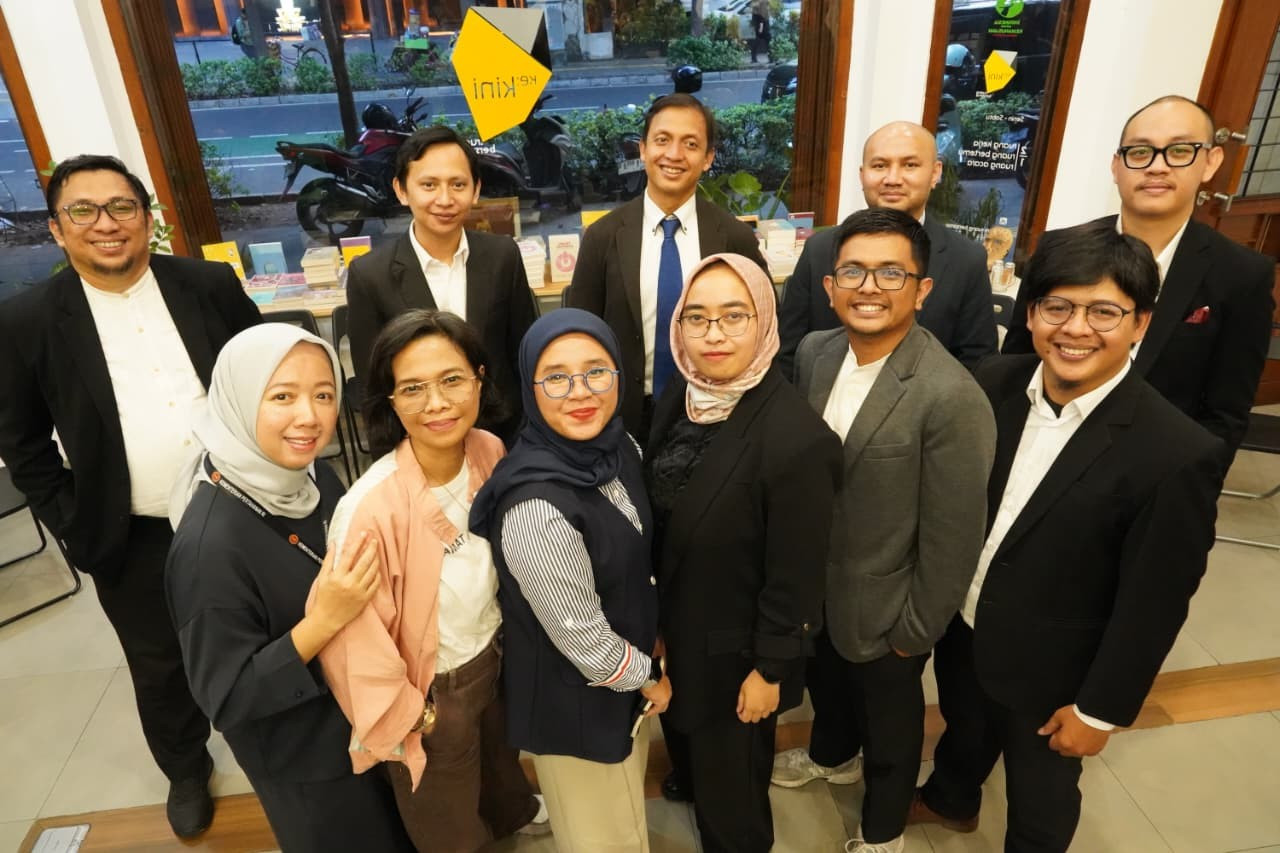 Eleven of the shadow cabinet's 15 members gather for their first working meeting in Jakarta on Monday following the launch of the self-styled watchdog initiative. (Courtesy of/The Shadow Cabinet))
E
arlier this month a coalition of academics, activists and professionals did something no civil society group in the country's post-authoritarian history has attempted: they appointed their own cabinet.
Fifteen "shadow ministers," selected from 121 applicants over two months of vetting, were unveiled as a citizen-run counterpart to President Prabowo Subianto's official "Red and White Cabinet." The group calls itself the Kabinet Bayangan, or "Zaken Kabinet dari Rakyat" (People's Cabinet of Experts). It has no office in the state bureaucracy, no budget and no constitutional standing. Its emergence nonetheless says something about the state of Indonesian democracy: when formal channels of accountability close, civil society builds an unofficial one rather than accept the silence.
The project is led by Feri Amsari, a constitutional law lecturer at Andalas University, who chaired the selection committee and serves as shadow "state secretary," alongside co-initiator Ahmad Jilul Qur'ani Farid of Masyarakat Transparansi Indonesia.
The roster includes economist Bhima Yudhistira Adhinegara as shadow finance minister, health activist Irma Hidayana in the health post, Armand Suparman in home affairs, Shofwan Al-Banna Choiruzzad in foreign affairs, Curie Maharani in defense, Khoirunnisa Nur Agustyati in women's rights and others across research, social affairs and agriculture. Candidates were screened for integrity, competence, being under 50, a willingness to be critical, a pro-people orientation and no party affiliation.
Feri's explanation cuts to the heart of it: "The formation of the ‘shadow cabinet’ is our response to the loss of checks and balances against the executive. Nearly all political forces today stand in the government's supporting ranks."
He insists that the group is not trying to seize power, describing it instead as "a monitoring platform and evidence-based policy alternative-drafter, working pro bono and non-partisan."

Hurriyah, director of the University of Indonesia's Center for Political Studies (Puskapol), frames it as a response to the structural paradox in which elections still run on schedule, but accountability has been hollowed out underneath them, shifting the burden of opposition onto ordinary citizens. Its real achievement, in her view, is upgrading criticism from scattered social-media complaints into structured, sector-by-sector oversight.