TheJakartaPost
Please Update your browser
Your browser is out of date, and may not be compatible with our website. A list of the most popular web browsers can be found below.
Just click on the icons to get to the download page.


Popular Reads
Top Results
No results found. Please check your search term and try again
Can't find what you're looking for?
View all search results
Popular Reads
Top Results
No results found. Please check your search term and try again
Can't find what you're looking for?
View all search resultsAnalysis: Seeking the missing sugar feedstock for E20 initiative
Change text size
Gift Premium Articles
to Anyone
Share the best of The Jakarta Post with friends, family, or colleagues. As a subscriber, you can gift 3 to 5 articles each month that anyone can read—no subscription needed!
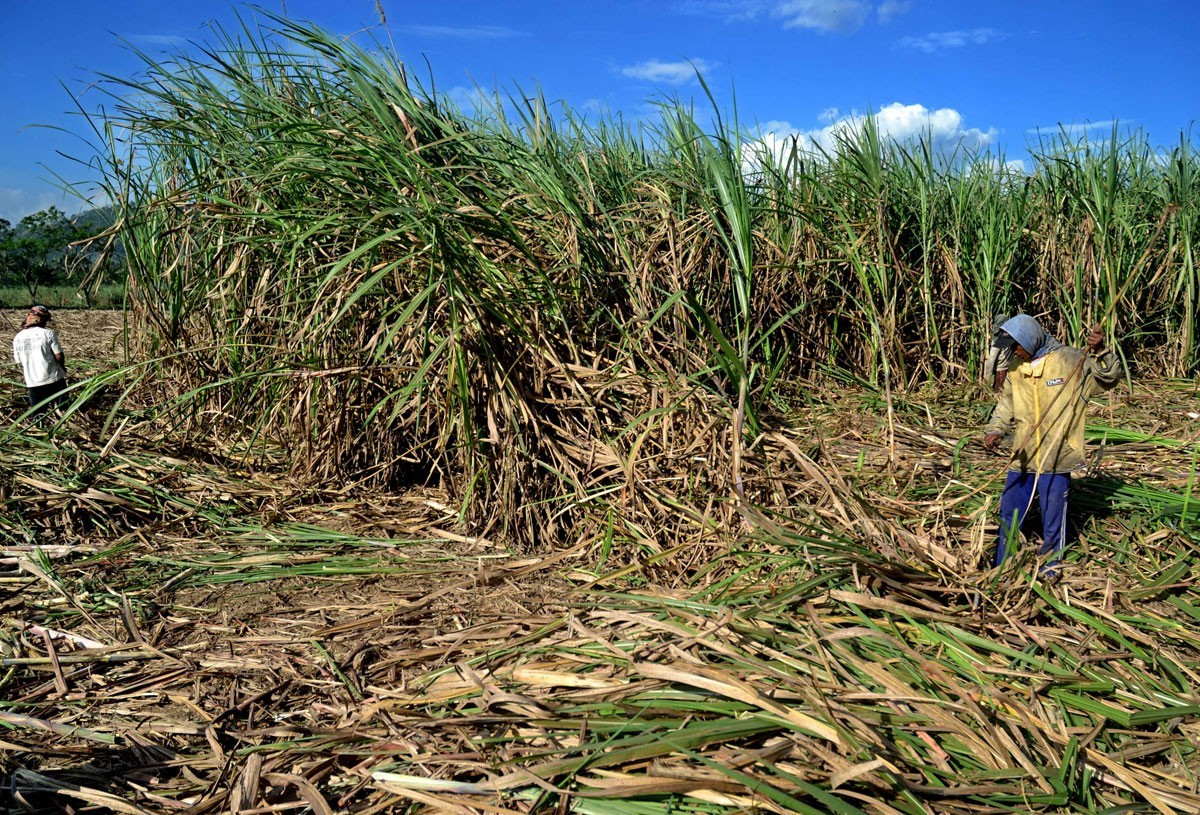 Field workers harvest sugarcane to have it ready for crushing in Purwosekar village in Malang, East Java. The cane will be sold either to brown sugar makers or large sugar factories, depending on its quality. Better quality cane will fetch a better price among brown sugar makers. (JP/Aman Rochman)
I
ndonesia is preparing to introduce E20, a gasoline blend containing 20 percent fuel ethanol, even as it continues to import sugar to meet domestic food demand. The initiative seeks to replicate the success of the country's biodiesel mandate by reducing reliance on imported gasoline while creating new demand for domestic agricultural commodities.
Under the current roadmap, the government plans to introduce E10 by 2027 before increasing the blend to E20 as early as 2028. However, given Indonesia's limited bioethanol production capacity and the substantial upstream and downstream investments still required, the proposed timeline appears to reflect policy ambition more than industrial readiness.
Much of the government's confidence appears to draw on Indonesia's successful biodiesel experience. However, the comparison overlooks a fundamental difference in feedstock availability. The biodiesel mandate was built on an already mature palm oil industry that consistently generated production surpluses, allowing part of its output to be redirected to energy use without significantly disrupting existing markets.
Bioethanol, by contrast, would rely primarily on sugarcane and its derivatives, where Indonesia starts from a much weaker position. Domestic sugar production remains insufficient to satisfy national demand, forcing the country to rely heavily on imports each year. As a result, scaling up bioethanol production would require not only new ethanol plants and blending infrastructure but also a substantial expansion of sugarcane production.
The difference becomes even clearer when comparing how each feedstock is currently used. Although palm oil is also an important food commodity, Indonesia has historically produced far more than its domestic food market requires. Around 65 percent of the country's palm oil production is exported, while domestic food consumption accounts for only 8.95 million tonnes, or roughly 17.5 percent of total production of 51.3 million tonnes.
By contrast, sugar presents a very different picture. According to Statistics Indonesia (BPS), the country produced only 2.46 million tonnes of sugar in 2024 while importing around 5.3 million tonnes to meet domestic demand. This persistent supply deficit contrasts sharply with the structural surplus enjoyed by the palm oil industry. Consequently, Indonesia has little surplus sugar that can be diverted to fuel ethanol without first expanding agricultural production. Developing a bioethanol industry therefore depends not only on new processing facilities but also on significantly greater sugarcane cultivation.

Recognizing these constraints, the government has paired the E20 roadmap with an ambitious plan to expand both the sugar and bioethanol industries. During the announcement of the E20 program, President Prabowo Subianto said Indonesia would build at least 30 ethanol plants, with the possibility of expanding to as many as 50, to meet future blending requirements.