TheJakartaPost
Please Update your browser
Your browser is out of date, and may not be compatible with our website. A list of the most popular web browsers can be found below.
Just click on the icons to get to the download page.


Popular Reads
Top Results
No results found. Please check your search term and try again
Can't find what you're looking for?
View all search results
Popular Reads
Top Results
No results found. Please check your search term and try again
Can't find what you're looking for?
View all search resultsRice alone is not enough for Indonesia’s children
Large-scale food fortification is one of the most effective, affordable and evidence-based strategies to address micronutrient deficiencies.
Change text size
Gift Premium Articles
to Anyone
Share the best of The Jakarta Post with friends, family, or colleagues. As a subscriber, you can gift 3 to 5 articles each month that anyone can read—no subscription needed!
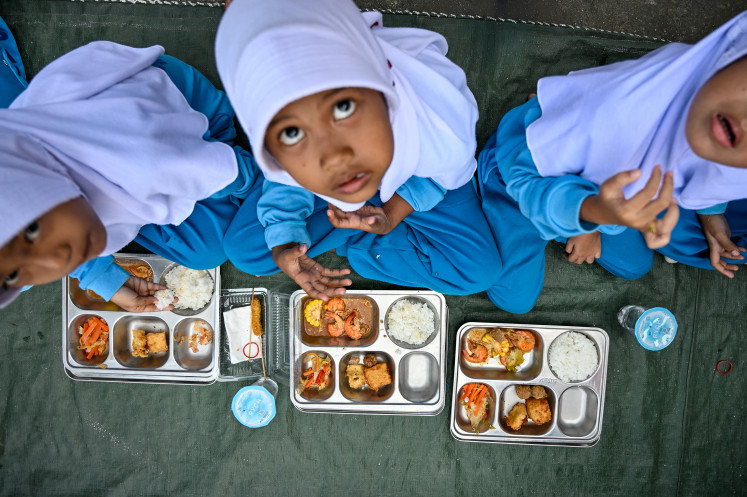
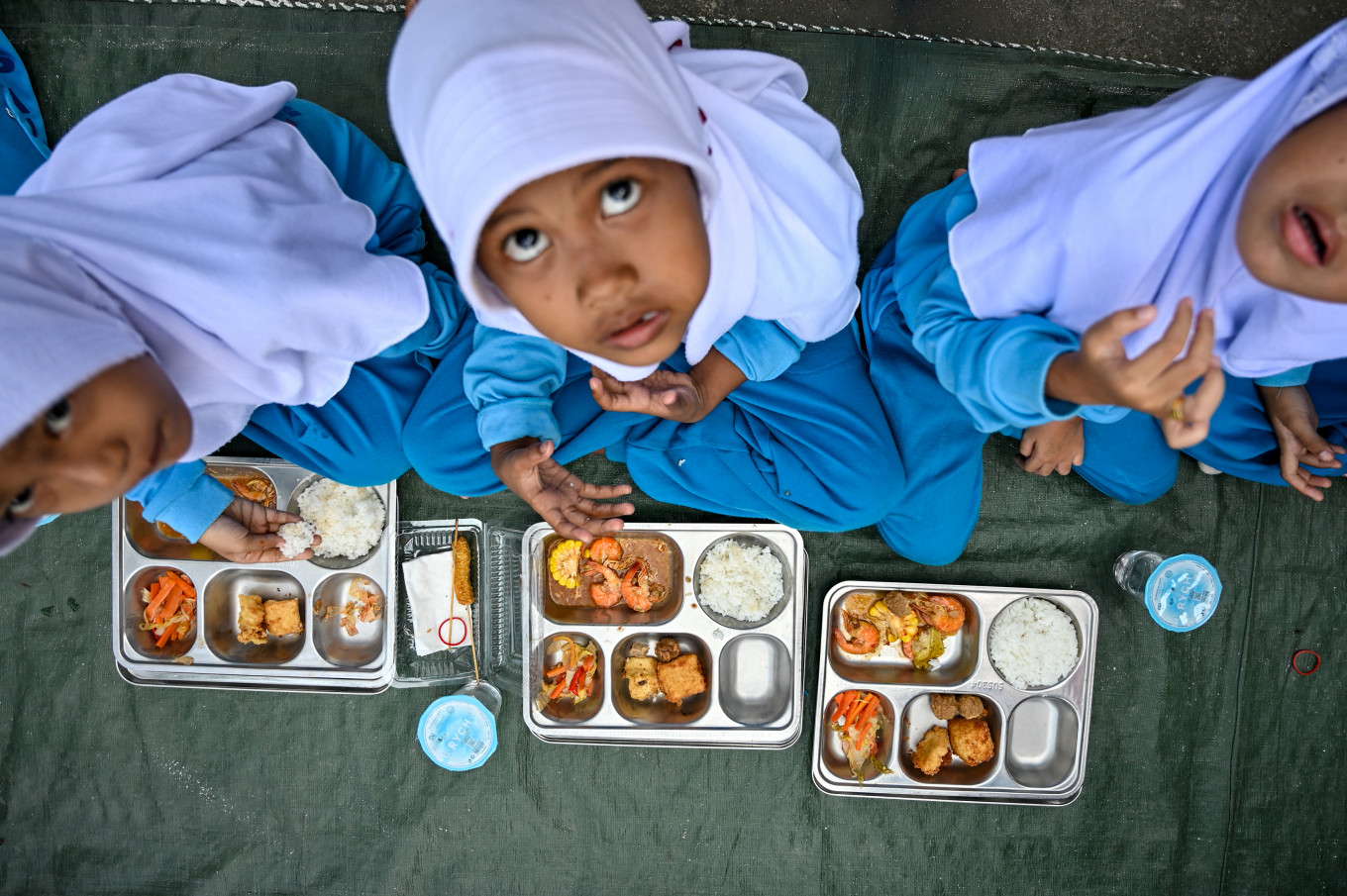 Kindergarten students eat meals on April 23 supplied by the government’s free nutritious meal program in Banda Aceh. (AFP/Chaideer Mahyuddin)
I
ndia and Indonesia have just marked 75 years of diplomatic relations, and in this month that partnership took on new depth. Prime Minister Narendra Modi's state visit to Jakarta resulted in commitments by both governments to deepen cooperation on food security and nutrition. For those of us working in nutrition, this is an opportunity to learn from a partner that has already turned commitment into action.
Last year in October, I stood in the courtyard of a government primary school on the outskirts of New Delhi, watching children line up for their hot midday meal. On their plates was a simple combination of fortified rice, lentils, fortified salt and vegetables. The food was modest, but what those children did not know was the long journey their meal had taken: from a centralized kitchen preparing 27,000 such meals every day, to the rigorous quality assurance checks that ensured the fortified rice and salt were safe, consistent and nutritious.
India’s school feeding program now reaches more than 100 million children daily. It is one of the largest in the world, and remarkably, it operates with very few cases of food contamination. The lesson is clear: nutrition on a scale is possible when political commitment, financing and governance align. Indonesia is now standing at a similar crossroads.
Indonesia has made progress, but the country continues to face persistent malnutrition. Nearly one in five children remains stunted. One in four children under five is anemic. More than one in four women suffers from anemia. These numbers are predictors of Indonesia’s future productivity, competitiveness and human capital.
A nation cannot hope to thrive when millions of its children begin life at a nutritional disadvantage. Large-scale food fortification is one of the most effective, affordable and evidence-based strategies to address micronutrient deficiencies. Indonesia has implemented salt iodization, wheat flour fortification and cooking oil fortification. But one major staple remains untouched: rice. This is a critical gap.
More than 90 percent of Indonesians eat rice every day. It is the backbone of our diet, culture and food security. Yet the rice consumed by most Indonesian households provides calories, not nutrients. Fortifying rice with iron, folic acid, vitamin B12 and other essential micronutrients is a simple, cost-effective intervention that requires no change in consumer behavior.

Globally, more than 150 countries fortify at least one staple food. Seventeen have already implemented rice fortification at scale. Indonesia needs to catch up.