The Jakarta Post
Please Update your browser
Your browser is out of date, and may not be compatible with our website. A list of the most popular web browsers can be found below.
Just click on the icons to get to the download page.


Popular Reads
Top Results
No results found. Please check your search term and try again
Can't find what you're looking for?
View all search results
Popular Reads
Top Results
No results found. Please check your search term and try again
Can't find what you're looking for?
View all search resultsWhen war comes for the economy
A war economy is not necessarily the mobilization of force, but conflict used as a lever on prices and supply chains.
Change text size
Gift Premium Articles
to Anyone
Share the best of The Jakarta Post with friends, family, or colleagues. As a subscriber, you can gift 3 to 5 articles each month that anyone can read—no subscription needed!
 Set as preferred source
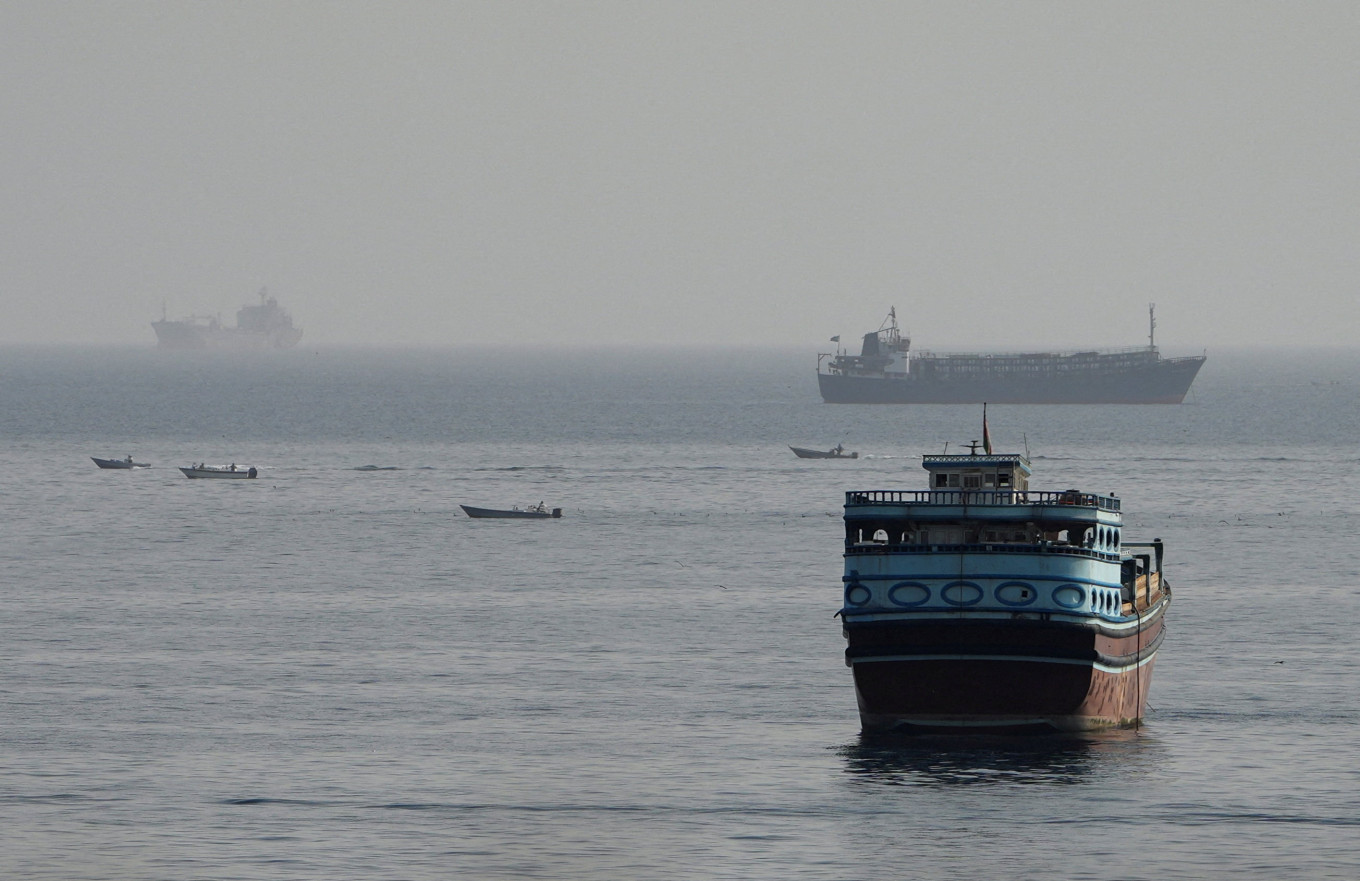 Vessels wait in the Strait of Hormuz, as seen from Musandam, Oman, on Aug. 3, 2026. (Reuters/Stringer)
W
hen President Prabowo Subianto told members of the Chamber of Commerce and Industry last week that Iran already possessed nuclear weapons, his remarks were quickly cut from the official recording.
They should not have needed to be.
The claim was unsubstantiated. The International Atomic Energy Agency has found no indication of a coordinated Iranian nuclear weapons program, and two of the country's most respected foreign policy analysts said so within hours.
The Foreign Ministry's clarification was more careful: the President, it said, was warning about the proliferation risk that flows from a destabilized Middle East, not confirming Iran's nuclear status. Indonesia consistently opposes nuclear proliferation and supports the Treaty on the Non-Proliferation of Nuclear Weapons.
All is well, except for Prabowo's performance.
If Indonesia's president is making unverified nuclear claims to a domestic business audience during the most consequential energy crisis of the decade, the country's strategic thinking has not kept pace with the conflict.

And that matters, because what is happening in the Strait of Hormuz is not merely a war. It is a new form of economic warfare, and Indonesia is not a bystander.