The Jakarta Post
Please Update your browser
Your browser is out of date, and may not be compatible with our website. A list of the most popular web browsers can be found below.
Just click on the icons to get to the download page.


Popular Reads
Top Results
No results found. Please check your search term and try again
Can't find what you're looking for?
View all search results
Popular Reads
Top Results
No results found. Please check your search term and try again
Can't find what you're looking for?
View all search resultsHow civic action shields youth from radicalization
Disillusioned youth are turning to radical ideologies—and our best defense is restoring purpose through meaningful civic engagement
Change text size
Gift Premium Articles
to Anyone
Share the best of The Jakarta Post with friends, family, or colleagues. As a subscriber, you can gift 3 to 5 articles each month that anyone can read—no subscription needed!
 Set as preferred source
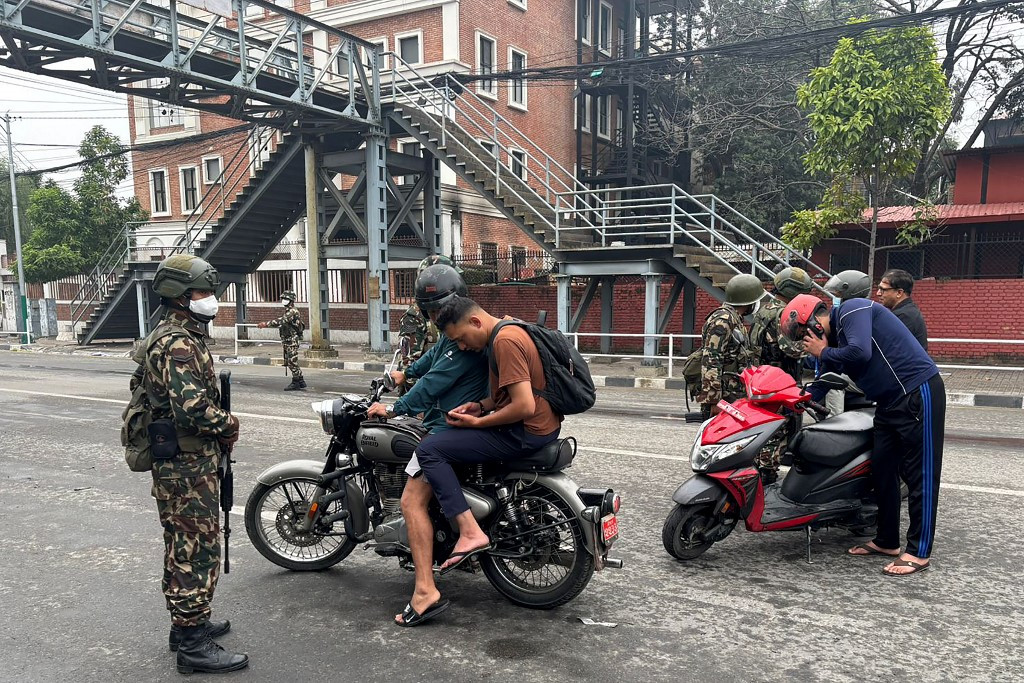 Army personnel inspect identity documents of commuters along a street as part of security measures on September 10, 2025, in Kathmandu. Nepali demonstrators set parliament ablaze on September 9, while the veteran prime minister quit, as a “Gen Z“ protest movement sparked by a ban on social media overtook the Himalayan nation. (AFP/Paavan Mathema)
I
often think that we are squandering a major global opportunity with the International Volunteer Year 2026. This milestone should be a celebrated turning point embraced wholeheartedly by the United Nations, national governments and grassroots civil society organizations worldwide.
Instead, there is near-total silence surrounding the initiative. It was conceived as a vital recognition of the power of civic engagement—a celebration of what communities can accomplish when they prioritize enduring values such as empathy, mutual cooperation and altruism.
This missed chance comes at a perilous moment when governments around the globe are losing touch with their younger generations. More and more, young citizens feel profoundly detached from public life, democratic institutions and community affairs. Disillusioned by stagnant socioeconomic prospects and alienated by polarized political environments, many retreat into digital cynicism or seek artificial emotional comfort in AI companions.
While we must be careful not to make sweeping generalizations, the broader pattern of disaffection is undeniable and deeply concerning. More alarmingly, an increasing number of disenfranchised youths are falling prey to extreme, radical and violent ideologies that thrive in environments where positive social bonds have eroded.
The dangerous surge in youth radicalization is precisely what prompted me to reflect on the stabilizing, transformative role of volunteerism. The immediate trigger for my reflection was the communal unrest that flared up across the southern plains of Nepal a few weeks ago. Clashes between Hindu and Muslim youths erupted into open mayhem, overwhelming local law enforcement and posing serious challenges for authorities trying to quell the violence.
Thousands of miles away, in a completely different part of Asia, young people continue to succumb to similarly destructive, albeit structurally distinct, radical influences. The rural plains of Nepal and the densely packed, hyper-modern urban spaces of Singapore could hardly be more different.

Yet in late July, Singaporean authorities arrested three teenagers caught in advanced stages of planning devastating violent attacks. All three were victims of radical doctrines: two had pledged allegiance to Islamic State (IS) propaganda, while the third—a boy of just 14—was drawn to what counter-terrorism experts classify as Composite Violent Extremism (CoVE), internalizing violent, nihilistic attitudes through first-person shooter games on online platforms like Roblox.