The Jakarta Post
Please Update your browser
Your browser is out of date, and may not be compatible with our website. A list of the most popular web browsers can be found below.
Just click on the icons to get to the download page.


Popular Reads
Top Results
No results found. Please check your search term and try again
Can't find what you're looking for?
View all search results
Popular Reads
Top Results
No results found. Please check your search term and try again
Can't find what you're looking for?
View all search resultsAnarchy and the geoeconomy: How China's adjustment impacts Indonesia
Great-power conflict won’t hit Southeast Asia with battleships first—it will arrive through hollowed-out commodity prices, flooded domestic markets and a battered rupiah.
Change text size
Gift Premium Articles
to Anyone
Share the best of The Jakarta Post with friends, family, or colleagues. As a subscriber, you can gift 3 to 5 articles each month that anyone can read—no subscription needed!
 Set as preferred source
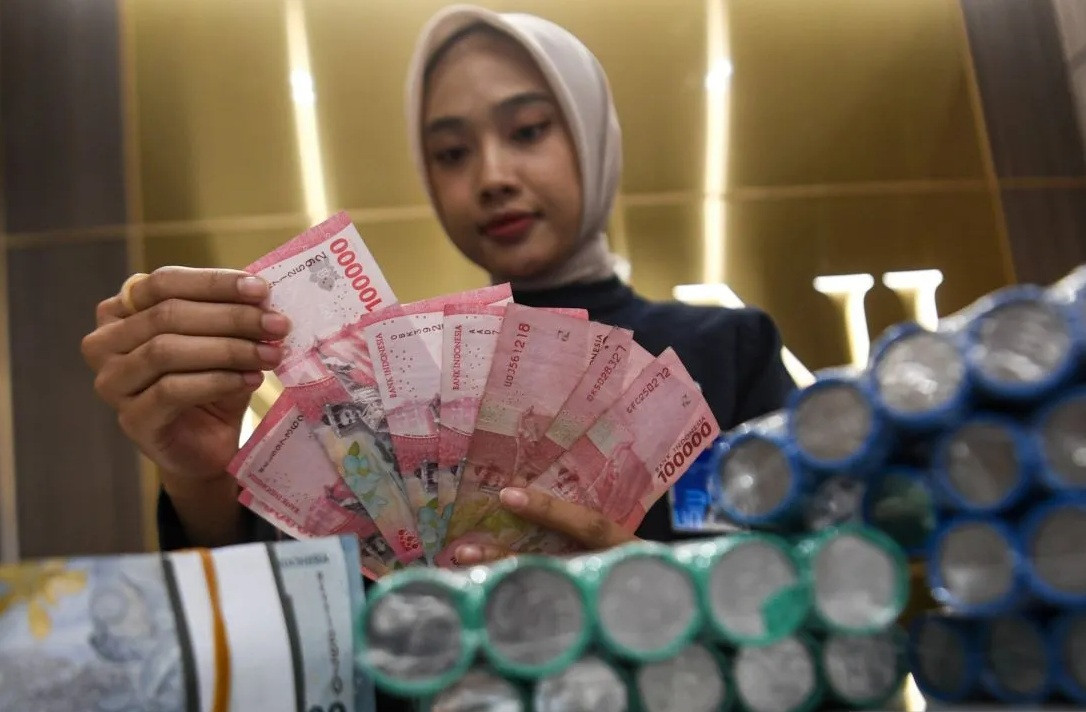 A teller counts rupiah banknotes at the BNI Pasar Baru branch in Jakarta on Oct. 27, 2025. (Antara/Muhammad Adimaja)

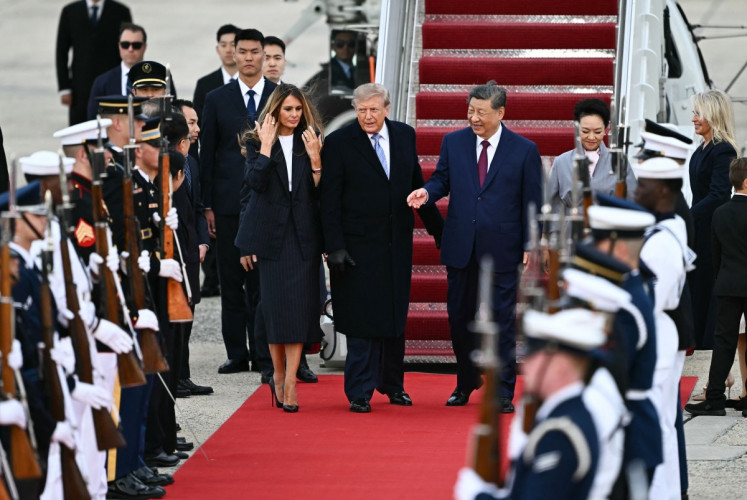
In his 50th-anniversary essay for International Security, "The Iron Cage of International Anarchy," John Mearsheimer offers an argument worth stating plainly: with no overarching global authority to enforce order, great powers are trapped into competing for security, and that competition inevitably risks war. Dating the return of multipolarity to roughly 2017, when China and Russia consolidated great-power status, he frames the United States-China rivalry as the system's most dangerous flashpoint.
For Southeast Asia, the troubling part is his rationale for why a conflict in East Asia is far more plausible than a US-Soviet clash ever was. China has not fought a major war since 1979 and lacks the Soviet Union's visceral memory of devastation. It operates with few allies to constrain its impulses, while its claims over Taiwan and the South China Sea are driven as much by raw nationalism as by cold strategy.
Unlike Cold War Europe, East Asia lacks a rigid Iron Curtain; a naval skirmish remains conceivable where a land war in Europe was unthinkable. Mearsheimer forecasts at least one major crisis within the next half-century.
Yet a 50-year horizon is too broad for practical statecraft. The urgent question is how this rivalry manifests right now, and the immediate battleground is geo-economic, not military. For a middle power, systemic anarchy hits through prices, capital flows and exchange rates long before warships show up on the horizon.
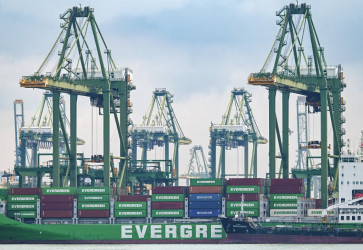
Michael Froman captures the sheer scale of this dynamic in "The Next Global Economic Crisis Could Be Made in China" (Foreign Affairs, August 2026). China’s 2025 trade surplus neared US$1.2 trillion. The country commands roughly 30 percent of global industrial output and is on track to hit 45 percent by 2030. The resulting friction is a matter of basic arithmetic: global GDP is projected to grow by just 3.1 percent in 2026, while China’s export surplus surged over 20 percent year-on-year.
This imbalance resists easy negotiation because its root cause is fiscal rather than purely industrial. Nearly 30 percent of Chinese industrial firms operate at a loss, climbing to 34 percent in sectors targeted by Made in China 2025. Yet these zombie enterprises survive because local provincial revenues depend directly on their existence.

Shifting the economy toward domestic household consumption would gut local tax bases overnight, guaranteeing that Beijing's reforms remain half-hearted. The fallout is staggering: China maintains 55 million units of automotive capacity for a global market of 90 million, alongside solar manufacturing capacity double the entire world's annual installations. A producer at that scale dictates global prices rather than taking them.