The Jakarta Post
Please Update your browser
Your browser is out of date, and may not be compatible with our website. A list of the most popular web browsers can be found below.
Just click on the icons to get to the download page.


Popular Reads
Top Results
No results found. Please check your search term and try again
Can't find what you're looking for?
View all search results
Popular Reads
Top Results
No results found. Please check your search term and try again
Can't find what you're looking for?
View all search resultsWhat SBY and Jokowi can teach Prabowo about regaining public trust
History proves political recovery is entirely possible. SBY and Jokowi successfully restored their approval ratings above 50 percent. Not only did they improve their numbers, both went on win re-election.
Change text size
Gift Premium Articles
to Anyone
Share the best of The Jakarta Post with friends, family, or colleagues. As a subscriber, you can gift 3 to 5 articles each month that anyone can read—no subscription needed!
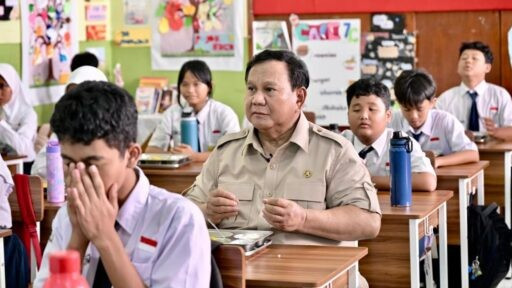 President Prabowo Subianto inspects the implementation of the free nutritious meal program on June 2 at State Junior High School (SMPN) 111 Jakarta. (Courtesy of/The Palace's Press Bureau (BPMI))
T
empo Data Science’s survey in August showed President Prabowo Subianto approval rating hovers at about 40 percent. In July, Saiful Mujani Research and Consulting’s (SMRC) phone survey placed the president’s approval rating at 51.1 per cent.
Despite methodological differences between pollsters, the trend is clear: Prabowo’s approval rating has fallen significantly since peaking around 80 percent in January 2025. Both surveys attribute the drop in Prabowo’s ratings to growing public dissatisfaction with the economy, politics and law enforcement.
In more than two decades, falling under the 50-percent psychological threshold is a rare setback for an Indonesian president as the public generally judges presidential performance with leniency.
Lembaga Survei Indonesia’s (LSI) data shows that Indonesian presidential approval has fallen below 50 percent only twice since 2004. Approval ratings fell to 45 percent under Susilo Bambang Yudhoyono (SBY) in June 2008, and to 40 percent under Joko “Jokowi” Widodo in June 2015.
Indonesian presidential approval ratings live and die primarily by how the public views the economy, even if non-economic factors still carry weight. The lowest approval ratings for both SBY and Jokowi illustrates this rule. Rising global oil prices forced both leaders to slash fuel subsidies to free up fiscal space, everyday costs soared and, ultimately, their approval ratings tanked.
Both predecessors faced falling global commodity prices and economic turbulence. SBY dealt with the fallout of the US financial crisis, while Jokowi navigated China’s economic deceleration.

Prabowo’s declining approval rating mirrors that of his predecessors, rooted firmly in public economic dissatisfaction. Today’s economic pressures are also partially caused by the global economic and geopolitical situation, particularly Trump tariffs and the Middle East conflict. The latter has already forced the Prabowo administration to raise non-subsidized fuel prices.