The Jakarta Post
Please Update your browser
Your browser is out of date, and may not be compatible with our website. A list of the most popular web browsers can be found below.
Just click on the icons to get to the download page.


Popular Reads
Top Results
No results found. Please check your search term and try again
Can't find what you're looking for?
View all search results
Popular Reads
Top Results
No results found. Please check your search term and try again
Can't find what you're looking for?
View all search resultsA fractured world tests the limits of multilateralism
From Central Asia to the Pacific, sovereign states are proving that global rules cannot remain the exclusive playground of great powers.
Change text size
Gift Premium Articles
to Anyone
Share the best of The Jakarta Post with friends, family, or colleagues. As a subscriber, you can gift 3 to 5 articles each month that anyone can read—no subscription needed!
 Set as preferred source
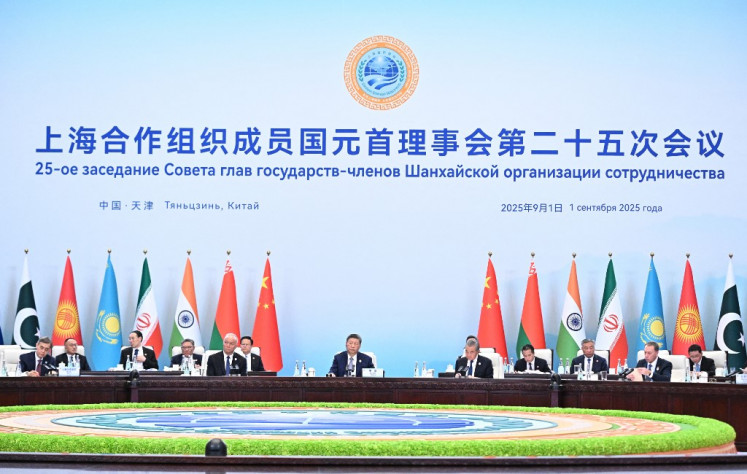
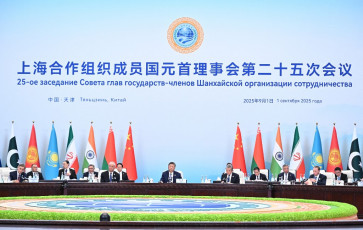
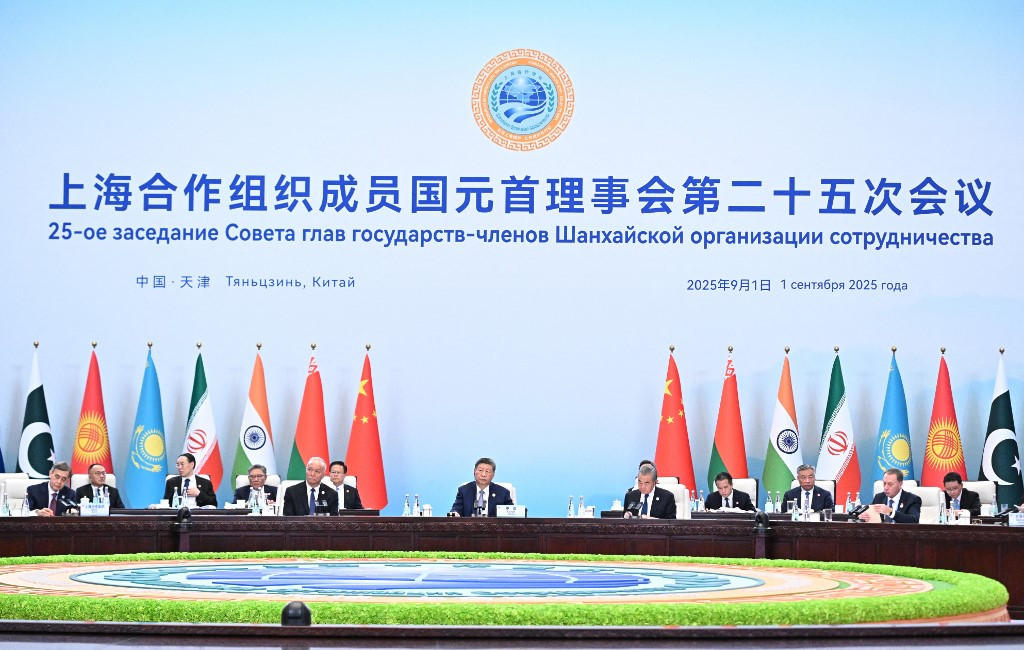 Chinese President Xi Jinping (center) attends the Shanghai Cooperation Organisation (SCO) Summit in Tianjin on Sept. 1, 2025, in this pool photograph distributed by the Russian state agency Sputnik. (AFP/Pool/Sergey Bobylev)
F
rom Central Asia to Micronesia and across Europe, positive signals are beginning to emerge, reaffirming the importance of a rules-based international order, one grounded in core principles and values that firmly reject arrogance and hegemonic overreach.
Consider the recent Shanghai Cooperation Organization (SCO) summit held in Bishkek, the capital of Kyrgyzstan. Before looking at the proceedings themselves, it is worth spending a moment on the SCO as a concept.
A genuine multilateral order demands fresh cooperative mechanisms capable of forging new partnerships. As an initiative originally spearheaded by China, the SCO can play an important role here. It brings together nearly all of Central Asia, save for Turkmenistan, a region that has already demonstrated immense strategic value. Crucially, it unites India, Pakistan, Russia and Iran alongside Beijing.
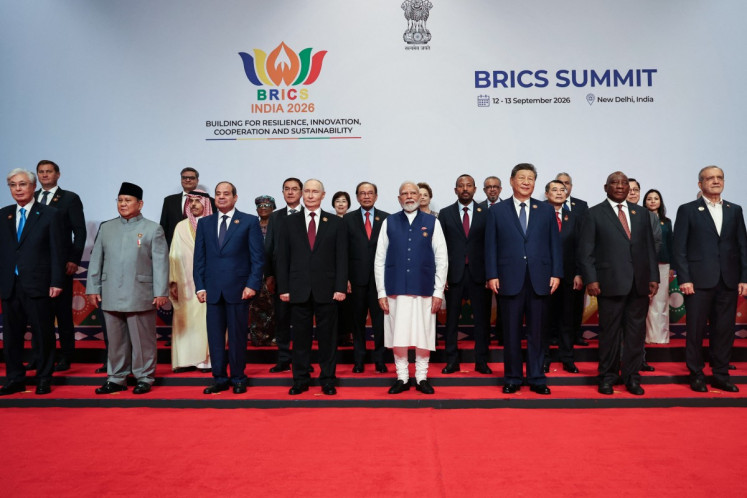
Western observers, who consider human rights an indispensable component of foreign policy, must accept a pragmatic reality: a more balanced, truly multipolar international community must inevitably make room for illiberal and overtly authoritarian states. Consequently, organizations like the SCO and BRICS should not be judged strictly against the high moral standards that Western nations set for themselves, and often attempt to export abroad, occasionally at the cost of noticeable double standards. Instead, these institutions should be evaluated not just for their manifest limitations, but for their genuine potential to foster economic cooperation and, over time, people-to-people ties.
At their best, such forums can provide an unexpected stage for the candid dialogue humanity needs to confront today’s compounding crises. That was precisely the case in Bishkek when Indian Prime Minister Narendra Modi, during a sideline bilateral meeting, pressed Russian President Vladimir Putin to bring an end to the war in Ukraine. Modi’s remarks were unusually forthright:
“Every day that the war continues, humanity is, in effect, set back a step, whilst every step toward peace gives all of humanity real hope for peace. We need to move from endless war to an end to the war, to a cessation of hostilities.”

This was the defining takeaway from Bishkek. The international community should welcome a more assertive India prepared to turn rhetoric into action regarding the casualties and devastation caused by the war against Ukraine. The Indian leader struck the right chord at the right moment, better late than never. A fairer, more balanced multilateral order requires rising powers like India to demonstrate that they can adopt principled, unequivocal stances on the global stage.