The Jakarta Post
Please Update your browser
Your browser is out of date, and may not be compatible with our website. A list of the most popular web browsers can be found below.
Just click on the icons to get to the download page.


Popular Reads
Top Results
No results found. Please check your search term and try again
Can't find what you're looking for?
View all search results
Popular Reads
Top Results
No results found. Please check your search term and try again
Can't find what you're looking for?
View all search resultsWhat do dead monkeys reveal about Indonesia's wildfire toll?
The flames may eventually die down, but for the wildlife trapped in Indonesia’s charred forests, the real crisis of hunger, trauma and displacement has only just begun.
Change text size
Gift Premium Articles
to Anyone
Share the best of The Jakarta Post with friends, family, or colleagues. As a subscriber, you can gift 3 to 5 articles each month that anyone can read—no subscription needed!
 Set as preferred source
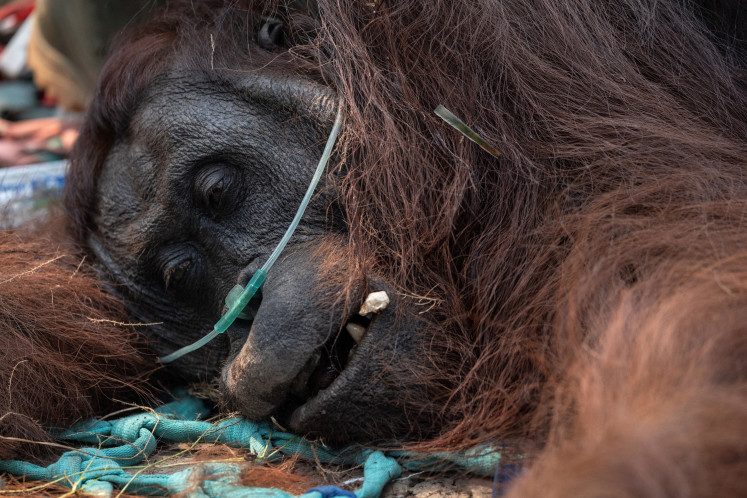
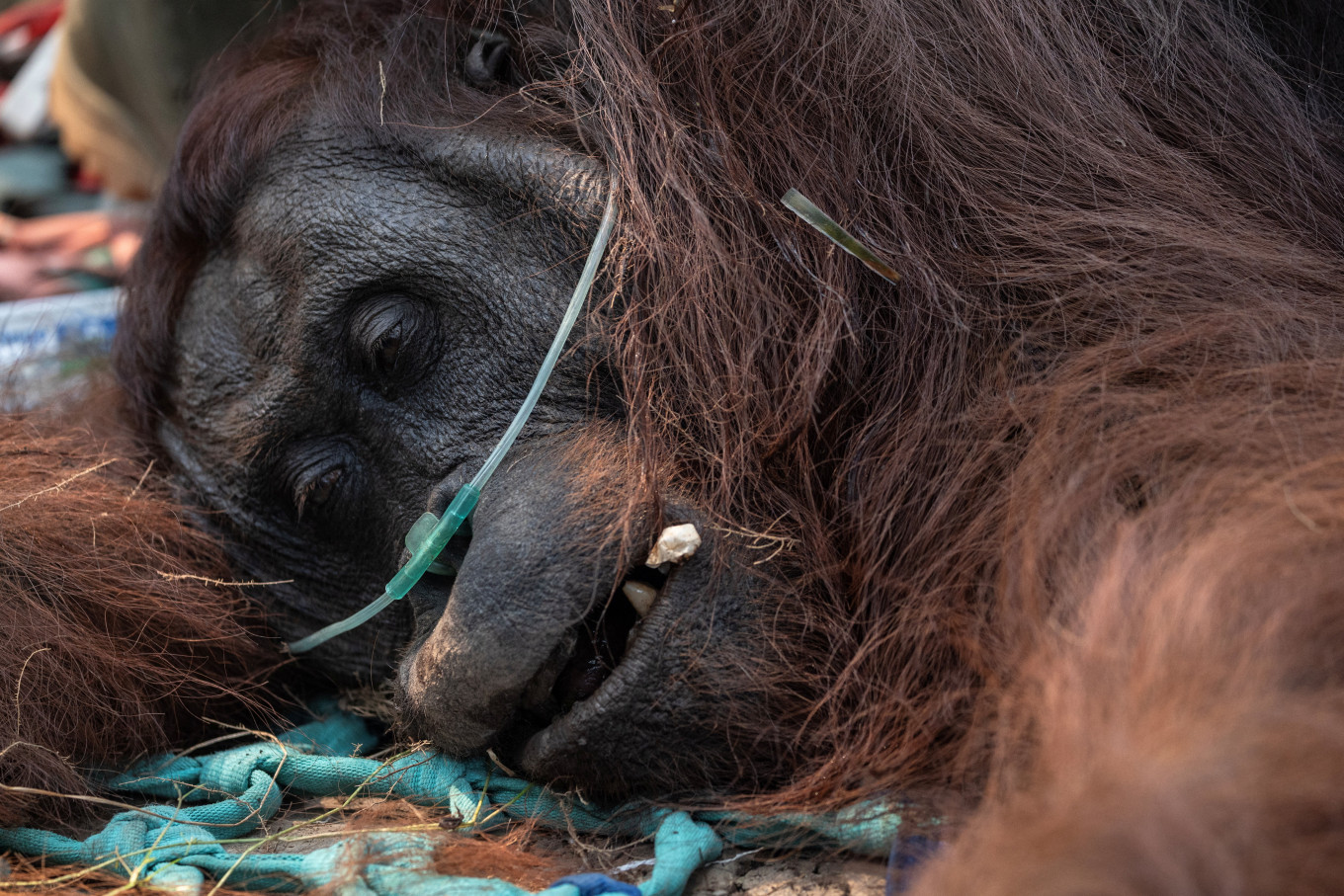 An orangutan named Sampurna receives emergency treatment after being rescued on Aug. 30 at a palm-oil plantation near an area affected by wildfires, in Kuala Satong village, Ketapang regency, West Kalimantan. (Reuters/Willy Kurniawan)
I
ndonesia’s wildfire season, an all-too-familiar companion to prolonged drought, has crossed into territory that feels far more visceral. The damage is not just an abstract statistic about scorched hectares or vanishing canopy anymore—it is turning up in the bodies of animals.
In Kalimantan, the wildfires have killed 12 endangered proboscis monkeys, and left many orangutans with respiratory infections, burn injuries and severe food shortages. Over in Sumatra, wild elephants are running out of ground as the fires squeeze their habitat down to scraps. What we are watching unfold is no longer simply forest loss; it’s an immediate, acute animal welfare crisis.
This is where drawing a line between conservation and animal welfare actually matters. Conservation usually steps back to ask the macro question: Will the species or the population survive? Animal welfare zooms in what the individual creature is enduring right now?
A wild animal doesn't need to be on the brink of extinction for its suffering to count. The Five Domains Model—a framework developed by David Mellor and his colleagues—gauges welfare across nutrition, environment, physical health, behavior and mental state.
A wildfire hammers every single one simultaneously. Water points foul or dry up. Forage turns to ash. The air grows thick, searing and toxic, searing lung tissue and burning skin. Basic, daily instincts—foraging, traveling, finding a safe roost, interacting with a group—are shattered overnight. The inevitable result is a slow grinding mix of hunger, exhaustion and sustained panic.
Seen from this perspective, a carcass is merely the most visible casualty. A surviving animal that has lost its territory, inhaled dense smoke for days and been driven into an agricultural plantation is enduring an acute welfare crisis. Crucially, the damage does not end when the air clears.

Research on wild Bornean orangutans following the 2015 peat fires in Central Kalimantan revealed that smoke exposure fundamentally altered their behavior and energy balance. The primates spent significantly more time resting, and these physiological shifts persisted long after the haze had dispersed. This finding exposes how routinely we underestimate the broader impacts of wildfires. Direct burning is not required to cause harm. Smoke alone compromises respiratory health and mobility; destroyed canopy reduces food availability months down the line; and fragmented cover forces wildlife to travel farther and take greater risks simply to survive.