The Jakarta Post
Please Update your browser
Your browser is out of date, and may not be compatible with our website. A list of the most popular web browsers can be found below.
Just click on the icons to get to the download page.


Popular Reads
Top Results
No results found. Please check your search term and try again
Can't find what you're looking for?
View all search results
Popular Reads
Top Results
No results found. Please check your search term and try again
Can't find what you're looking for?
View all search resultsAI in RI healthcare: Opportunities and risks
From the perspective of Indonesia’s national health policy, AI is an innovation. Ensuring that innovation is safe, equitable and trustworthy is a critical issue when it comes to AI in the health sector.
Change text size
Gift Premium Articles
to Anyone
Share the best of The Jakarta Post with friends, family, or colleagues. As a subscriber, you can gift 3 to 5 articles each month that anyone can read—no subscription needed!
 Set as preferred source
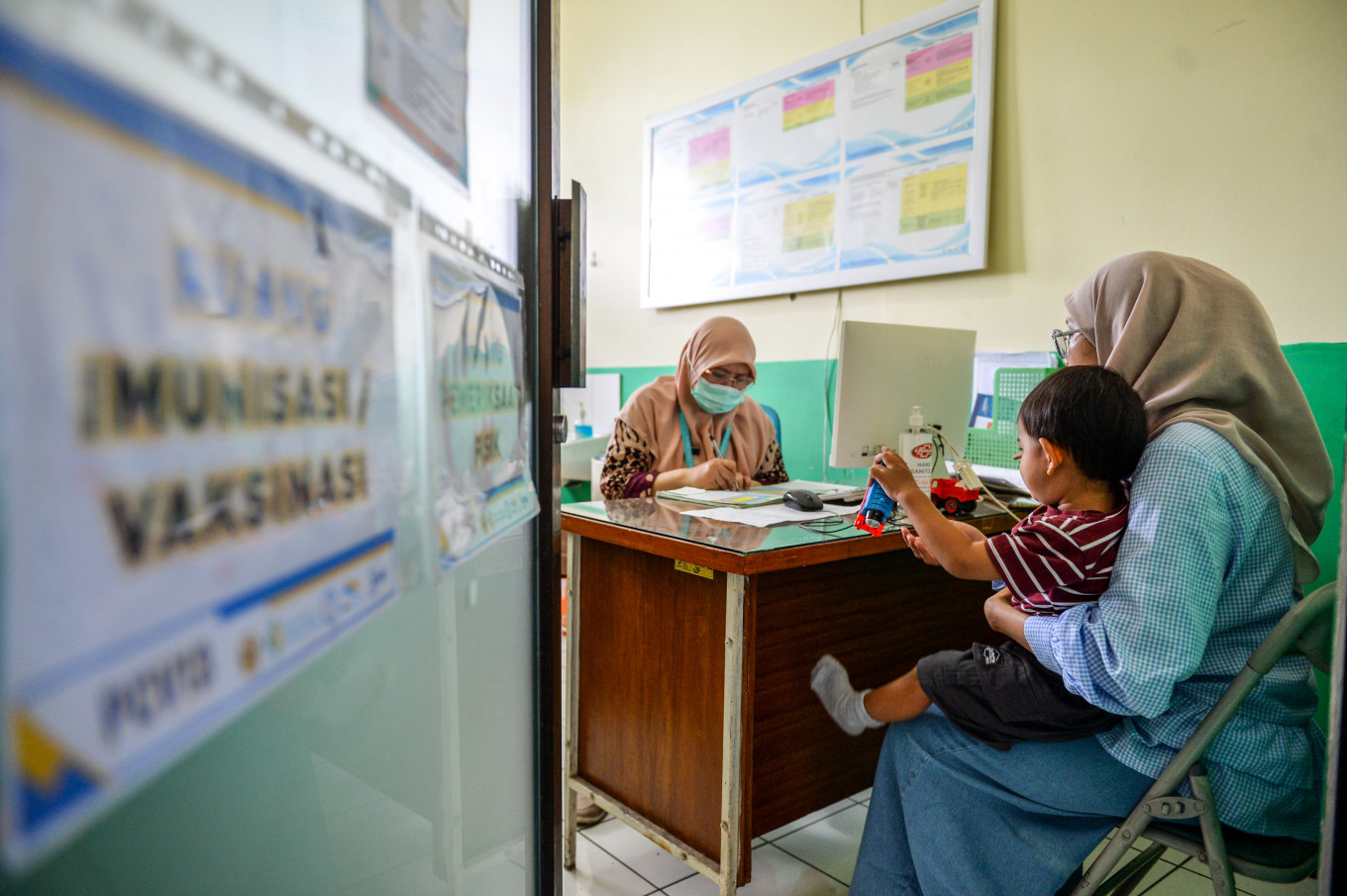 A doctor attends to a toddler receiving a measles vaccine on March 27 at the Ibrahim Adjie community health center (Puskesmas) in Bandung, West Java. (Antara/Raisan Al Farisi)
M
omentum for using artificial intelligence in Indonesia’s healthcare industry has been building significantly in recent years. Each year, billions of dollars go into developing technologies in hospitals, expanding AI-driven diagnostic tools for catastrophic diseases such as cancer, stroke and heart problems.
Major medical institutions say in various reports that physicians, nurses and other health workers already use AI tools to simplify documentation and reduce burnout. At the same time, many patients are reportedly turning to generative AI for health guidance, using it as a digital “front door” to care.
Despite a clear and rapid increase in approvals for AI-enabled medical tools, societal concerns linger over whether physicians will remain responsible for patient health: Will they still hold the stethoscope and talk to their patients, or will they rely more on AI than on developing their own clinical judgment?
From the perspective of Indonesia’s national health policy, AI is an innovation. Ensuring that innovation is safe, equitable and trustworthy is a critical issue when it comes to AI in the health sector.
Amid heavier and more complex challenges facing its health system, such as demographic changes with a continuously growing population and a significant increase in non-infectious diseases, Indonesia has adopted AI to address real problems posed by its geography.
Asnawi Abdullah, head of the Health Development Policy Agency at the Health Ministry, said AI has been used to bridge the gap in healthcare services across Indonesia’s vastness.

On its strategic role in community health centers (puskesmas) in remote areas, AI helps health workers identify people with high complication risks early and decide on priority referrals quickly and precisely, as well as notifying patients not to stop taking their medication, Asnawi said during the recent launch of the Philips Future Health Index 2026.