The Jakarta Post
Please Update your browser
Your browser is out of date, and may not be compatible with our website. A list of the most popular web browsers can be found below.
Just click on the icons to get to the download page.


Popular Reads
Top Results
No results found. Please check your search term and try again
Can't find what you're looking for?
View all search results
Popular Reads
Top Results
No results found. Please check your search term and try again
Can't find what you're looking for?
View all search resultsBRICS seeks to give the Global South a bigger voice
The grouping increasingly represents emerging and middle powers across regions that share common development priorities and seek a greater voice in institutions shaping global affairs.
Change text size
Gift Premium Articles
to Anyone
Share the best of The Jakarta Post with friends, family, or colleagues. As a subscriber, you can gift 3 to 5 articles each month that anyone can read—no subscription needed!
 Set as preferred source
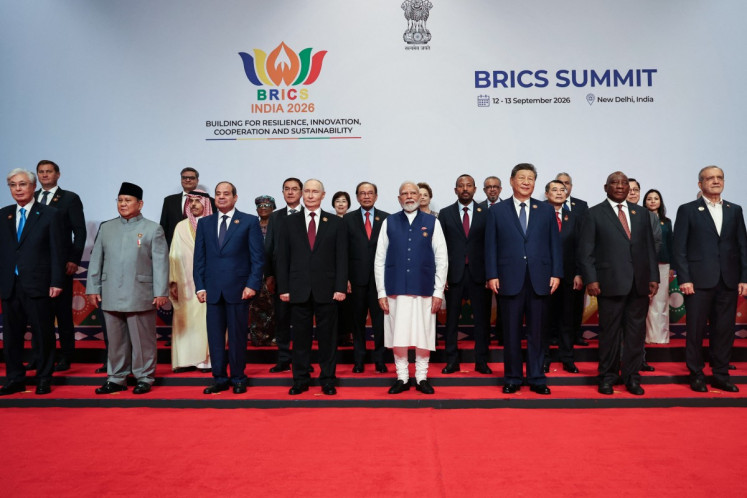
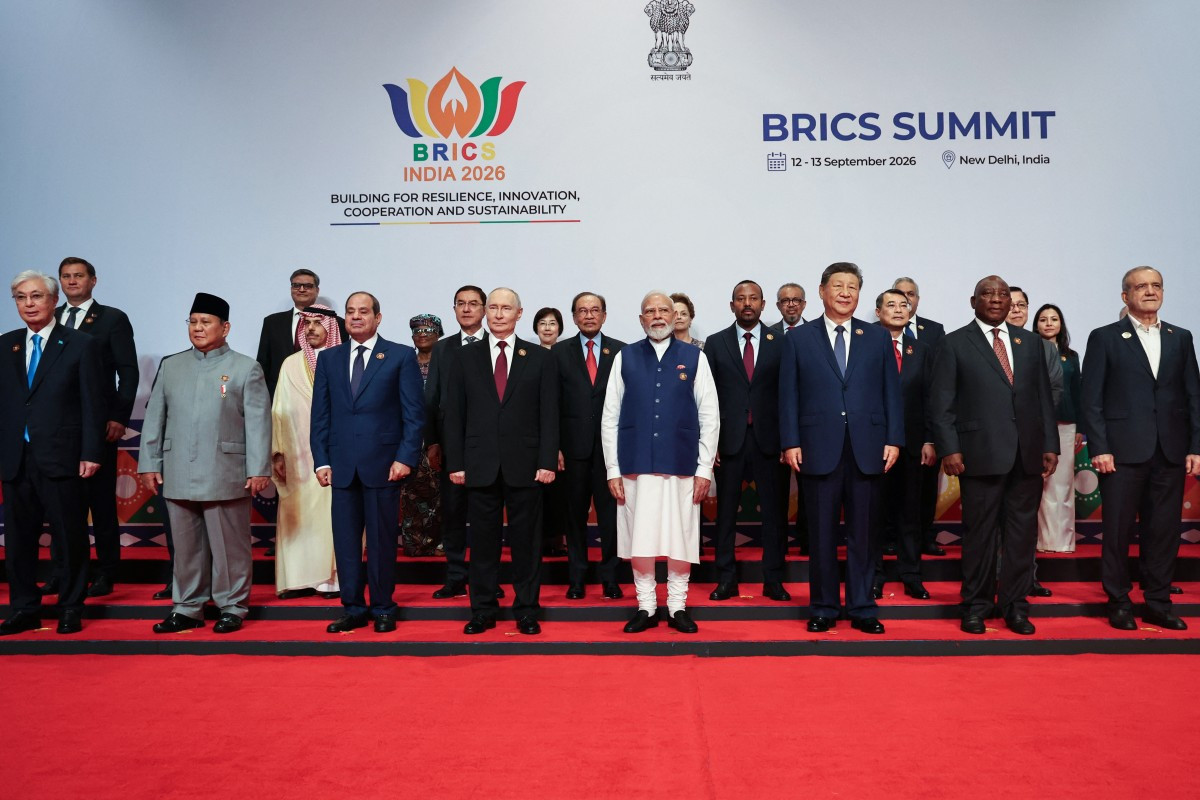 Leaders of participating countries gather for a photograph on Sept. 13 during the 18th BRICS Summit in New Delhi. (AFP/Sputnik)
D
espite attempts in some international commentaries to portray the 18th BRICS Summit in New Delhi as being overshadowed by differences among member states, the grouping used its latest meeting to underline a broader agenda: greater representation for emerging economies in global decision-making and reforms to the international economic and political order.
The presence of leaders from diverse political systems, including Russian President Vladimir Putin, Iranian President Masoud Pezeshkian and Indian Prime Minister Narendra Modi, reflected the expanding composition and geopolitical diversity of BRICS. Rather than being defined by political uniformity, the grouping increasingly represents emerging and middle powers across regions that share common development priorities and seek a greater voice in institutions shaping global affairs.
At the heart of India’s BRICS Presidency was the argument that the international system needs to evolve in line with changes in the global economic balance. Modi, addressing the opening session of the summit, called for global governance reforms that could transform what he described as a “pyramid of privilege” into a “platform of partnership”.
Modi argued that existing global governance structures concentrate decision-making among a limited number of countries, while many nations remain primarily recipients of decisions made elsewhere. He proposed that BRICS work towards developing 10 proposals for global governance reform, with the objective of evolving them into a BRICS Reform Roadmap by the next summit.
He also highlighted the disconnect between the role played by developing countries in addressing global crises and their representation in international decision-making. His observation that the Global South is “today in the front row of global crises, but in the back row of decision-making” captured one of the central concerns driving the grouping’s reform agenda.
The summit placed reform of global governance among its key priorities, particularly against the backdrop of a more fragmented and multipolar international environment.

BRICS reiterated its support for a multilateral system that is more representative, inclusive, responsive, transparent and accountable. The grouping also reaffirmed its commitment to international law and the purposes and principles of the UN Charter, while stressing the importance of dialogue, consultation and cooperation among nations.