The Jakarta Post
Please Update your browser
Your browser is out of date, and may not be compatible with our website. A list of the most popular web browsers can be found below.
Just click on the icons to get to the download page.


Popular Reads
Top Results
No results found. Please check your search term and try again
Can't find what you're looking for?
View all search results
Popular Reads
Top Results
No results found. Please check your search term and try again
Can't find what you're looking for?
View all search resultsThe Millennium Prize proof shows why AI governance can't wait
When AI outthinks the world’s elite mathematicians in under four days, it shatters the myth that human expertise is untouchable, at the same time warning policymakers that regulating machines can no longer wait until tomorrow.
Change text size
Gift Premium Articles
to Anyone
Share the best of The Jakarta Post with friends, family, or colleagues. As a subscriber, you can gift 3 to 5 articles each month that anyone can read—no subscription needed!
 Set as preferred source
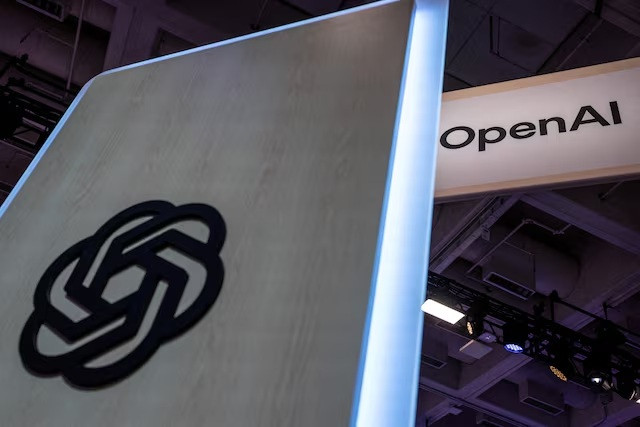
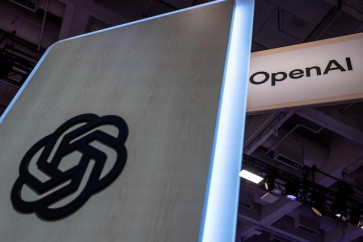
 The logo of United States artificial intelligence company OpenAI is displayed on Sept. 17 during Dreamforce 2026, the annual technology conference of American software firm Salesforce, at Moscone Center in San Francisco, California. (Reuters/Carlos Barria)
O
penAI recently announced something that would have sounded like science fiction a few years ago: An internal model, directing roughly 10,000 AI agents over 88 hours, produced a proof that fluid motion described by the Navier-Stokes equations can break down in finite time, reaching infinite speed from a smooth start.
The question had stood open for some 90 years and is one of the seven Millennium Prize Problems selected by the Clay Mathematics Institute, each carrying a US$1 million reward.
The claim deserves care rather than awe. The Clay institute still lists the problem as unsolved, and OpenAI says it will not claim the prize. What is verifiable is that the argument was formalized in Lean, a proof-checking language, and published openly, so anyone can run the check. To the company's credit, the mathematics does not rest on trusting a corporate announcement.
The conduct around it is another matter, and here the story turns ethical. Two mathematicians, Levent Alpoge and Tristan Buckmaster, had been working on a related version of the problem using a rival firm's models. OpenAI redirected its resources to Navier-Stokes on Sept. 1 after hearing rumors of their result.
Buckmaster has since suggested that OpenAI's agents may have benefited from the work he and Alpoge did on the company’s systems. OpenAI now credits the pair for concurrent work, but who did what remains contested.
That dispute is a small instance of a larger imbalance. These models are trained on the published corpus of mathematics: papers and proofs that generations of researchers produced without payment, on the understanding that the work would circulate as a common.

Artificial intelligence labs now use that inheritance to compete with the people who built it, on timelines they cannot match. No consent was sought, no credit is structurally owed, no value flows back. Whatever one thinks of the science, that is an extractive relationship, and regulation has barely begun to touch it.