The Jakarta Post
Please Update your browser
Your browser is out of date, and may not be compatible with our website. A list of the most popular web browsers can be found below.
Just click on the icons to get to the download page.


Popular Reads
Top Results
No results found. Please check your search term and try again
Can't find what you're looking for?
View all search results
Popular Reads
Top Results
No results found. Please check your search term and try again
Can't find what you're looking for?
View all search resultsAnalysis: Equality before the law ends inside prison cells
Change text size
Gift Premium Articles
to Anyone
Share the best of The Jakarta Post with friends, family, or colleagues. As a subscriber, you can gift 3 to 5 articles each month that anyone can read—no subscription needed!
 Set as preferred source
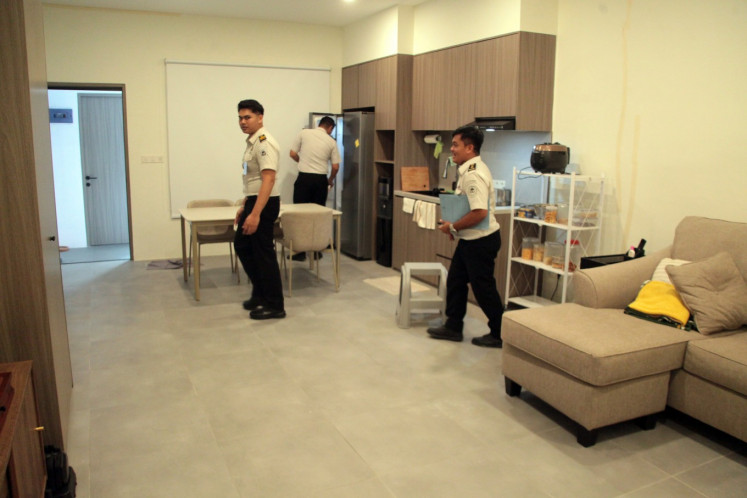
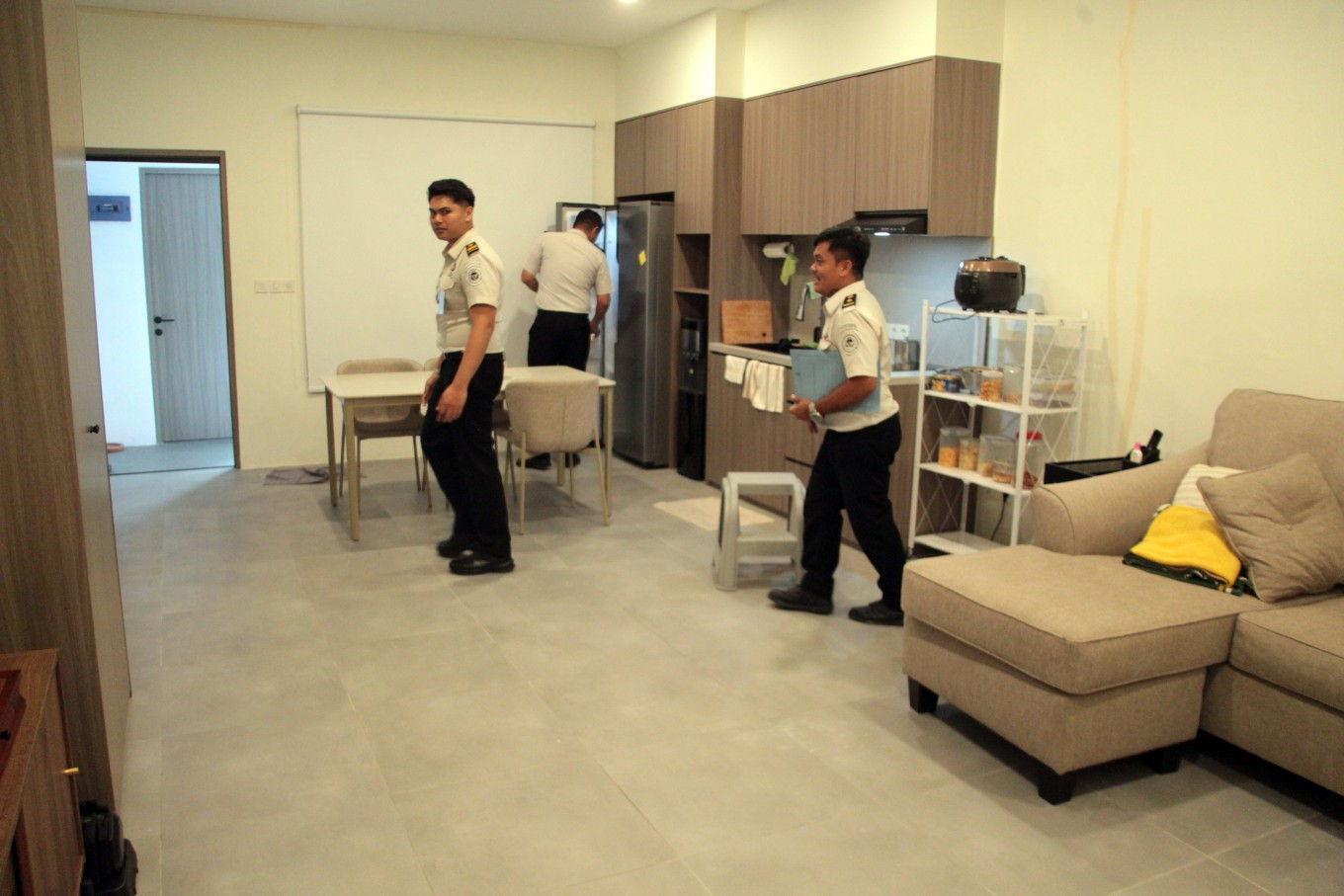 Officials show a room raided by the Indonesian Ombudsman at the Cibinong Penitentiary in Bogor, West Java, on Thursday, Sept. 24, 2026. West Java Corrections directorate head Yudi Suseno said the 11 official residences were provided for several prison officials, including the Cibinong penitentiary head. (Antara/Yulius Satria Wijaya)
I
ndonesia has once again been forced to confront an uncomfortable question: What happens to the principle of equality before the law once the courtroom doors close?
The question has resurfaced with renewed urgency following a Sept. 23 inspection by the Indonesian Ombudsman at Cibinong Penitentiary in West Java, which uncovered what appeared to be a cluster of well-appointed private residences built directly inside the prison complex. Footage of the unannounced visit quickly went viral. The quarters were furnished with amenities far more typical of serviced apartments than correctional cells, featuring air conditioners, flat-screen televisions, refrigerators, plush sofas and formal dining tables. At one point, an individual was captured hurriedly shutting a door as investigators approached, evidently attempting to evade scrutiny.
According to the Ombudsman, the inspection team identified more than 10 house-like structures on the grounds, alongside luxury vehicles, a fully equipped gym and a golf simulator under construction. One occupant identified himself as an inmate, though correctional officers quickly intervened to block further questioning.
The revelations provoked swift public outcry, fueling demands to uncover how such accommodation could exist inside a state penitentiary and who authorized their use. To its credit, the government acted rapidly. On Sept. 25 and 26, the Immigration and Corrections Ministry questioned 52 inmates and more than 50 facility staff members. On Sept. 26, the ministry suspended Cibinong warden Wisnu Hani Putranto alongside four senior administrative officers pending a full inquiry. Yet subsequent disclosures revealed problems that run far deeper than unauthorized comforts.
During a Sept. 28 hearing before House of Representatives Commission XIII, Director General of Corrections Mashudi conceded that the Cibinong compound housed 16 residential units, 13 of which were never registered as state assets. Mashudi maintained that the buildings were intended as official staff residences and assimilation facilities rather than illicit cells. However, he also admitted that two inmates, Ahmad Albani and Hasan Tjhie, were present inside the facilities during the inspection. Both men were convicted in the high-profile PT Timah graft case, each handed 10-year sentences by the Jakarta High Court in 2025.
The Ombudsman laid out even more troubling details during a separate hearing before House Commission II the following day. Investigators revealed that corruption convict Jimmy Masrin, the former president commissioner of PT Petro Energy sentenced in March 2026 in the Indonesia Eximbank graft case, was suspected of occupying one of the luxury units. Furthermore, the team discovered CCTV equipment throughout the residential enclave, directly contradicting the warden’s earlier assertion that the area lacked surveillance, though investigators could not immediately confirm whether the cameras were operational.

Compounding the issue of preferential housing, the Ombudsman cited reports from inmates’ families alleging that prisoners were routinely subjected to illegal levies of Rp 150,000 (US$8.40) per week simply to secure basic treatment. The scandal has therefore moved well past the initial shock of opulent interiors. The pressing issues now center on administrative complicity: who authorized access, how these shadow assets operated outside state registers and to what extent wealth and connections continue to purchase an entirely different reality behind bars.