The Jakarta Post
Please Update your browser
Your browser is out of date, and may not be compatible with our website. A list of the most popular web browsers can be found below.
Just click on the icons to get to the download page.


Popular Reads
Top Results
No results found. Please check your search term and try again
Can't find what you're looking for?
View all search results
Popular Reads
Top Results
No results found. Please check your search term and try again
Can't find what you're looking for?
View all search resultsThree agendas for Minister Arrmanatha
Many see and expect that the new Foreign Minister could inject a new energy into the performance of Indonesia’s foreign policy in the years to come.
Change text size
Gift Premium Articles
to Anyone
Share the best of The Jakarta Post with friends, family, or colleagues. As a subscriber, you can gift 3 to 5 articles each month that anyone can read—no subscription needed!
 Set as preferred source
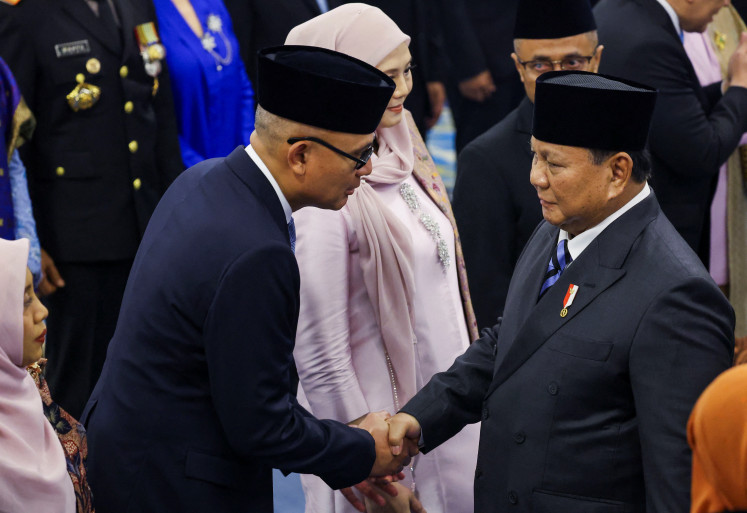
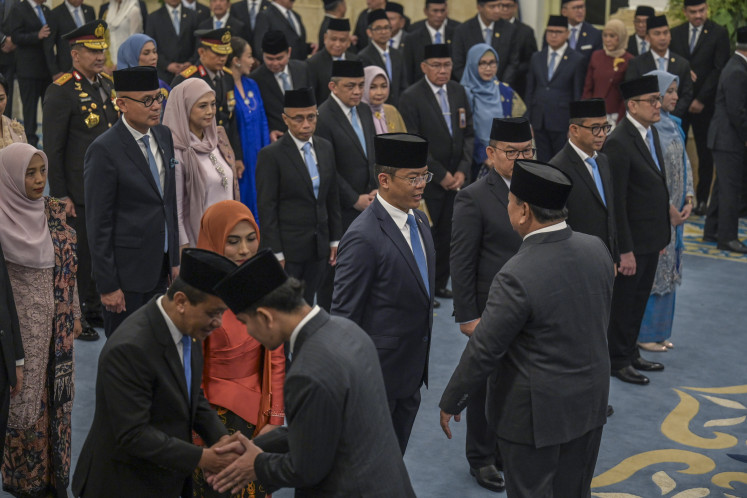
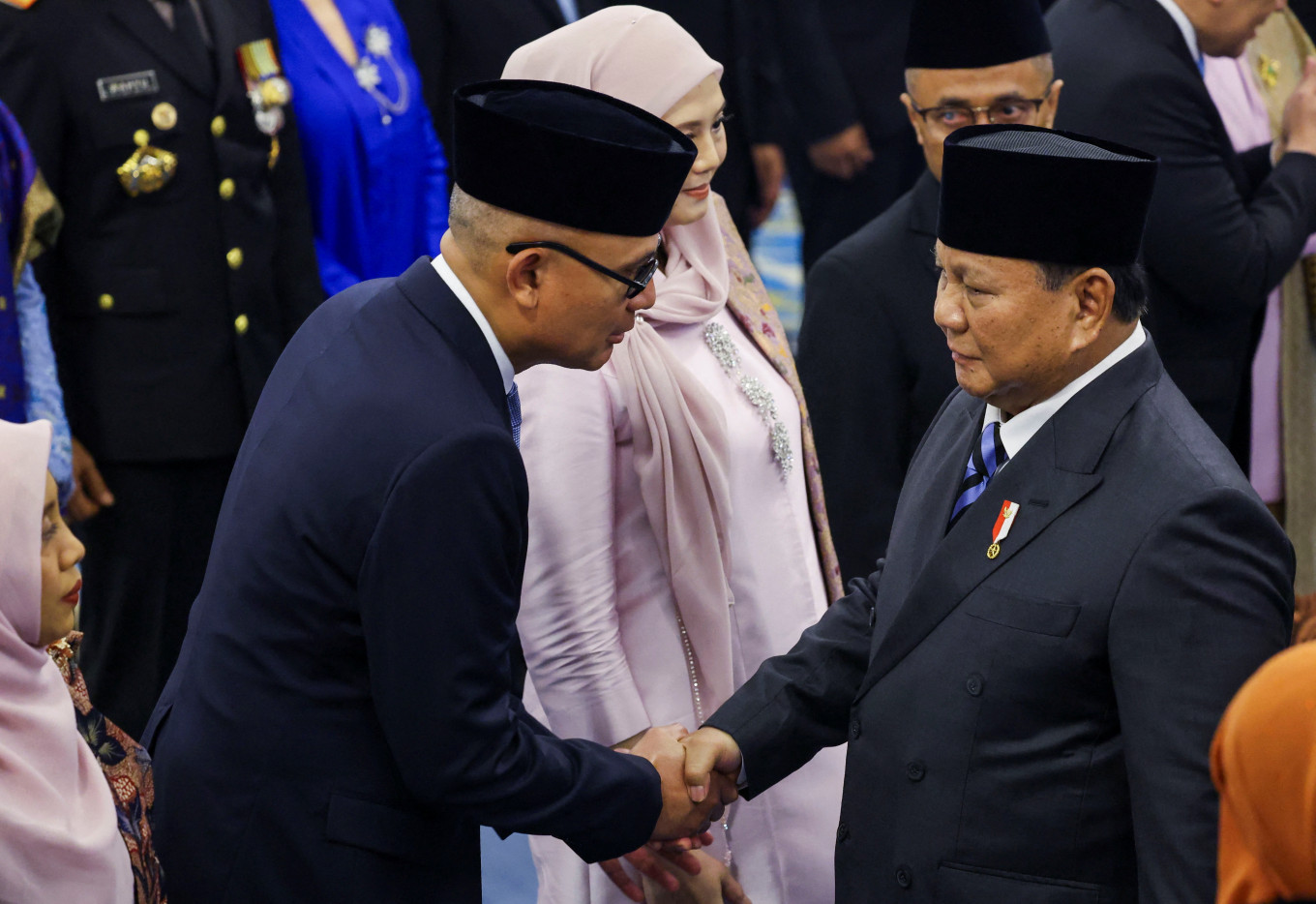 President Prabowo Subianto greets Foreign Minister Arrmanatha Nasir following Nasir's inauguration at the State Palace in Jakarta on Oct. 1, 2026 (Reuters/Ajeng Dinar Ulfiana)
T
he appointment of Arrmanatha Nasir, a career and professional diplomat, as Foreign Minister on Oct. 1, has been hailed by many as a step in the right direction. Many see and expect that the new Foreign Minister could inject a new energy into the performance of Indonesia’s foreign policy in the years to come.
At the same, it is also important to point out, as Minister Arrmanatha himself reiterated after the inauguration, that a degree of continuity is unavoidable and, in fact, necessary. In other words, Minister Arrmanatha, while recognizing the need to balance change and continuity, also realizes that his function and role as “an assistant” to the President in formulating and executing foreign policy. Any expectation of what he should and could do must be understood within that constitutional limitation.
While it is true that our foreign policy needs a more comprehensive and coherent strategic framework, Minister Arrmanatha cannot do everything all at once. The challenges facing Indonesia will grow increasingly more severe in the next decade or so. However, how and whether Indonesia can address those challenges in the next decade or so would very much depend on what we do now.
I would like to suggest that for the next three years, Minister Arrmanatha should focus on three strategic agendas.
The first agenda is to formulate and execute a clearer multilateral institutional strategy, both at global and regional arenas. Here, Indonesia needs to define clearly its position in, and engagement with, three critical multilateral institutions.
The immediate and most pressing one is at the United Nations. Minister Arrmanatha needs to provide a clearer rationale for why we are seeking a non-permanent seat at the UN Security Council (UNSC) next year, and what we plan to do once we are elected. We all know that the UN is under serious strain. It has become ineffective, its relevance is being questioned, and in fact the entire UN system is in a dire need of overhaul. Here, for example, Indonesia could revive the drive to reform the UN, especially its Security Council. Many ideas are out there. What Minister Arrmanatha needs to do is just gather some ideas from the best minds in international affairs in the country.

The second is what to do with our membership in BRICS. This issue has been debated since Prabowo Subianto’s government decided to join the grouping. What we need now is to formulate clear objectives that we want to achieve through our membership of BRICS. Strategically, we need to make it clear how we want BRICS to evolve. We should reiterate that the value of BRICS to Indonesia lies in its agenda to ensure a more equitable and just international order. BRICS, we must insist, should never become an anti-West bloc, and we should not allow other members to use BRICS for its own national strategic agenda.