The Jakarta Post
Please Update your browser
Your browser is out of date, and may not be compatible with our website. A list of the most popular web browsers can be found below.
Just click on the icons to get to the download page.


Popular Reads
Top Results
No results found. Please check your search term and try again
Can't find what you're looking for?
View all search results
Popular Reads
Top Results
No results found. Please check your search term and try again
Can't find what you're looking for?
View all search resultsAnalysis: SAL new rulebook: Where the money should go
Change text size
Gift Premium Articles
to Anyone
Share the best of The Jakarta Post with friends, family, or colleagues. As a subscriber, you can gift 3 to 5 articles each month that anyone can read—no subscription needed!
 Set as preferred source
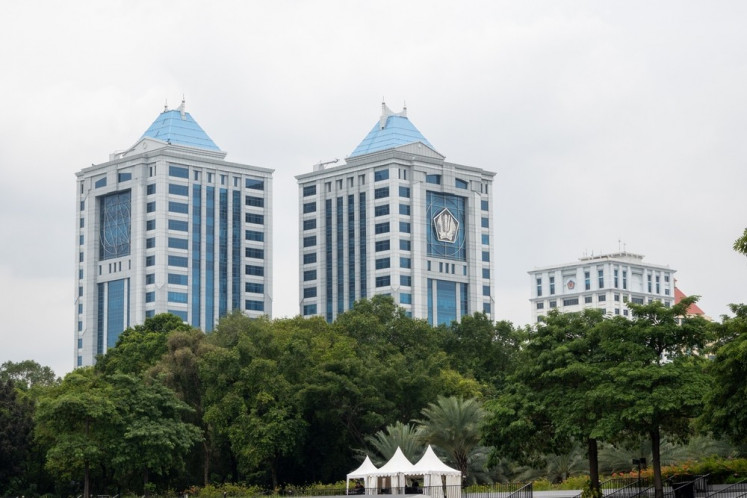
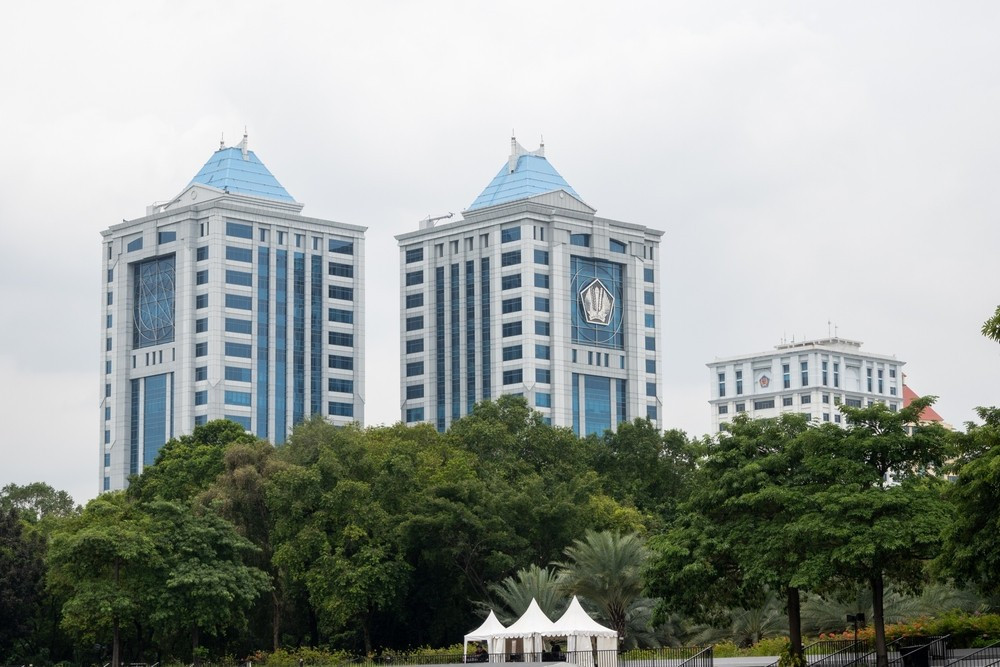 A general view of the Finance Ministry office is seen on Dec. 6, 2024, in Jakarta. (Shutterstock/ardiwebs)
T
he government has formally changed how it manages its budget surplus funds (SAL), ending a nearly year-long debate over how the roughly Rp 400 trillion (US$22.4 billion) in surplus funds should be managed and put to use. Under Finance Ministry Regulation (PMK) No. 67/2026, excess government cash can now be placed with commercial banks or invested in government securities (SBN), giving the Finance Ministry greater flexibility in managing its cash.
The policy builds on a strategy introduced under then-finance minister Purbaya Yudhi Sadewa, who began moving SAL funds from Bank Indonesia (BI) into state-owned banks (Himbara) in September 2025 to increase banking liquidity and encourage lending. The policy subsequently became the subject of a tug-of-war between the Finance Ministry and BI as the government temporarily withdrew part of the funds from Himbara in June amid pressure on the rupiah, before returning them following concerns over bank liquidity. After Purbaya was removed as finance minister, there was speculation that the SAL funds would instead be returned to BI. The government has chosen a different approach, formalizing the flexibility to place the funds outside BI through PMK 67/2026.
With the new regulation, the Finance Ministry no longer needs to issue a separate Finance Minister Decree (KMK) for every SAL placement. Instead, PMK 67/2026 provides the regulatory basis for placements with commercial banks or investments in SBN, allowing the Finance Ministry to make such placements within the framework established by the regulation. This effectively turns what had previously required individual decisions into a more flexible and repeatable cash-management mechanism.
The case for returning more SAL funds to BI rests partly on the central bank's role in managing liquidity and stabilizing the rupiah. BI has continued to use a combination of foreign-exchange and liquidity-management instruments, including spot, domestic non-deliverable forward (DNDF) and offshore NDF transactions, while maintaining an accommodative macroprudential stance. At its September meeting, BI kept the BI-Rate at 5.75 percent, where it has stood since June, while continuing to emphasize rupiah stability and economic growth.
The pressure on the rupiah has also been reflected in BI's foreign-exchange reserves. Reserves fell from $156.5 billion at the end of 2025 to $144.9 billion in May 2026, before recovering to $146.5 billion at the end of August. That leaves reserves about $10 billion below their end-2025 level. BI said the August position was equivalent to 5.4 months of imports, or 5.3 months including government external-debt servicing, still well above the international adequacy benchmark of around three months.
Against this backdrop, proponents of keeping more government liquidity at BI can argue that doing so would give the central bank greater access to liquidity as it manages external pressures and the rupiah. But this raises a separate question: what has the SAL placement with Himbara actually achieved?

The government initially placed Rp 200 trillion of SAL funds with state-owned banks in September 2025, with the stated aim of strengthening bank liquidity and encouraging lending. The placement was later expanded. In June 2026, Purbaya announced that the government would increase the total placement to as much as Rp 400 trillion through additional Rp 100 trillion placements in two stages. By August, the government had added another Rp 70 trillion, bringing the total government funds in Himbara to nearly Rp 400 trillion, while extending the original Rp 200 trillion placement until July 2027.