The Jakarta Post
Please Update your browser
Your browser is out of date, and may not be compatible with our website. A list of the most popular web browsers can be found below.
Just click on the icons to get to the download page.


Popular Reads
Top Results
No results found. Please check your search term and try again
Can't find what you're looking for?
View all search results
Popular Reads
Top Results
No results found. Please check your search term and try again
Can't find what you're looking for?
View all search resultsConserving a connected ocean
Marine conservation is a fundamental component of national development among many WIO countries, but international cooperation and common financing instruments are essential because the ocean, as well as the species in it, knows no man-made bounds.
Change text size
Gift Premium Articles
to Anyone
Share the best of The Jakarta Post with friends, family, or colleagues. As a subscriber, you can gift 3 to 5 articles each month that anyone can read—no subscription needed!
 Set as preferred source
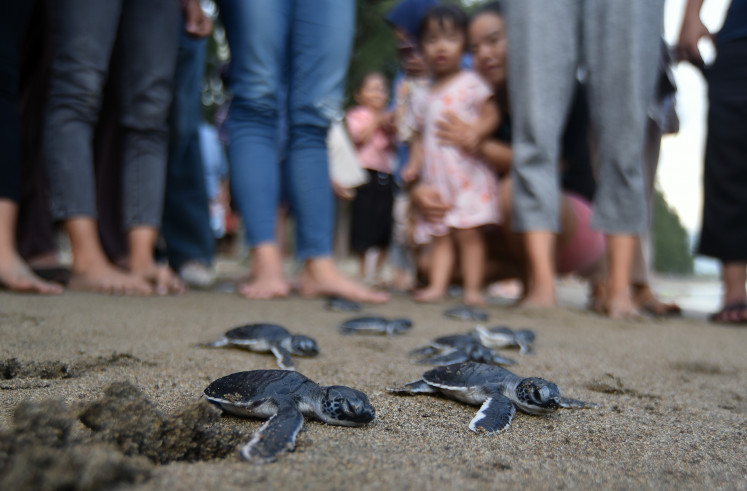
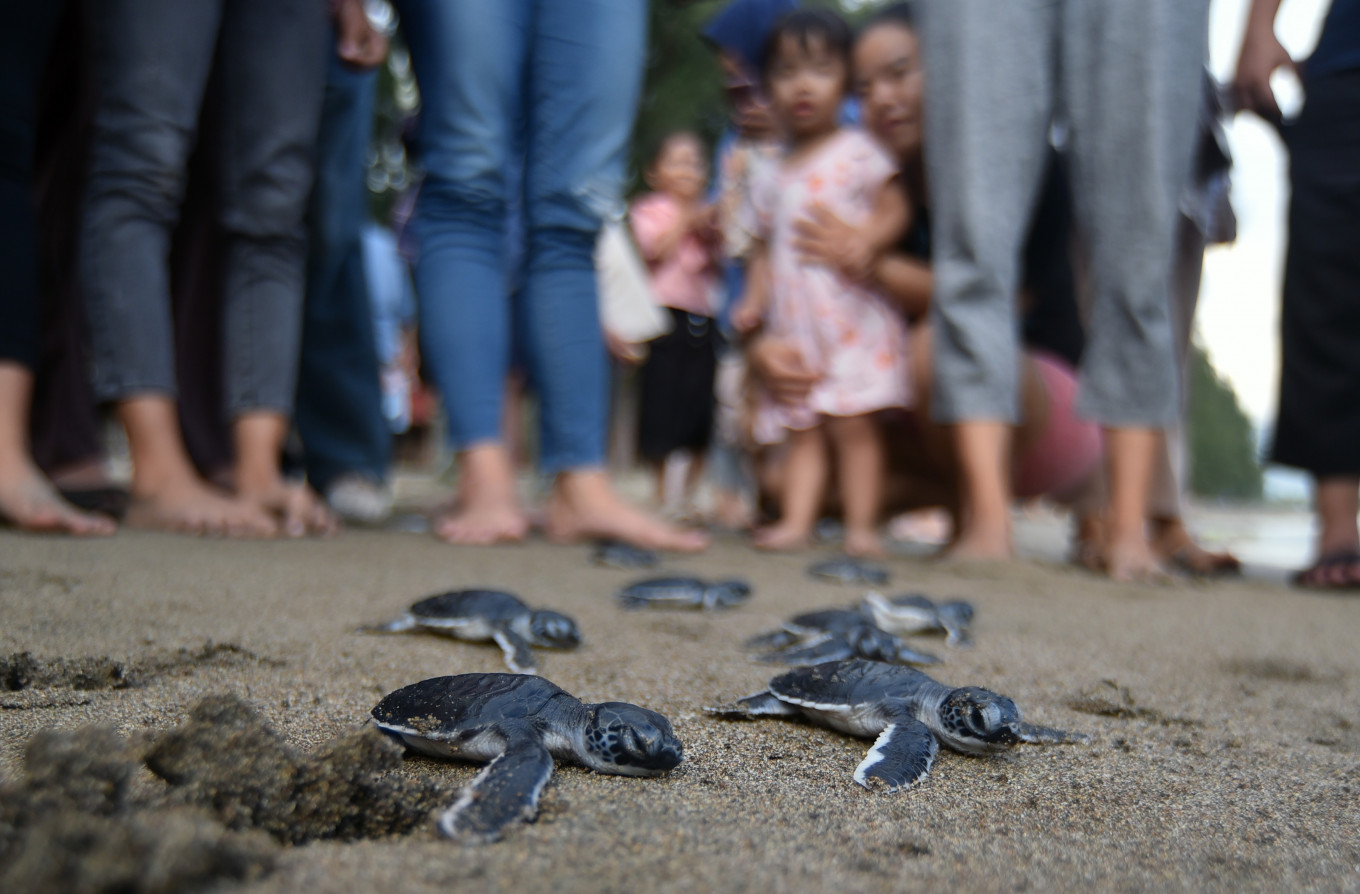 Visitors watch green sea turtle (Chelonia mydas) hatchlings crawl to the sea on May 2, 2026, during a release event at Pasir Jambak Beach in Padang, West Sumatra. (Antara/Fitra Yogi)
E
very year, sea turtles return to the beaches of northern KwaZulu-Natal in South Africa, where they began life. Once they leave the shore, some travel north through the Mozambique Channel, using waters and coastal habitats off Mozambique and Madagascar, while others journey into the wider Indian Ocean. South Africa can protect their nesting beaches, but no country alone can protect their entire journey.
The turtle embodies the central challenge of ocean conservation. Strong national action is indispensable, but protecting migratory species, interconnected habitats and shared ecosystems requires countries to work together. And to do that, the finance supporting such cooperation must be capable of making the same journey as the turtle.
For the approximately 60 million people living within 100 kilometers of the Western Indian Ocean (WIO) coastline, the stakes of conservation are immediate. Healthy marine ecosystems support food security, livelihoods, trade and tourism as well as provide bulwarks against storms. They are the natural foundation of the sustainable blue economies our countries are working to build.
But their value also reaches far beyond the region. Our mangroves and seagrasses store carbon. Our reefs sustain biodiversity. Our waters support migratory species whose journeys connect coastlines and the wider ocean. Protecting them may be a regional responsibility, but it is also in the interest of the rest of the world.
Regional leaders do not lack ambition, nor are we waiting for others to define what ocean conservation should look like.
In my country, Seychelles, we have seen what can happen when ambitious goals are backed by strong political commitments and innovative finance. Our experience in marine spatial planning and conservation finance demonstrates that protecting the ocean can be integrated into national development. Now other countries across the Western Indian Ocean are pursuing similar strategies shaped by their own priorities and circumstances.

Through the Nairobi Convention, governments have committed to stronger cooperation in developing sustainable blue economies and more effective, inclusive forms of ocean governance. The Regional Ocean Governance Strategy has established the mandate, and we are all tasked with creating the financing mechanisms capable of delivering it.