The Jakarta Post
Please Update your browser
Your browser is out of date, and may not be compatible with our website. A list of the most popular web browsers can be found below.
Just click on the icons to get to the download page.


Popular Reads
Top Results
No results found. Please check your search term and try again
Can't find what you're looking for?
View all search results
Popular Reads
Top Results
No results found. Please check your search term and try again
Can't find what you're looking for?
View all search resultsNurturing sports talent early
International sporting glory isn’t an accident of luck or raw grit. It is the inevitable dividend of a nation that invests in the health, education and human development of its people.
Change text size
Gift Premium Articles
to Anyone
Share the best of The Jakarta Post with friends, family, or colleagues. As a subscriber, you can gift 3 to 5 articles each month that anyone can read—no subscription needed!
 Set as preferred source
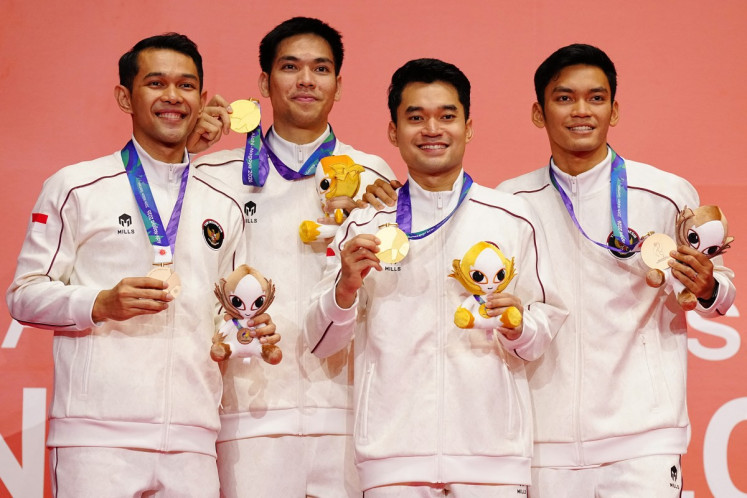
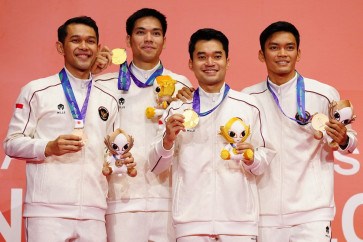
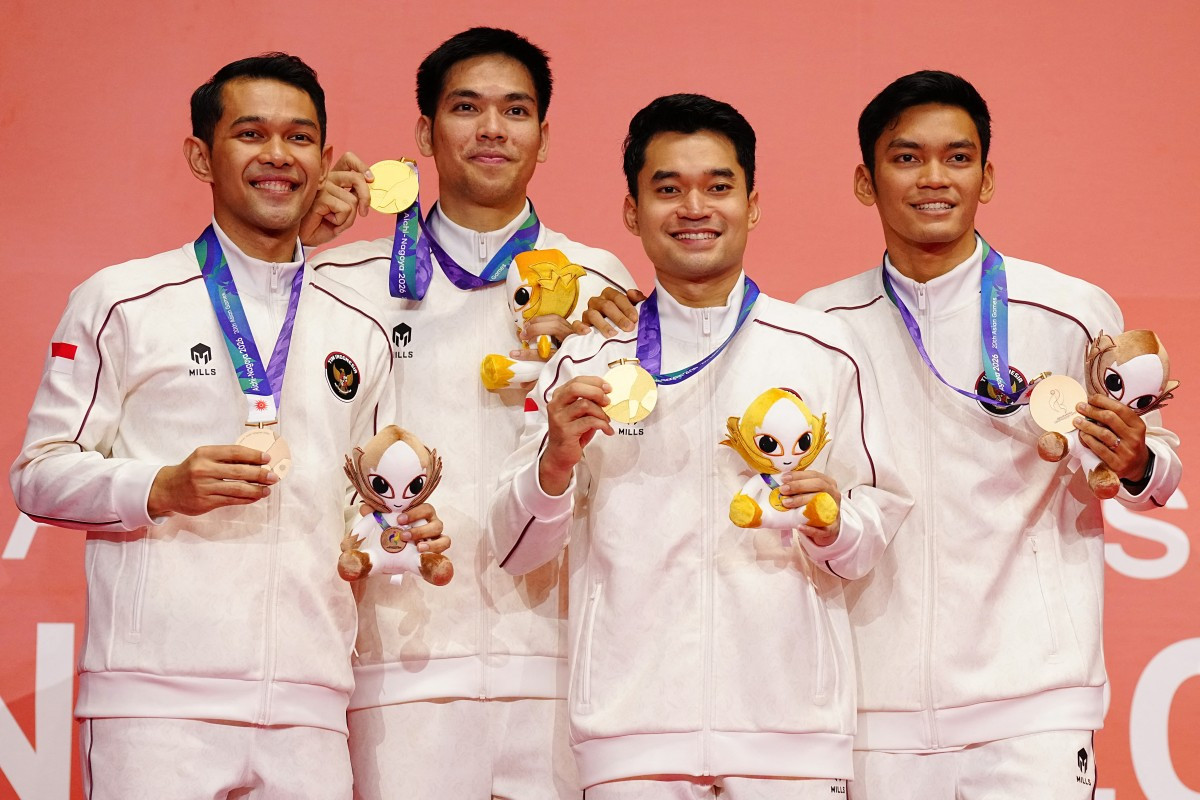 Indonesian men's doubles badminton gold medalists Daniel Marthin (center left) and Leo Rolly Carnando (center right) pose with their bronze-winning compatriots Fajar Alfian (left) and Shohibul Fikri on Sept. 29 during the event’s Asian Games 2026 medal ceremony at the Ichinomiya City Gymnasium in Aichi prefecture. (AFP/Yuichi Yamazaki)
D
ominating the medal table at international sports competitions rarely boils down to pure grit or luck. Seeing China, Japan and South Korea claim medal after medal at the just concluded Asian Games Aichi-Nagoya 2026 in Japan might lead to the conclusion that these countries threw unlimited cash at their national training centers or in China’s case, simply benefited from sheer population size.
It turns out they spent decades investing heavily in developing their human capital before an athlete ever touched a track or pool. Their successes at the 20th Asian Games, as well as Olympics, are returns on their long-term, calculated investments.
At Aichi-Nagoya, China predictably topped the standings with 169 gold medals. Host Japan finished a distant second with 83, followed by South Korea with 39. Indonesia, the world's fourth largest country, languished in 16th place with just five gold medals, down from the seven it collected in 2022.

A country’s human development index, its track record in health care, education and living standards, quietly dictates what its athletes can achieve. Producing high-achieving sportsmen and sportswomen requires healthy children first.
Decades of focusing on maternal health and early nutrition in Japan and South Korea mean their young athletes grew up without the physical setbacks due to childhood stunting or a poor diet.
Education is another pillar. Sports today isn’t just about running until an athlete drops. Sports talent development runs on biomechanics, high-level tactical analysis and precision recovery. When an entire society is well-educated, coaches, medical staff and athletes understand and embrace sports science instead of relying on gut feelings.

As for living standards, higher family incomes mean that parents can afford to let their kids pursue a career in sports without worrying it might derail their financial future.