The Jakarta Post
Please Update your browser
Your browser is out of date, and may not be compatible with our website. A list of the most popular web browsers can be found below.
Just click on the icons to get to the download page.


Popular Reads
Top Results
No results found. Please check your search term and try again
Can't find what you're looking for?
View all search results
Popular Reads
Top Results
No results found. Please check your search term and try again
Can't find what you're looking for?
View all search resultsAddressing sexual violence in ‘pesantren’: Is it possible?
Behind the sacred walls of Indonesia’s boarding schools, an insidious architecture of spiritual authority weaponizes devotion to silence victims of sexual abuse—and only collective resistance can tear it down.
Change text size
Gift Premium Articles
to Anyone
Share the best of The Jakarta Post with friends, family, or colleagues. As a subscriber, you can gift 3 to 5 articles each month that anyone can read—no subscription needed!
 Set as preferred source
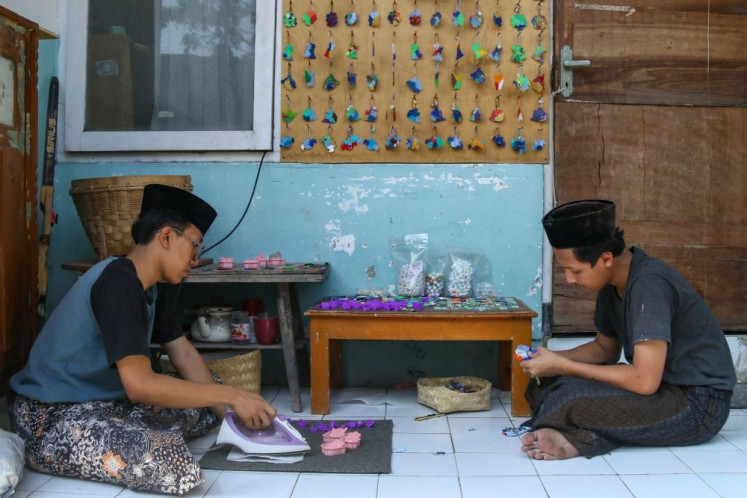
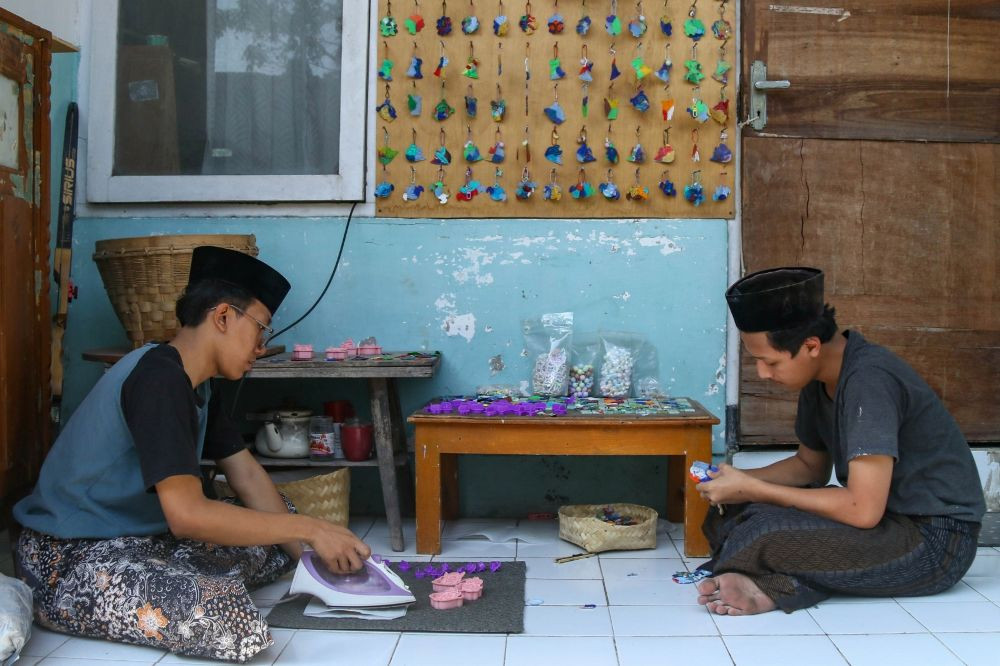 Circular endeavor: Students produce key holders from plastic waste on Oct. 8, 2026 at Pondok Pesantren Ali Maksum, an Islamic boarding school in Panggungharjo village, Bantul regency, Yogyakarta. (Antara/Ilham Nur Arifin)
A
September 2026 BBC Eye investigative documentary titled “The Teacher’s Shame” laid bare the anatomy of sexual violence within Indonesian pesantren (Islamic boarding schools). Grounded in the harrowing testimonies of two female santri (students) who are alumni of Pesantren Asyiddiqiyah in Jombang, East Java, and Pesantren Abul Barokah Wanafahat in Jonggat, Central Lombok, West Nusa Tenggara, the broadcast prompted dozens of other victimized santri across the country to come forward and report their own experiences.
Nevertheless, the broader public response was marked by ambivalence and confusion, manifested in a lukewarm collective reaction. Meanwhile, relevant state agencies and Islamic educational authorities issued perfunctory, normative statements, calling merely for clarity and proper procedural handling.
The time to question whether sexual violence occurs within religious educational institutions has long passed. The urgent imperative now is determining how to dismantle, or at least decisively deter, these practices.
Regulatory measures do exist. The Religious Affairs Ministry issued Minister of Religious Affairs Regulation No. 73/2022 concerning the prevention and handling of sexual violence in educational units under its purview. In practice, however, enforcement remains largely toothless. The Child Protection Agency (LPA), an organization providing direct victim advocacy, consistently encounters bureaucratic dead ends when attempting to file reports with both the police and the ministry’s antiviolence task forces.
This administrative obstruction illustrates the systemic inertia surrounding sexual violence in pesantren. State authorities frequently treat such abuses as isolated infractions blown out of proportion by the media. Compounding the problem, few pesantren maintain formal standard operating procedures (SOPs) for preventing or addressing sexual violence, operating on the normative assumption that such misconduct is unthinkable within a sacred institutional setting.
Consequently, cases of sexual violence are rarely adjudicated through formal legal channels. In the notorious 2021–2022 case at the Madani Quran boarding school in Bandung, where more than nine underage santri were raped—some as young as 13, several resulting in pregnancies—the initial resolution proposed (and demanded by the victims’ parents) was forced marriage to the perpetrator.

While the legal system eventually intervened, sentencing the perpetrator to death and ordering asset forfeiture for victim restitution, the ministry responded by disavowing institutional responsibility, claiming the facility was not a recognized pesantren but an unaccredited Quranic dormitory.