The Jakarta Post
Please Update your browser
Your browser is out of date, and may not be compatible with our website. A list of the most popular web browsers can be found below.
Just click on the icons to get to the download page.


Popular Reads
Top Results
No results found. Please check your search term and try again
Can't find what you're looking for?
View all search results
Popular Reads
Top Results
No results found. Please check your search term and try again
Can't find what you're looking for?
View all search resultsWhy producing more food is no longer enough
Record harvests mean little if plates stay empty: Indonesia must stop measuring food security by the tonne and start measuring it by nutrition, access and ecological sense.
Change text size
Gift Premium Articles
to Anyone
Share the best of The Jakarta Post with friends, family, or colleagues. As a subscriber, you can gift 3 to 5 articles each month that anyone can read—no subscription needed!
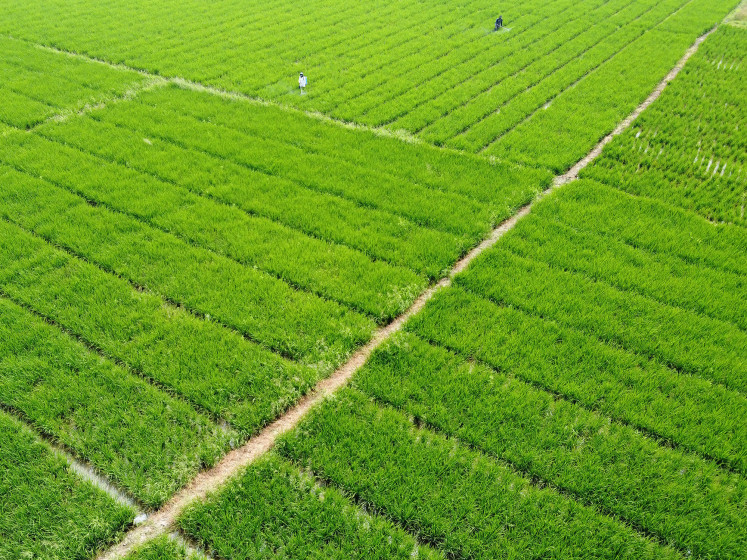
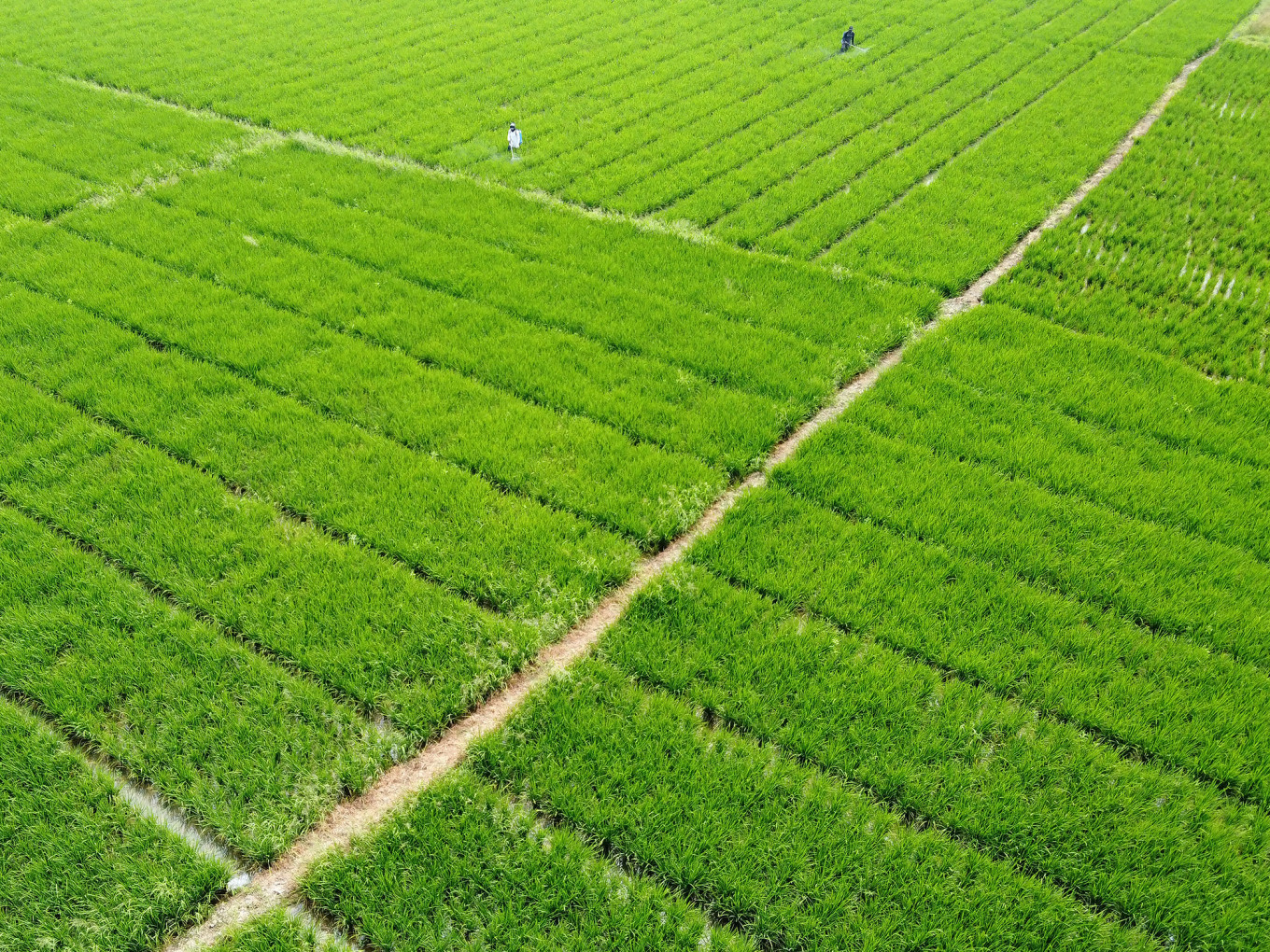 An aerial view shows a farmer spraying crops on Oct. 2 in a rice field in Sukakarya, Bekasi, West Java. (JP/Iqro Rinaldi)
W
orld Food Day is observed every Oct. 16. This year, the Food and Agriculture Organization (FAO) has chosen the theme, “Innovate today. Nourish tomorrow”. The message is simple yet demanding: Producing more food is no longer enough.
The real challenge is improving nutrition today without undermining our ecological capacity to feed people tomorrow. That challenge remains daunting. Around 673 million people - 8.2 percent of the global population - still experienced hunger in 2024, while roughly 2.3 billion faced moderate or severe food insecurity.
Indonesia sits squarely within this dilemma. On the one hand, dietary quality must improve, particularly access to animal-source protein. On the other, feeding a population approaching 300 million inevitably strains land, water and energy systems.
The question, therefore, is not whether Indonesia should produce more food - it should. What demands scrutiny is the tendency to treat production volume as the sole measure of success, while equitable access, nutritional value and ecological costs remain secondary concerns.
The government reports that the country has achieved self-sufficiency in eight key commodities: rice, feed corn, large chilies, bird’s eye chilies, shallots, household sugar, chicken meat and eggs. Several have even entered export markets.
Higher production matters, but food security is never determined by supply alone. As Amartya Sen’s concept of entitlement illustrates, hunger rarely stems solely from absolute food shortages; it occurs when individuals lack the economic or social means to acquire food. In short, abundant harvests have value only when nutritious food actually reaches people’s plates.

Indonesia performs relatively well on aggregate food-security metrics, but national averages mask critical disparities. In 2024, 8.27 percent of the population was classified as undernourished. While down from 10.21 percent in 2022, this figure proves that aggregate abundance does not guarantee universal consumption.