The Jakarta Post
Please Update your browser
Your browser is out of date, and may not be compatible with our website. A list of the most popular web browsers can be found below.
Just click on the icons to get to the download page.


Popular Reads
Top Results
No results found. Please check your search term and try again
Can't find what you're looking for?
View all search results
Popular Reads
Top Results
No results found. Please check your search term and try again
Can't find what you're looking for?
View all search resultsListen more, speculate less
Jakarta’s historic market rout isn’t the work of foreign conspirators, but a self-inflicted wound born of concentrated ownership and regulatory inertia that political defiance cannot heal.
Change text size
Gift Premium Articles
to Anyone
Share the best of The Jakarta Post with friends, family, or colleagues. As a subscriber, you can gift 3 to 5 articles each month that anyone can read—no subscription needed!
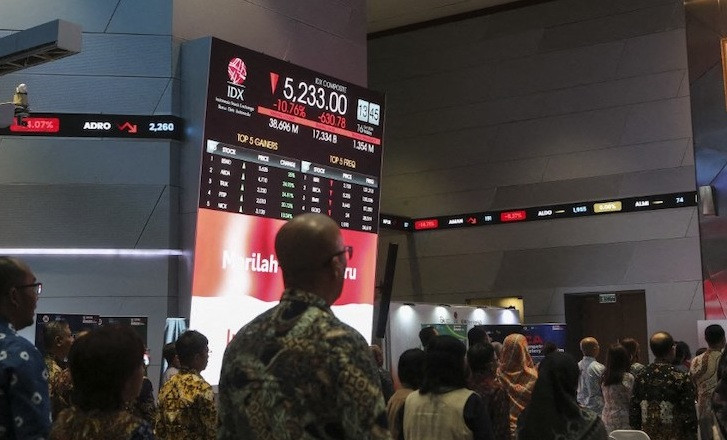
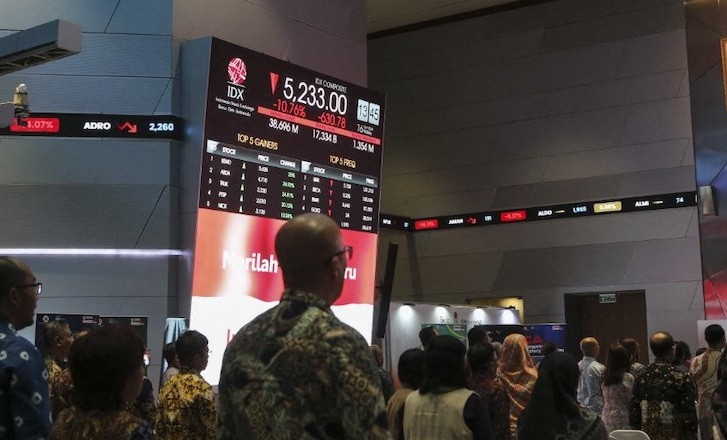 People look at a screen showing the Indonesia Composite Index after the market plunge at the stock exchange in Jakarta on Oct. 16, 2026. (AFP/Agus Rudianto)
S
ince the start of the year, Indonesia’s stock market has plunged more than 38 percent, making it one of the world’s worst-performing bourses, if not the absolute worst.
With the Iran war still raging and United States import tariffs clouding the global outlook, investors might instinctively expect these external shocks to shoulder the blame. However, the domestic market has instead been battered primarily by concerns raised by a single institution: index compiler MSCI.
When MSCI first raised red flags in January, freezing index changes for Indonesia and threatening to downgrade the country from emerging-market to frontier-market status, the Indonesia Composite Index (IDX) tumbled 16.7 percent in two days. The timing could hardly have been worse: the benchmark index had touched an all-time high of 9,134.7 just a week before the announcement.
Since then, the bourse has remained on a steady downward trajectory amid compounded geopolitical and macroeconomic headwinds. That slide worsened earlier this month following another stern MSCI warning threatening to reclassify Indonesia as a "standalone market", a classification reserved for cases of “severe deterioration” in market accessibility, size, or liquidity. The market fell another 11 percent the day immediately following the announcement, logging its steepest single-day drop since the 1997-1998 Asian financial crisis. In total, the IDX has recorded net foreign outflows exceeding US$5.1 billion since the turn of the year.
Crucially, MSCI’s warnings in both January and October have had little to do with the operating performance of most Indonesian companies. Instead, the index compiler has zeroed in on a handful of equities with highly concentrated ownership, leaving them vulnerable to coordinated trading and artificial price manipulation.
Blue-chip stalwarts across banking and manufacturing, including BCA, BRI, Bank Mandiri, and Astrahave maintained relatively resilient fundamentals, yet they have not escaped the collateral damage. Dragged lower by the broad market rout, their price-to-earnings (P/E) ratios now sit well below those of regional peers.

State asset fund Danantara is right in assessing Indonesia’s battered stocks as an attractive bargain. But the core issue remains whether domestic authorities are willing and able to resolve MSCI’s underlying grievances to prevent the sell-off from deepening further.