The Jakarta Post
Please Update your browser
Your browser is out of date, and may not be compatible with our website. A list of the most popular web browsers can be found below.
Just click on the icons to get to the download page.


Popular Reads
Top Results
No results found. Please check your search term and try again
Can't find what you're looking for?
View all search results
Popular Reads
Top Results
No results found. Please check your search term and try again
Can't find what you're looking for?
View all search resultsDecolonization and the geopolitics of legitimacy: From Morocco to Papua
When multilateral forums succumb to political theater and procedural breaches, the genuine legal principles of decolonization and sovereignty risk being lost to ideological distraction.
Change text size
Gift Premium Articles
to Anyone
Share the best of The Jakarta Post with friends, family, or colleagues. As a subscriber, you can gift 3 to 5 articles each month that anyone can read—no subscription needed!
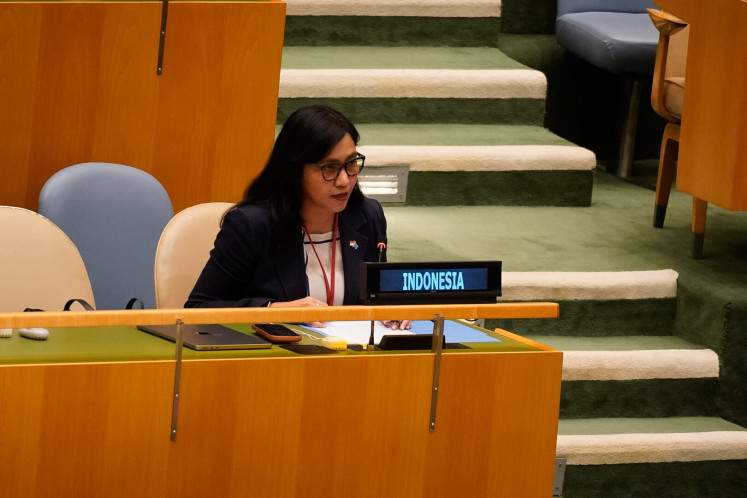
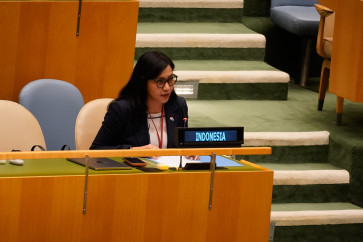
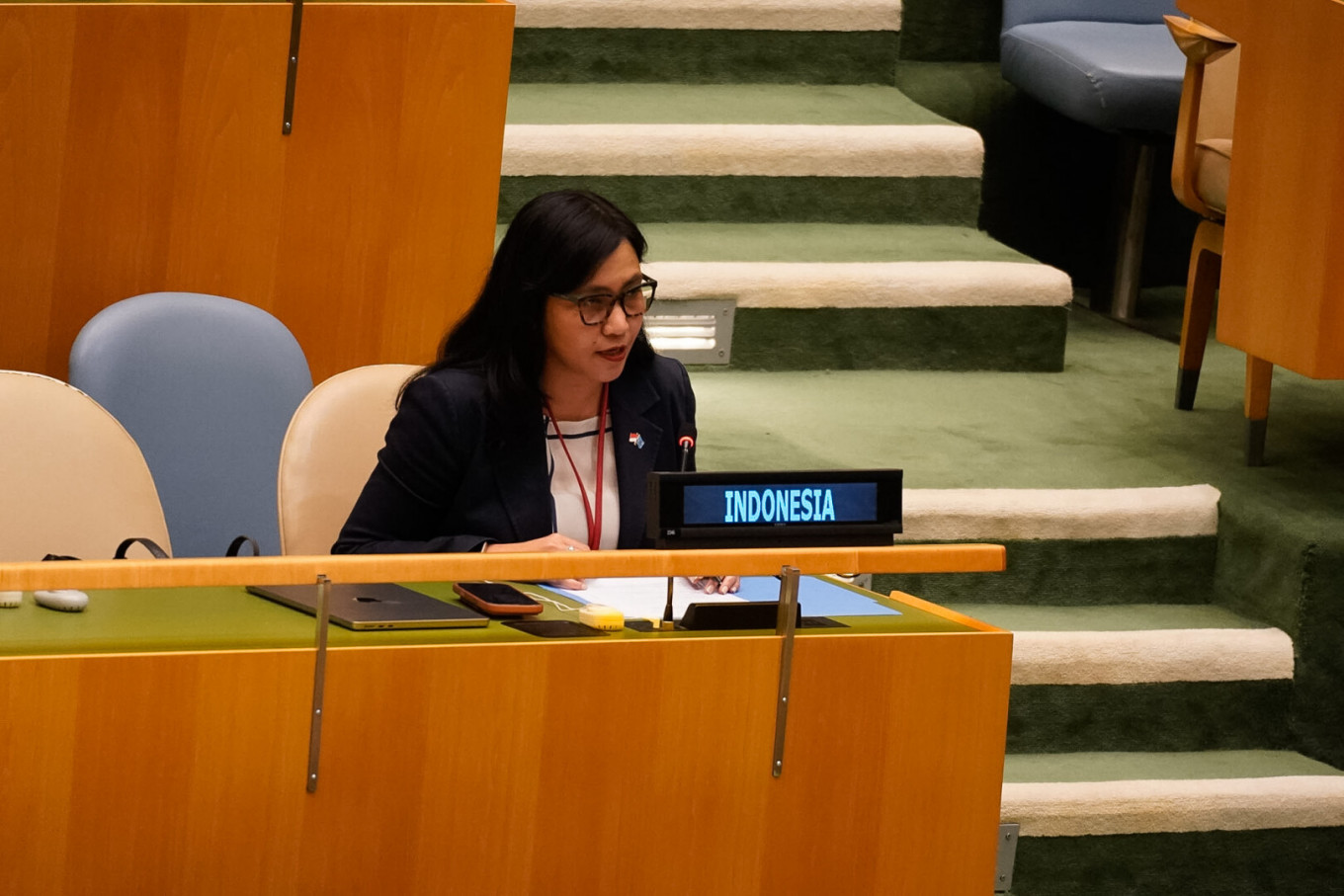 Indonesia exercises its right of reply during the General Debate of the 81st United Nations General Assembly (UNGA) in response to statements by representatives of Solomon Islands and Vanuatu regarding the situation on Sept. 28in Papua. (Courtesy of/Foreign Ministry)
W
hen the United Nations was founded in 1945, the global map was dominated by the sprawling colors of imperial rule. Dozens of territories remained subjugated, stripped of self-governance and integrated into extractive metropolitan economies.
In response to this systemic marginalization, the UN established a clear moral, political, and legal imperative: decolonization. Through historic milestones such as UN General Assembly Resolution 1514 (XV) of 1960—the Declaration on the Granting of Independence to Colonial Countries and Peoples—a sweeping wave of self-determination reshaped the geopolitical landscape, dismantling classical empires and birthing scores of newly sovereign states.
Yet, as critical scholars of international relations and postcolonial theory frequently argue, history is rarely linear or neatly concluded. The legal termination of formal colonial administration did not automatically erase the deep structural inequalities, epistemological hierarchies, and geopolitical contestations embedded within the international system.
Today, the remnants of that historical architecture have narrowed to 17 territories remaining on the Non-Self-Governing Territories (NSGT) list under the purview of the UN Special Political and Decolonization Committee (Fourth Committee).
I recently participated in the Fourth Committee session as a petitioner at UN Headquarters in New York. The proceedings once again underscored the profound complexities of territorial disputes while offering a sobering lesson in the fragility of procedural discipline and multilateral norms.
Multilateral bodies like the UN Fourth Committee are frequently caught between two competing forces: on one hand, they serve as vital forums for amplifying subaltern voices; on the other, they risk deteriorating into theaters for ideological proxy contests, where external actors project strategic interests under the guise of humanitarian or liberationist rhetoric. Navigating this terrain demands unyielding adherence to empirical truth, historical literacy and institutional integrity.

In my petition delivered on Oct. 6, I highlighted a persistent irony: protracted international debates often suffer from a willful blindness to empirical realities on the ground. Since Spain’s withdrawal in 1975 and the territory’s return to the Kingdom of Morocco—underpinned by deep historical ties, cultural affinity, and the traditional bay'ah (allegiance) between local Sahrawi tribes and the Moroccan Sultan—the scale of socio-economic and institutional transformation has been monumental.