The Jakarta Post
Please Update your browser
Your browser is out of date, and may not be compatible with our website. A list of the most popular web browsers can be found below.
Just click on the icons to get to the download page.


Popular Reads
Top Results
No results found. Please check your search term and try again
Can't find what you're looking for?
View all search results
Popular Reads
Top Results
No results found. Please check your search term and try again
Can't find what you're looking for?
View all search resultsThe Mecca Pact and Iran: A path to de-escalation?
Though the Mecca Pact’s visit to Tehran last week was neither a symbolic gesture nor a fundamental move, observers, media and others are keeping an eye on related developments that may herald a regional security restructuring.
Change text size
Gift Premium Articles
to Anyone
Share the best of The Jakarta Post with friends, family, or colleagues. As a subscriber, you can gift 3 to 5 articles each month that anyone can read—no subscription needed!
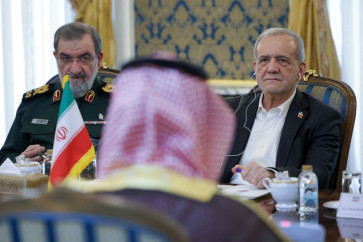
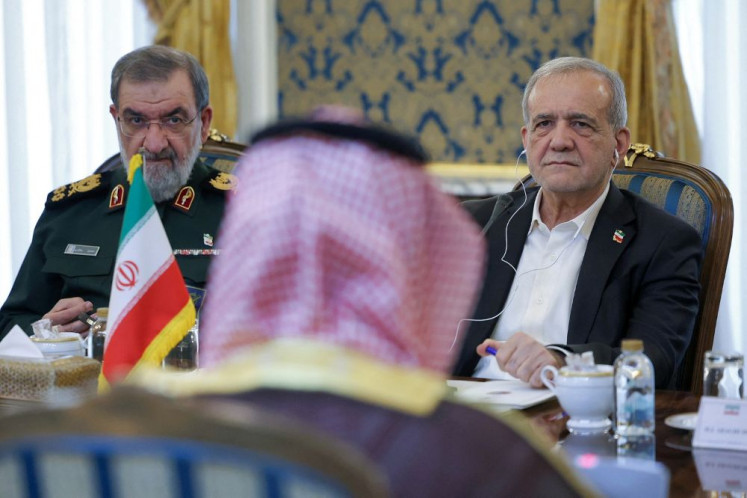
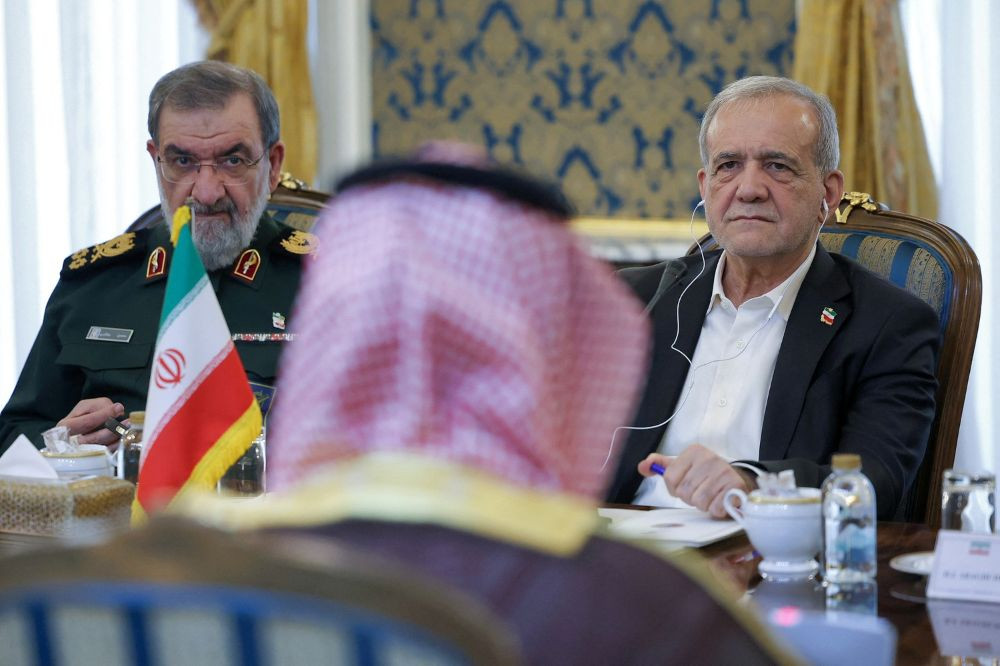 Regional sit-down: Iranian President Masoud Pezeshkian (right) and National Security Council head Mohsen Rezaei (left) meet with Saudi Arabian Defense Minister Khalid bin Salman Al Saud on Oct. 26, 2026 during four-way talks in Tehran that also involved the Pakistan army chief and Turkey's intelligence chief. (AFP/Iranian Presidency)
T
he visit to Tehran on Oct. 26 by senior officials from three signatories of the Mecca Pact, Saudi Arabia, Turkey and Pakistan, should not be viewed merely as a symbolic diplomatic gesture. The fact that all three countries are signatories to the pact, which stipulates that an armed attack against one member shall be regarded as an attack against the others, carries particular significance.
The agreement was signed amid the ongoing United States-Israeli war against Iran, triggering political and diplomatic speculation about the broader conflict in the Middle East.
Many observers believe the visit to Iran signals an attempt to find a way out of the cycle of confrontation involving the US, Israel, Iran, Saudi Arabia and the Houthis. Media reports indicate the visit produced no major diplomatic breakthrough. Nevertheless, Iran and the three Mecca Pact members agreed to continue their dialogue on regional peace and security.
Does the visit mark the beginning of a new configuration of power in the Middle East, or is it simply an effort to de-escalate regional tensions?
In the short term, it is premature to imagine Iran joining the Mecca Pact. The pact is a collective defense alliance encompassing military cooperation, joint exercises, intelligence sharing, defense technology development and defense industry collaboration. For Tehran, joining such a structure would mean accepting an alliance logic that has historically been associated with efforts to contain Iranian influence.
Iran's reluctance to join the Mecca Pact can be understood through Stephen Walt's balance of threat theory. Walt argues that states do not assess other countries solely in terms of their material capabilities; they also consider their intentions, geographical proximity, offensive capabilities and the extent to which they perceive them as threats.

From Iran's perspective, the Mecca Pact could be interpreted as an attempt to balance its regional influence. The most realistic option for Iran is therefore what might be called "selective engagement". This would allow Tehran to cooperate with the pact through limited mechanisms, such as crisis communication, coordination over Yemen and efforts to prevent military incidents caused by miscalculation on the ground.





Your Opinion Matters
Share your experiences, suggestions, and any issues you've encountered on The Jakarta Post. We're here to listen.
Enter at least 30 characters
0
/ 30
Thank you
Thank you for sharing your thoughts. We appreciate your feedback.