The Jakarta Post
Please Update your browser
Your browser is out of date, and may not be compatible with our website. A list of the most popular web browsers can be found below.
Just click on the icons to get to the download page.


Popular Reads
Top Results
No results found. Please check your search term and try again
Can't find what you're looking for?
View all search results
Popular Reads
Top Results
No results found. Please check your search term and try again
Can't find what you're looking for?
View all search resultsLet’s get childhood immunization back on track
Immunization against common childhood diseases is the most effective public health intervention to prevent outbreaks.
Change text size
Gift Premium Articles
to Anyone
Share the best of The Jakarta Post with friends, family, or colleagues. As a subscriber, you can gift 3 to 5 articles each month that anyone can read—no subscription needed!
 Set as preferred source
A
round the world, countries are racing at an unprecedented speed to develop a safe and effective vaccine against COVID-19. While such a breakthrough could allow social restrictions to be safely eased and bring an eventual end to the pandemic, it will likely take months or years to achieve.
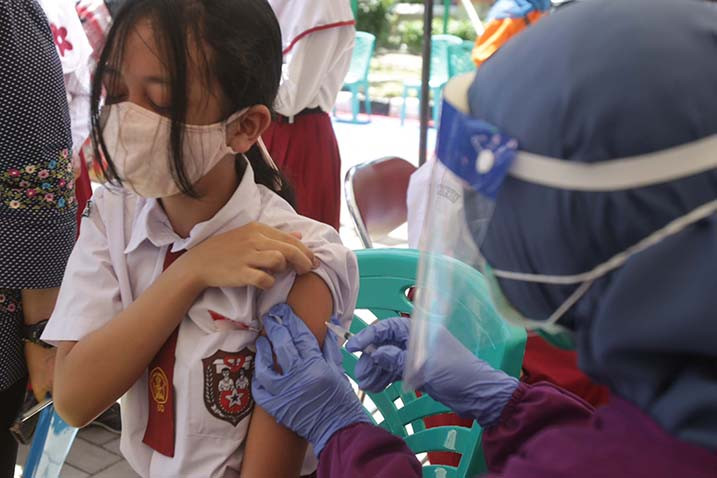
In the meantime, we cannot overlook the vaccines that we already have to avert additional waves of childhood illness and death from other deadly, yet entirely preventable diseases such as measles and polio.
Already there is evidence that routine immunization services are at risk. A recent assessment of the Indonesian health system conducted by the Ministry of Health and United Nations Children’s Fund (UNICEF) shows that 84 percent of the more than 5,000 health facilities surveyed from all 34 provinces reported significant disruptions to immunization services. Although many continue to offer immunization, others have had their services partially interrupted or shut down completely.
The survey outlines several reasons for these suspensions, including the introduction of physical distancing measures, disruptions to vaccine supplies caused by travel restrictions and hesitancy on the part of caregivers to bring their children to health facilities.
A follow-up survey by the Ministry of Health and UNICEF from July 2020 with nearly 7,000 parents and caregivers provides an understanding of community views on immunization during the pandemic. Despite widespread fears of becoming infected with the virus, respondents expressed strong support for the government’s policy to continue immunization services with safety precautions. The majority of parents and caregivers indicated that despite the pandemic, they would like to continue safely immunizing their children. This shows there is still strong demand for vaccination services – and for good reason.
The science is clear: immunization saves lives. Immunization against common childhood diseases is the most effective public health intervention to prevent outbreaks. Routine childhood immunization requires fewer resources than responding to outbreaks and preventing illnesses helps to reduce the burden on already strained health systems. It is also a sound investment: globally every US dollar spent on childhood immunizations can yield up to US$44 in economic benefits, which include savings on medical costs and productivity loss when a child is sick and a parent cannot work.
In Indonesia, the immunization program has accomplished major public health goals, such as the eradication of maternal and neonatal tetanus in 2016. The proportion of children receiving all their basic routine vaccines has increased from 59 percent in 2007 to 65 percent in 2017, contributing to a drop in under-five child mortality, from 44 deaths per 1,000 live births to 32 during that same time period.