The Jakarta Post
Please Update your browser
Your browser is out of date, and may not be compatible with our website. A list of the most popular web browsers can be found below.
Just click on the icons to get to the download page.


Popular Reads
Top Results
No results found. Please check your search term and try again
Can't find what you're looking for?
View all search results
Popular Reads
Top Results
No results found. Please check your search term and try again
Can't find what you're looking for?
View all search resultsHave air disaster SAR costs been reimbursed?
If the airlines of the three air disasters above have not fully reimbursed the government or started the process of repaying all SAR costs, the government's silence might indicate failure to protect state and regional funds.
Change text size
Gift Premium Articles
to Anyone
Share the best of The Jakarta Post with friends, family, or colleagues. As a subscriber, you can gift 3 to 5 articles each month that anyone can read—no subscription needed!
 Set as preferred source
A
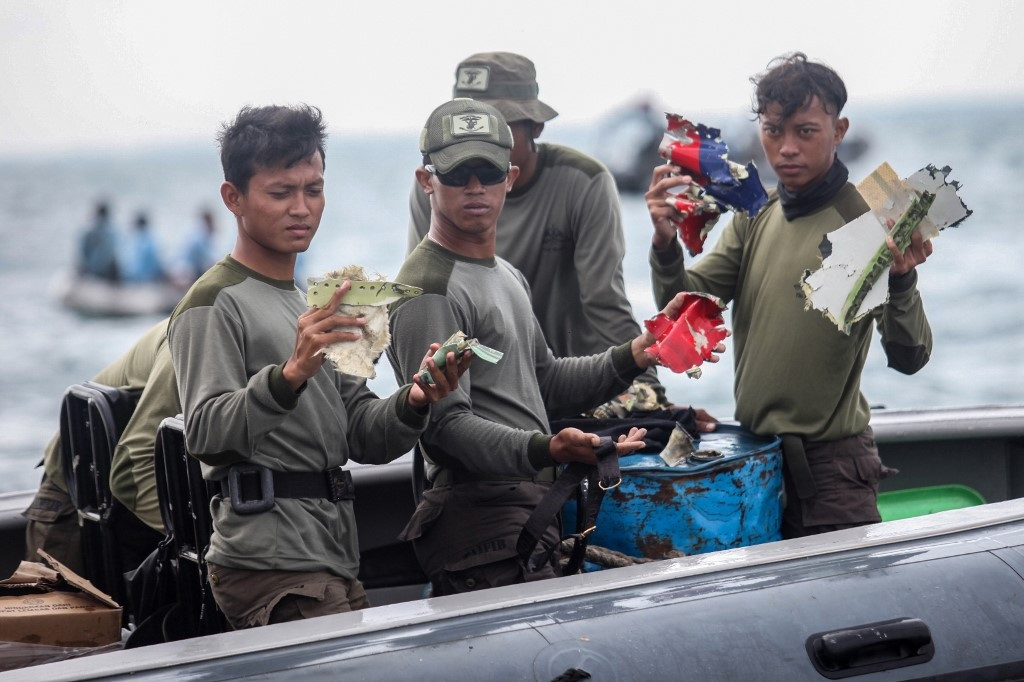
series of fatal accidents have plagued the national aviation industry over the past decade. AirAsia flight QZ8501, Lion Air flight JT610 and Sriwijaya Air flight SJ182 all crashed into the sea, respectively in December 2014, October 2018 and January 2021. Maritime search and rescue (SAR) operations focused on finding and saving possible survivors, plane debris and the aircraft’s black boxes.
Annex 12 on Search and Rescue to the Chicago Convention of 1944, the “magna carta” of international aviation law, imposes state responsibility for SAR operations, both in sovereign territory and on the high seas. A nation’s armed forces is generally involved through the deployment of defense equipment, such as warships, helicopters and maritime reconnaissance aircraft. In cases in which foreign passengers are among the victims, their countries of origin often offer assistance.
Indonesia’s SAR operations fall under Law No. 29/2014 on Search and Rescue. The National Search and Rescue Agency (Basarnas) is the mandated implementing agency that coordinates SAR operations, including aviation-related operations in accordance with Article 352 of Law No. 1/2009 on Aviation.
In the above three commercial air disasters, Basarnas coordinated SAR operations that lasted more than seven days. In fact, searching for victims in the sea takes a longer time. Extending the seven-day period is permitted on request from the aircraft or vessel owner, new clues or information on the location of victims or the aircraft or vessel, or new developments emerging from evaluating the SAR operation. If the aircraft or vessel owner requests an extension, they must bear the costs of the extended operation.
Article 73 of Indonesia’s SAR Law says that SAR operations may be financed by the state budget, the provincial budget and/or other legitimate and nonbinding funding sources. Insurance instruments belong to the last category.
An issue arises from the lack of further mention on provisions prioritizing the funding sources. The inclusion of the word "and/or" allows for a scenario wherein all SAR operating costs are shouldered by the state and provincial governments.
The state is responsible for carrying out SAR operations. However, in Indonesia’s aviation industry, which involves high technology and large capital, airlines bear the SAR operational costs through insurance (and reinsurance) in accordance with the Aviation Law. This clause is extremely straightforward to ensure that not a single rupiah of public funds is spent on covering the costs of SAR operations.