The Jakarta Post
Please Update your browser
Your browser is out of date, and may not be compatible with our website. A list of the most popular web browsers can be found below.
Just click on the icons to get to the download page.


Popular Reads
Top Results
No results found. Please check your search term and try again
Can't find what you're looking for?
View all search results
Popular Reads
Top Results
No results found. Please check your search term and try again
Can't find what you're looking for?
View all search resultsOvercoming the infectious infodemic in ASEAN
The role of universities is integral in the battle against fake news and academics can serve as fact-checkers for ASEAN governments and social media platforms.
Change text size
Gift Premium Articles
to Anyone
Share the best of The Jakarta Post with friends, family, or colleagues. As a subscriber, you can gift 3 to 5 articles each month that anyone can read—no subscription needed!

S
preading at least as quickly as the COVID-19 virus, an “infodemic” has infected large swaths of media and information exchange across ASEAN. Massive amounts of information, including rumors, misinformation and disinformation have reached millions of people who are hoping to understand how to stay safe until the pandemic is controlled.
High levels of uncertainty are driving people to look for any information about the virus and what to do about it.
Fake news has ranged from misinformation about which tests are needed for proper diagnosis to fear-inducing rumors that motivate people to make the wrong decisions.
“In Indonesia, if your PCR test results are positive, you get a lethal injection,” said Alisa, an Indonesian. This information came to her via WhatsApp.
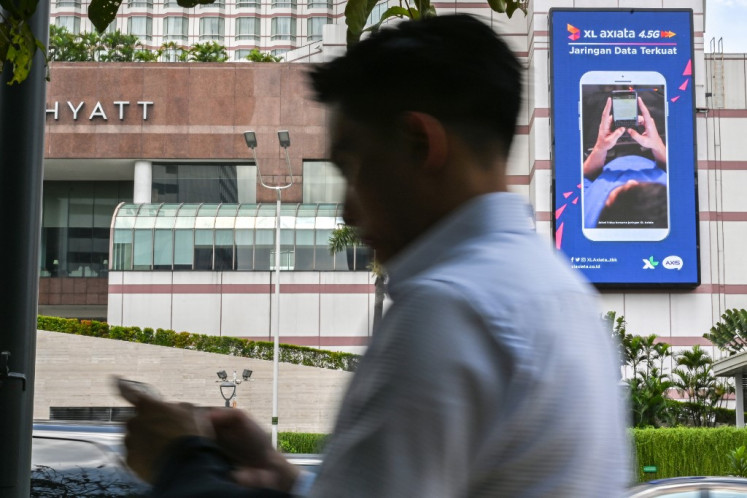
The growing risk of fake news and misinformation comes on the heels of rapidly increasing access to the internet and digital media among ASEAN citizens. According to We Are Social, in ASEAN, 69 percent of the region’s 672 million citizens are internet and social media users. A report by Google, Temasek, Bain & Company’s notes that in 2020, 40 million ASEAN citizens went online for the first time. With the region steadily pivoting toward digital transformation, and with an unconnected audience of 208 million, these numbers are projected to continuously, if not exponentially, increase.
All of this growth in internet usage is occurring at a time when people are stressed about their new circumstances and fearful about the impact of the pandemic on health and wellbeing. These circumstances have been exploited by people with bad intentions. They are also very conducive for the swift spread of misinformation and rumors.
The power of digital technologies to influence the opinions and behaviors of users, and the speed at which societies change due to these technological disruptions, are rendering many public and private institutions unable to quickly adapt.