TheJakartaPost
Please Update your browser
Your browser is out of date, and may not be compatible with our website. A list of the most popular web browsers can be found below.
Just click on the icons to get to the download page.


Popular Reads
Top Results
No results found. Please check your search term and try again
Can't find what you're looking for?
View all search results
Popular Reads
Top Results
No results found. Please check your search term and try again
Can't find what you're looking for?
View all search resultsBreaking the chain of online radicalization
For a group of extremists who were obsessed with jihad and martyrdom, the theology and ideology espoused by Aman gave them greater freedom in selecting targets that were within their capability.
Change text size
Gift Premium Articles
to Anyone
Share the best of The Jakarta Post with friends, family, or colleagues. As a subscriber, you can gift 3 to 5 articles each month that anyone can read—no subscription needed!
A
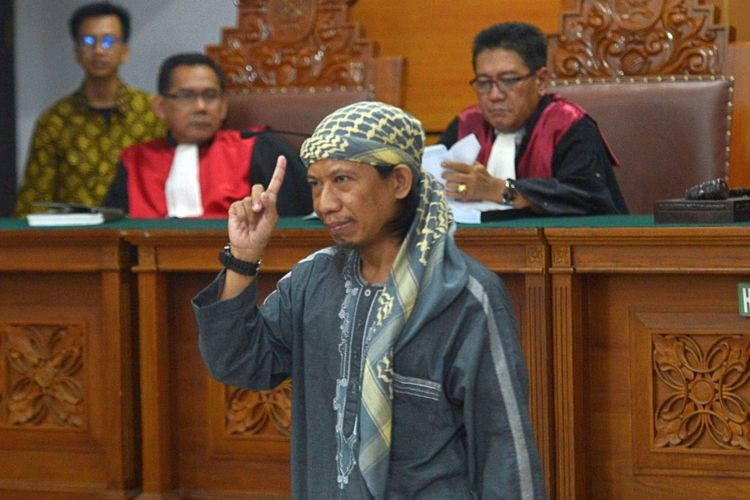
s a result, Aman Abdurrahman's thinking gave rise to the belief that true faith was when one was able to totally reject the thaghut system and its supporting elements, such as the government, police and military.
This way of thinking became more problematic when it emphasized the use of jihad as the highest form of “rejection” of the thaghut. The dissemination of this thought, particularly through the digital realm, became a powerful tool for recruiting new members and supporters — until today.
The doctrine outlining that the ultimate expression of faith was through fighting the enemies of faith (the thaghut) became a dangerous virus spreading throughout the extremist community. This was because in attacking the thaghut there was little concern for ordinary Muslims caught up in the crossfire — the most important thing was to fight against the thaghut.
For a group of extremists who were obsessed with jihad and martyrdom, the theology and ideology espoused by Aman gave them greater freedom in selecting targets that were within their capability. They no longer had to attack foreigners or the US allies, but instead could target other religious communities and everyone involved in helping support the ongoing rule of those who did not implement Islamic law, namely the Indonesian government.
This gave rise to a spate of attacks from 2010 onward, including a series of attacks targeting the police in Cirebon, West Java; Bima, West Nusa Tenggara; Surakarta, Central Java; and Jakarta from 2010 to 2013.
Then, in 2014, many “truth seekers” online, namely those that shared Abdurrahman's views, found a new home in IS' “false caliphate”. Many of IS' propaganda releases were in accordance with Abdurrahman's thinking. As a result, Aman and his followers flocked to pledge their allegiance to IS and its leader at the time, Abu Bakar al Baghdadi.
The “proof” offered by the existence of IS' caliphate as well as their pledge of allegiance to the nascent statelet provided a stronger justification for IS supporters' acts of terrorism. They could claim to be acting as “soldiers of the caliphate”, when perpetrating attacks in Indonesia and each of their attacks would receive official recognition as an IS attack.